
Saturday’s DARC SkyNet is at 9PM CT.
Discussion Topic of the Evening.
“The Sky is Never the Limit – Skynet Levels Up!”
Waz Up
Space Exploration and Space History
Space Exploration News
Starship Flight 15 Achieves First-ever Midair Launch Tower Catch – November 14, 2026

Space-Related Birthdays
10
| Astronaut Name | Birth Year | Birthdate | Callsign | Missions | Notes |
|---|---|---|---|---|---|
| Edward G. Gibson (ED-werd GIB-sun) | 1936 | November 8 | None | Skylab 4 | An American solar physicist and NASA scientist-astronaut, Gibson spent over 84 days in space aboard Skylab 4 during humanity’s first long-duration space station program. He completed three spacewalks totaling over 15 hours and operated the Apollo Telescope Mount to record unprecedented observations of solar flares and Comet Kohoutek. |
| Margaret Rhea Seddon (MAR-guh-ret REE-uh SED-un) | 1947 | November 8 | None | STS-51-D, STS-40, STS-58 | A physician, surgeon, and one of the first six female astronauts selected by NASA, Rhea Seddon logged over 722 hours in space across three Space Shuttle missions. She served as payload commander for the dedicated life sciences Spacelab missions STS-40 and STS-58. |
| Ronald E. Evans (RON-uld EV-unz) | 1933 | November 10 | None | Apollo 17 | A United States Navy Captain and NASA astronaut, Evans served as Command Module Pilot aboard America on Apollo 17, humanity’s final Apollo crewed lunar landing mission. During the voyage home, he performed a historic one-hour deep-space spacewalk in cislunar space to retrieve scientific film canisters from the service module equipment bay. |
| Mark T. Vande Hei (MARK VAN-duh HY) | 1966 | November 10 | KG5GNP | Soyuz MS-06 / Expedition 53/54, Soyuz MS-18/MS-19 / Expedition 64/65/66 | A retired United States Army Colonel and NASA astronaut, Vande Hei spent 355 consecutive days aboard the International Space Station, establishing an American single-spaceflight endurance record. An active amateur radio operator holding callsign KG5GNP, he logged over 523 cumulative days in space across four spacewalks. |
| G. Reid Wiseman (REED WYZE-mun) | 1975 | November 11 | KF5LKT | Soyuz TMA-13M / Expedition 40/41, Artemis II (Commander – Scheduled) | A United States Navy Captain and naval test pilot, Wiseman logged 165 days in orbit and performed two spacewalks aboard the International Space Station during Expedition 40 and 41. A licensed amateur radio operator holding callsign KF5LKT who previously served as Chief of the NASA Astronaut Office, he was selected to command the Artemis II lunar flyby mission. |
| Mike Melvill (MYK MEL-vil) | 1940 | November 11 | None | SpaceShipOne Flight 15P, SpaceShipOne Flight 16P | A veteran aerospace experimental test pilot with Scaled Composites, Melvill piloted SpaceShipOne past the 100-kilometer boundary of space on June 21, 2004, on Flight 15P. His historic flight made him the world’s first commercial astronaut and the first person to fly a privately funded crewed spacecraft past the Kármán line. |
| Richard H. Truly (RICH-erd TROO-lee) | 1937 | November 12 | None | Approach and Landing Tests (ALT), STS-2, STS-8 | A retired United States Navy Vice Admiral and astronaut originally selected for the Manned Orbiting Laboratory program, Truly piloted STS-2 during the first orbital reflight of Space Shuttle Columbia. |
| Sergey N. Ryazansky (sair-GAY ree-ZAHN-skee) | 1974 | November 13 | R4SKY | Soyuz TMA-10M / Expedition 37/38, Soyuz MS-05 / Expedition 52/53 | A Russian biochemist and cosmonaut, Sergey Ryazansky logged 304 days in space across two long-duration expeditions to the International Space Station, performing four spacewalks. Holding amateur radio callsign R4SKY, he participated in carrying the Olympic flame on an orbital spacewalk in 2013. |
| Fred W. Haise Jr. (FRED HAYZ) | 1933 | November 14 | None | Apollo 13, Space Shuttle Enterprise ALT | A former United States Marine Corps fighter pilot and aeronautical research test pilot, Haise served as the Lunar Module Pilot on the harrowing Apollo 13 mission in 1970. He played a vital operational role in converting the Lunar Module Aquarius into a life raft to return the crew safely to Earth, and later commanded three free-flight test landings aboard Space Shuttle Enterprise. |
| Edward H. White II (ED-werd WYT) | 1930 | November 14 | None | Gemini 4, Apollo 1 | A United States Air Force Lieutenant Colonel and aeronautical engineer, White made aerospace history on June 3, 1965, by performing the first American extravehicular activity (spacewalk) during Gemini 4. |


This Week in Space History
6
Apollo 4: Maiden Flight of the Saturn V Super Heavy-Lift Moon Rocket – November 9, 1967
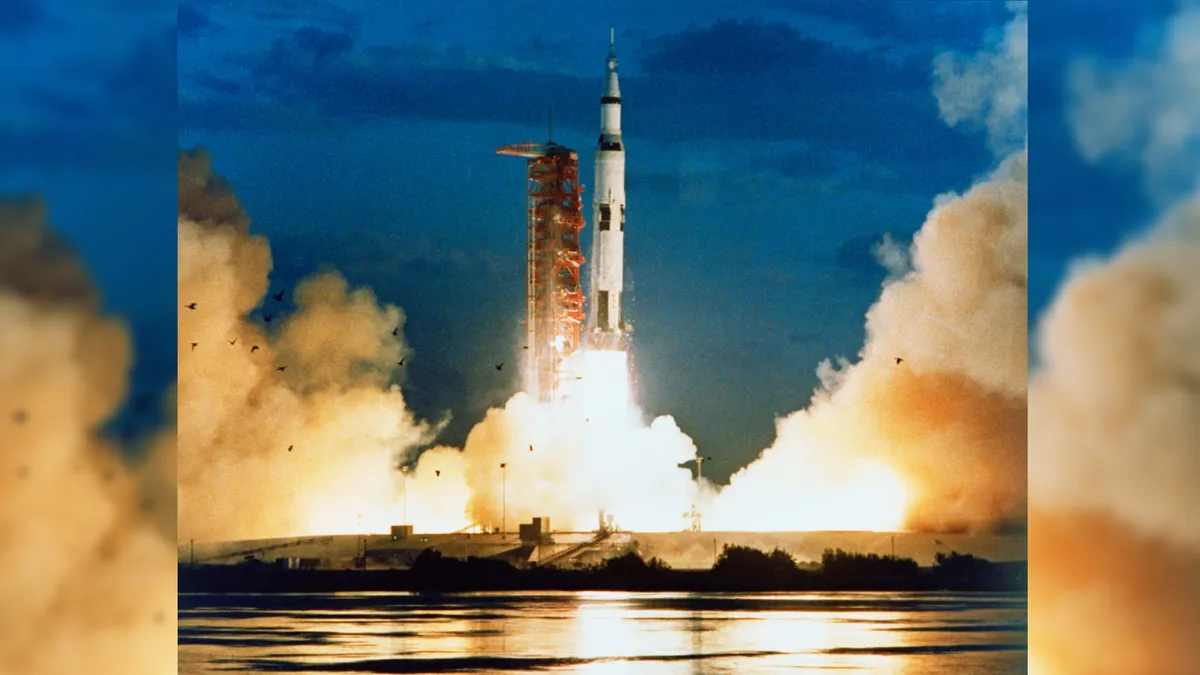
Luna 17 and Lunokhod 1: Launch of the First Robotic Planetary Rover – November 10, 1970

Gemini 12: Final Gemini Flight Validates Human Spacewalk Capability – November 11, 1966
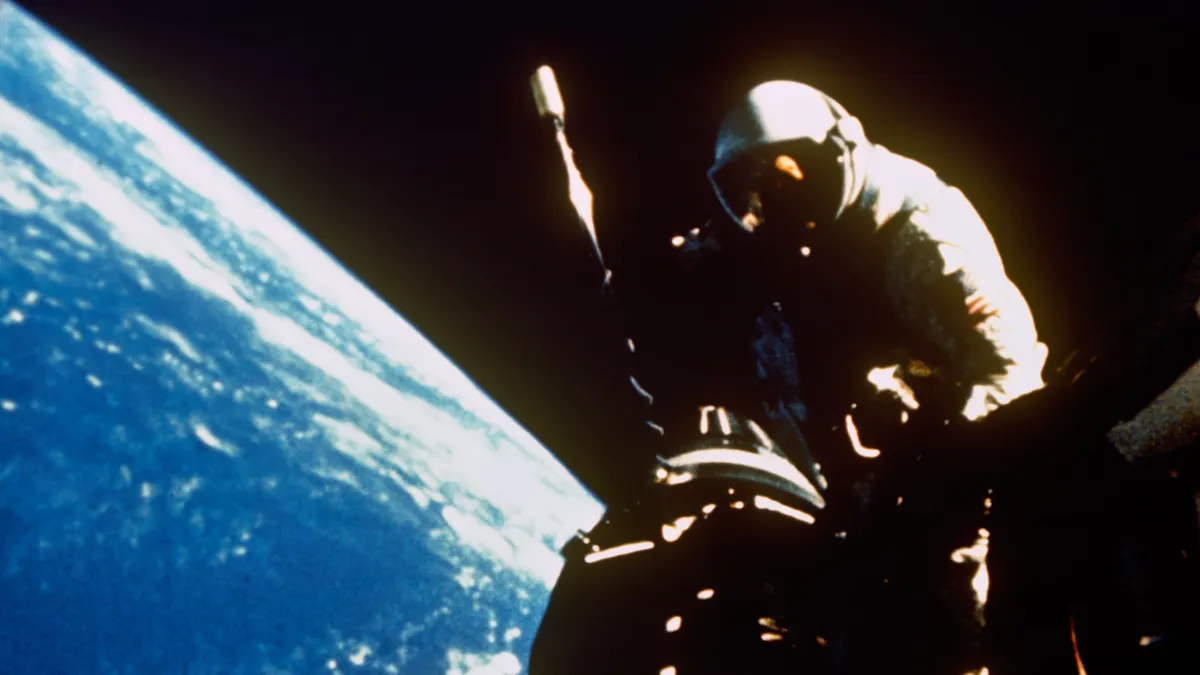
Voyager 1: Closest Encounter with Saturn and Titan – November 12, 1980

Mariner 9: First Spacecraft to Orbit Another Planet – November 13, 1971
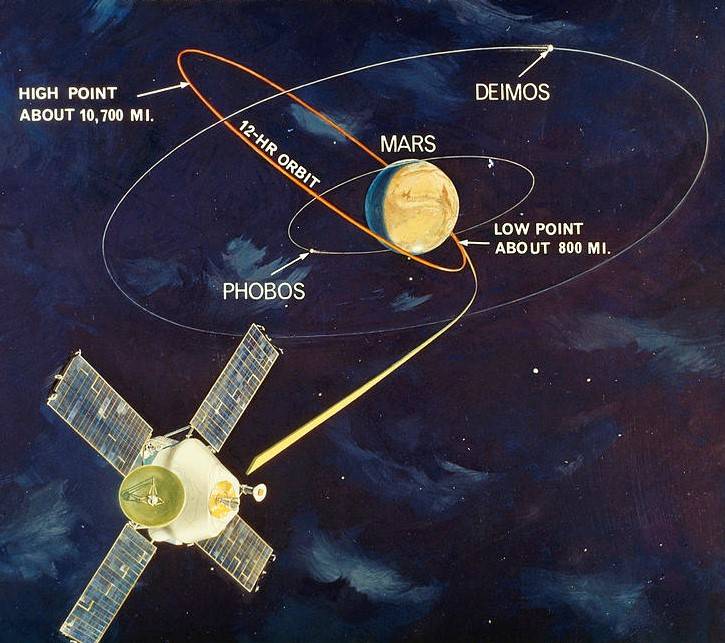
Apollo 12: Pinpoint Moon Landing Struck by Lightning at Launch – November 14, 1969

Miss Carolyn’s Constellation of the Week
Miss Carolyn’s Constellation of the Week
Aquarius, the Water Bearer.
Question of the Week
This Week’s Question: “What do you think happens if you fall into a black hole?”
“Next up are ‘Space Launches’ and ‘Space Station Passes for the Week’, which will be handled by
Tom KE5ICX.”
Space Launches For This Week
• USSF-317 · SpaceX (Upcoming)
• Date & Time: Tuesday, November 17, 2026 @ 7:14 p.m. PST (03:14 UTC Nov 18)
• Site: SLC-4E, Vandenberg Space Force Base, California
• Details: National security payload launched via Falcon 9.
• KOEN/Kinosputnik · Roscosmos (Upcoming)
• Date & Time: Thursday, November 19, 2026 (Time TBD)
• Site: Site 1S, Vostochny Cosmodrome, Russia
• Details: Commercial payload mission using a Soyuz-2 rocket.
• NROL-136 · SpaceX (Upcoming)
• Date & Time: Saturday, November 21, 2026 @ 4:30 a.m. PST (12:30 UTC)
• Site: SLC-4E, Vandenberg Space Force Base, California
• Details: Classified National Reconnaissance Office payload on a Falcon
Additional information is available at:
Space Flight Now https://spaceflightnow.com/launch-schedule/”
Visible Space Station passages over the next couple of days.
“You can use the http://www.heavens-above.com website to find out what’s in orbit and
where to look during fly-overs.”
All times are “local” (Dallas) time.
