
Saturday’s DARC SkyNet is at 9PM CT.
Discussion Topic of the Evening.
Halloween– October 31, 2026
Waz Up
Space Exploration and Space History
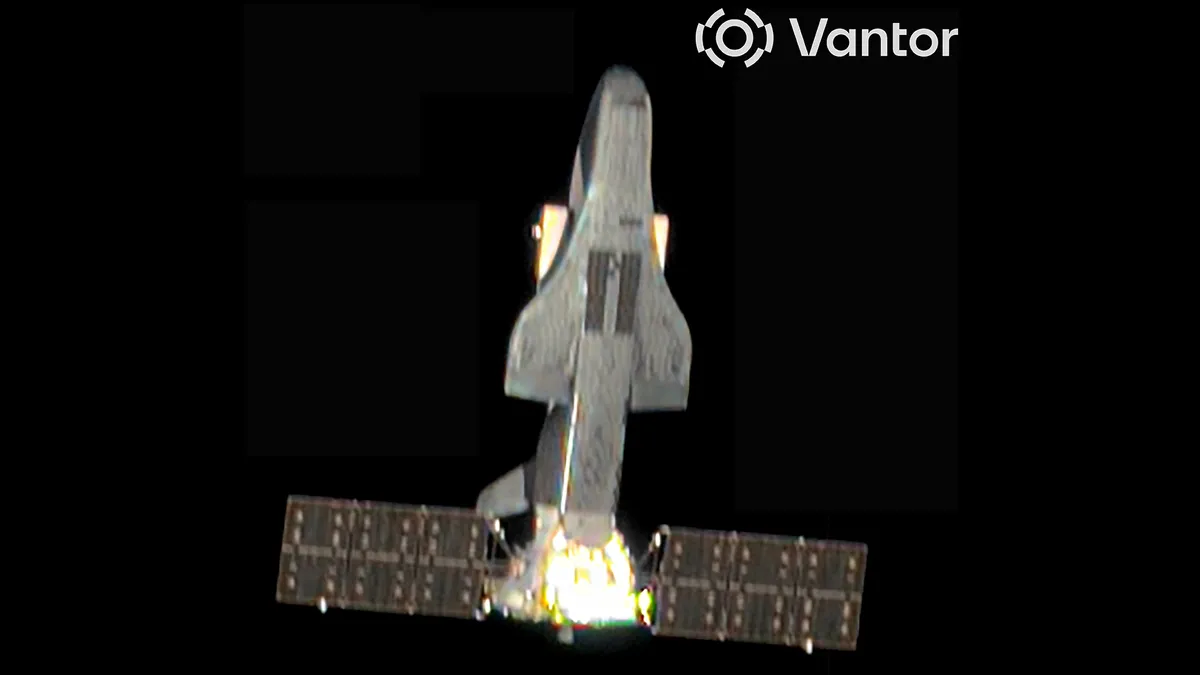
China’s Secretive Space Plane Photographed in Orbit Oct. 27, 2026
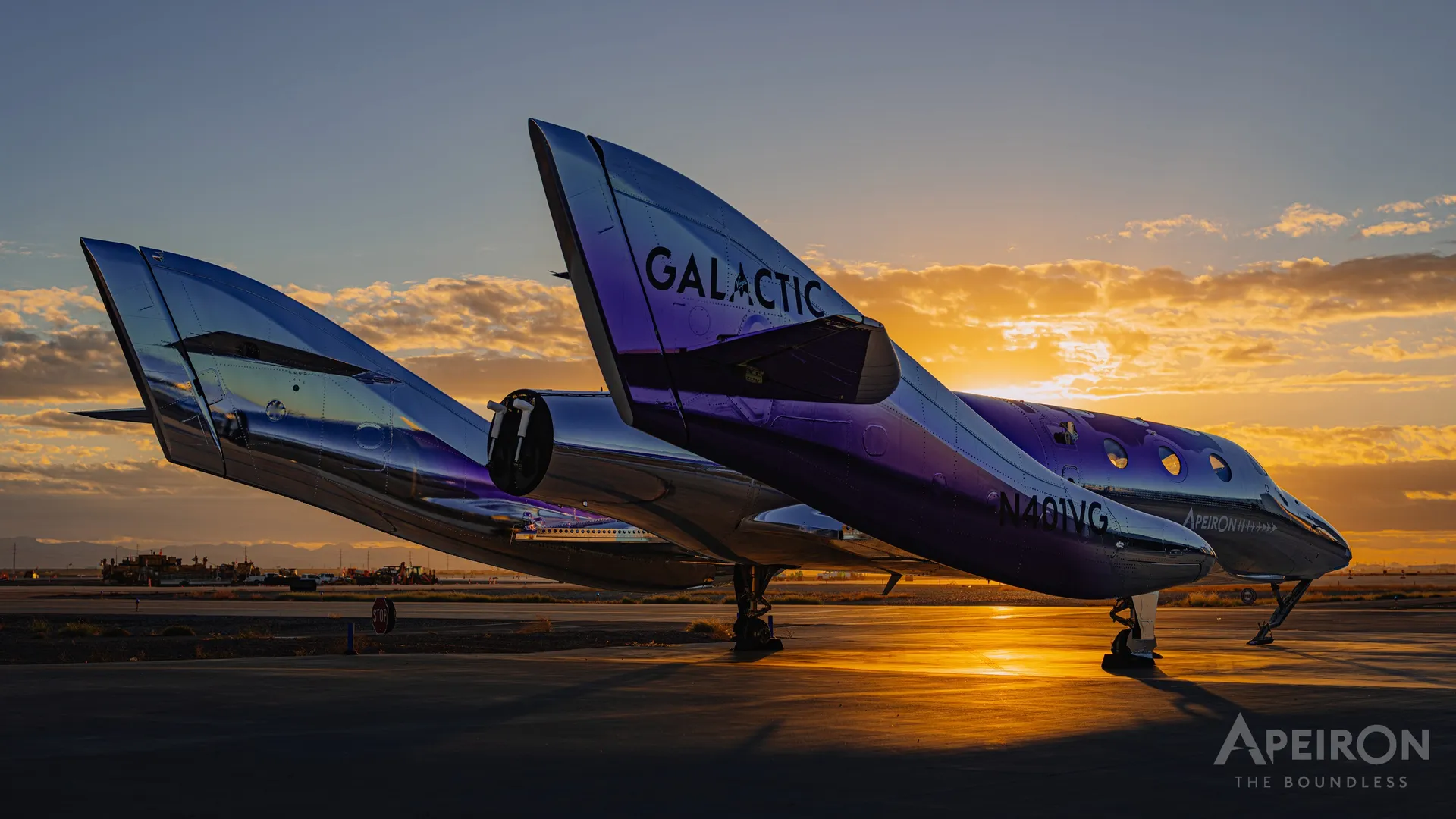
Virgin Galactic Unveils Its Next-Gen Space Plane Oct 29, 2026
Historic Canadian Spacewalk at the ISS Oct. 29, 2026

Space-Related Birthdays
| Astronaut Name | Birth Year | Birthdate | Callsign | Missions | Notes |
| Russell L. “Rusty” Schweickart (RUSS-ul SHWY-kert) | 1935 | October 25 | None | Apollo 9 | Flying as Lunar Module Pilot on Apollo 9, Schweickart performed the first crewed flight test of the Apollo Lunar Module in Earth orbit. During the mission, he conducted a historic 37-minute spacewalk from the lunar module porch to test the Apollo spacesuit portable life support system backpack. |
| Stephen K. Robinson (STEE-ven ROB-in-son) | 1955 | October 26 | K0SSG | STS-85, STS-95, STS-114, STS-130 | Robinson logged over 48 days in space across four Space Shuttle missions, including STS-95 with John Glenn and the STS-114 Return to Flight mission. During STS-114, he performed an unprecedented in-flight repair beneath the orbiter’s belly to remove protruding gap fillers from between the thermal protection tiles. |
| Zena M. Cardman (ZEE-nuh KARD-man) | 1987 | October 26 | KJ5CMN | NASA Astronaut Group 22 / Expedition 72/73 | Selected in NASA Astronaut Group 22, Cardman is a geobiologist who conducted scientific field research in extreme environments ranging from Antarctic ice sheets to deep-sea vents. She holds amateur radio callsign KJ5CMN and was assigned to command NASA’s SpaceX Crew-9 mission before flight manifest reconfigurations. |
| Gennadi M. Strekalov (ghen-NAH-dee streh-KAH-loff) | 1940 | October 28 | RV3DW | Soyuz T-3, Soyuz T-8, Soyuz T-10-1 (abort), Soyuz T-11, Soyuz TM-10, Soyuz TM-21 / STS-71 | Strekalov completed five orbital space missions to the Salyut and Mir space stations, spending 268 days in space with six spacewalks. An enthusiastic amateur radio operator holding callsign RV3DW, he famously survived a harrowing launch pad abort in 1983 when his rocket caught fire seconds before liftoff. |
| Valeri I. Tokarev (vah-LAIR-ee TOH-kah-reff) | 1952 | October 29 | None (ARISS Operator) | STS-96, Soyuz TMA-7 | A decorated Russian test pilot and cosmonaut, Tokarev flew aboard Space Shuttle Discovery on STS-96, the first shuttle docking with the International Space Station. He later served as flight engineer for Expedition 12, logging 189 days in orbit and helping deploy the experimental SuitSat-1 amateur radio satellite during an EVA. |
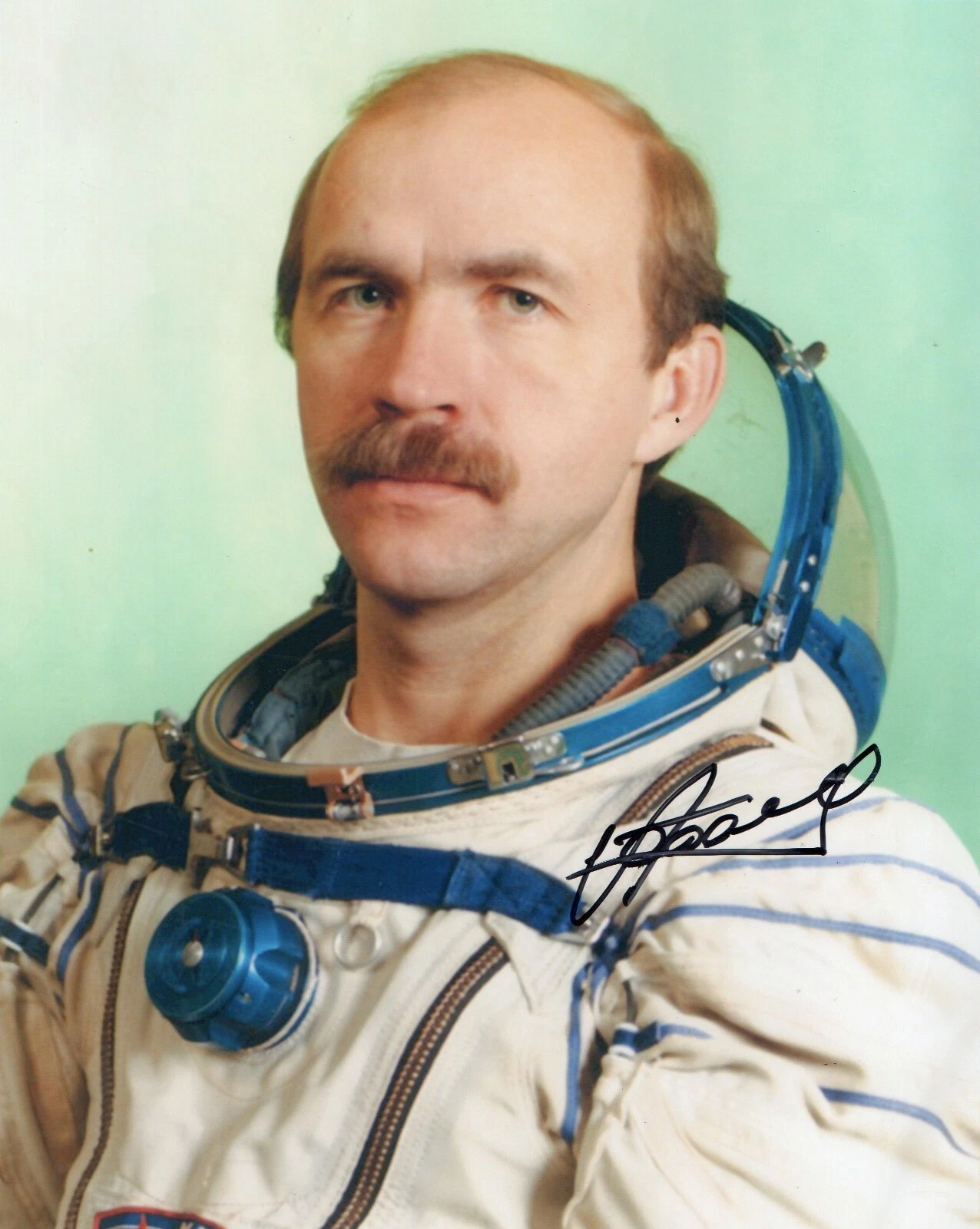
| Aleksandr F. Poleshchuk (al-ek-SAN-der poh-lesh-CHOOK) | 1953 | October 30 | RV3DP | Soyuz TM-16 | Poleshchuk served as flight engineer aboard the Mir space station for 179 days during the 1993 Soyuz TM-16 mission. A licensed radio amateur holding callsign RV3DP, he logged nearly 10 hours across two spacewalks to test advanced androgynous docking mechanisms. |
| Aleksandr I. Lazutkin (al-ek-SAN-der lah-ZOOT-keen) | 1957 | October 30 | None (ARISS Operator) | Soyuz TM-25 | Lazutkin spent 184 days in orbit as flight engineer aboard the Mir space station in 1997 during one of the most perilous missions in human spaceflight history. He successfully managed critical emergencies including an onboard oxygen candle fire and the dramatic hull puncture collision with an uncrewed Progress cargo ship. |
| Ronald J. Garan Jr. (RON-uld GAIR-un) | 1961 | October 30 | KF5GPO | STS-124, Soyuz TMA-21 | Garan logged 178 days in orbit and performed four spacewalks, helping install Japan’s Kibo laboratory module on the ISS during STS-124. A licensed radio amateur holding callsign KF5GPO, he actively communicated with students worldwide via ARISS and later founded the Fragile Oasis initiative. |
| Sandra H. Magnus (SAN-druh MAG-nuss) | 1964 | October 30 | KE5FYE | STS-112, STS-126/119, STS-135 | An aerospace materials engineer and NASA astronaut, Magnus logged over 157 days in orbit across three spaceflights, including a four-month expedition on the ISS. Holding amateur radio callsign KE5FYE, she flew on the historic STS-135 mission aboard Atlantis, the final flight of the Space Shuttle program. |
| Michael Collins (MY-kul KAH-linz) | 1930 | October 31 | None | Gemini 10, Apollo 11 | Collins flew on Gemini 10, where he performed two spacewalks, and later served as the Command Module Pilot for the historic Apollo 11 lunar landing mission in 1969. While orbiting the Moon alone aboard Columbia, he maintained vital mission communications and later served as the first director of the National Air and Space Museum. |
| Terrence W. Wilcutt (TAIR-unss WILL-kutt) | 1949 | October 31 | None | STS-68, STS-79, STS-89, STS-106 | A retired U.S. Marine Corps Colonel and naval aviator, Wilcutt logged over 1,000 hours in space across four Space Shuttle missions. He commanded both STS-89 to Mir and STS-106 to the International Space Station, later serving as NASA’s Chief of Safety and Mission Assurance. |




This Week in Space History
Kosmos 186 and Kosmos 188: World’s First Automated Space Docking – October 30, 1967

Luna 3: First Transmitted Photographs of the Moon’s Far Side – October 26, 1959

Venera 10: Landing and Panoramic Surface Imaging on Venus – October 25, 1975

Expedition 1 (Soyuz TM-31): Beginning of Continuous Human Space Presence – October 31, 2000

STS-95: John Glenn’s Return to Orbit as the Oldest Person in Space – October 29, 1998

Miss Carolyn’s Constellation of the Week
Constellations “Piscis Austrinus the Southern Fish” and “Grus the Crane”
Space Launches For This Week
Space Flight Now Launch Schedule
1. NVS-03
- Launch Date & Time: October 30, 2026, at 23:51 IST (18:21 UTC / 1:21 PM CDT)
- Launch Provider & Rocket: Indian Space Research Organisation (ISRO); GSLV-Mk.II (Flight GSLV-F18)
- Launch Site: Second Launch Pad (SLP), Satish Dhawan Space Centre, Sriharikota, India
- Target Orbit: Geosynchronous Transfer Orbit (GTO)
Expanded Mission Context: This flight aims to restore and fortify India’s indigenous NavIC regional navigation constellation. The network has faced systemic vulnerabilities from repeated failures of imported atomic clocks. To overcome these challenges, NVS-03 introduces an indigenously developed rubidium atomic clock alongside commercial backups. The 2,232 kg satellite utilizes an I-2K spacecraft bus built for a 12-year lifespan, broadcasting secure L1, L5, and S-band tracking signals designed to reach up to 1,500 km past Indian borders.
2. Starlink 15-18
- Launch Date & Time: October 30, 2026, at 8:48 PM PDT (Oct 31, 03:48 UTC)
- Launch Provider & Rocket: SpaceX; Falcon 9 Block 5
- Launch Site: Space Launch Complex 4 East (SLC-4E), Vandenberg Space Force Base, California
- Target Orbit: Low Earth Orbit (LEO)
Expanded Mission Context: A rapid-turnaround operational deployment adding 27 Starlink V2 Mini satellites to SpaceX’s low-latency broadband mesh. This flight utilizes a flight-proven first-stage booster executing a high-velocity entry burn before attempting a vertical recovery on an autonomous droneship stationed in the Pacific Ocean.
3. USSF-432 (Classified Military)
- Launch Date & Time: November 2, 2026, at 5:42 PM PST (Nov 3, 01:42 UTC)
- Launch Provider & Rocket: SpaceX; Falcon 9 Block 5
- Launch Site: Space Launch Complex 4 East (SLC-4E), Vandenberg Space Force Base, California
- Target Orbit: Low Earth Orbit (LEO) / Polar Orbit
Expanded Mission Context: A high-priority National Security Space Launch (NSSL) executed for the United States Space Force. Precise parameters regarding the satellite payload remain tightly classified. SpaceX confirms that the mission’s first-stage booster (B1095) is making its eighth operational flight, having previously supported the GPS III-8 mission. Stage separation occurs roughly 2.5 minutes into the flight, allowing the booster to return for a landing on the droneship ‘Of Course I Still Love You’.
4. The Sea God Surveys (iQPS Launch 9)
- Launch Date & Time: November 3, 2026 (Targeting roughly 3:25 AM EST / 08:25 UTC)
- Launch Provider & Rocket: Rocket Lab; Electron (Curie upper stage)
- Launch Site: Launch Complex 1, Māhia Peninsula, New Zealand
- Target Orbit: 575 km circular Sun-Synchronous Orbit (SSO)
Expanded Mission Context: This commercial mission marks Rocket Lab’s 10th launch booked by the Japanese Earth-observation enterprise iQPS (Institute for Q-shu Pioneers of Space). The Electron rocket will carry a single QPS-SAR-20 satellite to reinforce a radar imaging constellation. Utilizing high-resolution Synthetic Aperture Radar (SAR), these specialized spacecraft pierce through dense cloud cover and operate in complete darkness, capturing persistent on-demand ground imagery optimized for maritime navigation and environmental monitoring.
5. Starlink 15-21
- Launch Date & Time: November 5, 2026 (Time TBD)
- Launch Provider & Rocket: SpaceX; Falcon 9 Block 5
- Launch Site: Space Launch Complex 4 East (SLC-4E), Vandenberg Space Force Base, California
- Target Orbit: Low Earth Orbit (LEO)
Expanded Mission Context: A secondary West Coast Starlink deployment duplicating the October 30 flight blueprint. It will deliver another batch of 27 upgraded V2 Mini satellites to orbit, managing high-capacity bandwidth loads over the Pacific theater with subsequent booster recovery at sea.
6. Wenchang Mystery Flight
- Launch Date & Time: November 5, 2026 (Targeting NET)
- Launch Provider & Rocket: China Aerospace Science and Technology Corporation (CASC); Long March variant (TBD)
- Launch Site: Wenchang Satellite Launch Center, Hainan Island, China
- Target Orbit: Geosynchronous / Low Earth Orbit
Expanded Mission Context: Listed as an unannounced orbital window on global ranges. Wenchang is China’s premier coastal spaceport, typically reserved for heavy-lift Long March 5 or Long March 7 rockets transporting space station modules, deep-space probes, or massive high-throughput military communications platforms.
7. NROL-195 (Classified Espionage)
- Launch Date & Time: November 5, 2026 (Targeting NET)
- Launch Provider & Rocket: SpaceX; Falcon 9 Block 5
- Launch Site: Vandenberg Space Force Base, California
- Target Orbit: Sun-Synchronous / Polar Orbit
Expanded Mission Context: A dedicated national security mission under direct contract for the U.S. National Reconnaissance Office (NRO). The mission profile, hardware specs, and trajectory are classified, though its West Coast origin indicates a polar destination frequently used by radar or optical reconnaissance spy satellites.
9. Visible satellite passages over the next couple of days.
You can use the http://www.heavens-above.com website to find out what’s in orbit and
where to look during fly-overs
All times are “local” (Dallas) time.

