
IO Group: https://groups.io/g/DARCskynet/topics
Facebook Group: http://www.facebook.com/groups/306498286059167/
Saturday’s DARC SkyNet is at 9PM CT.
Discussion Topic of the Evening.
Bill N5BB
Waz Up
Space Exploration and Space History
Space Exploration News
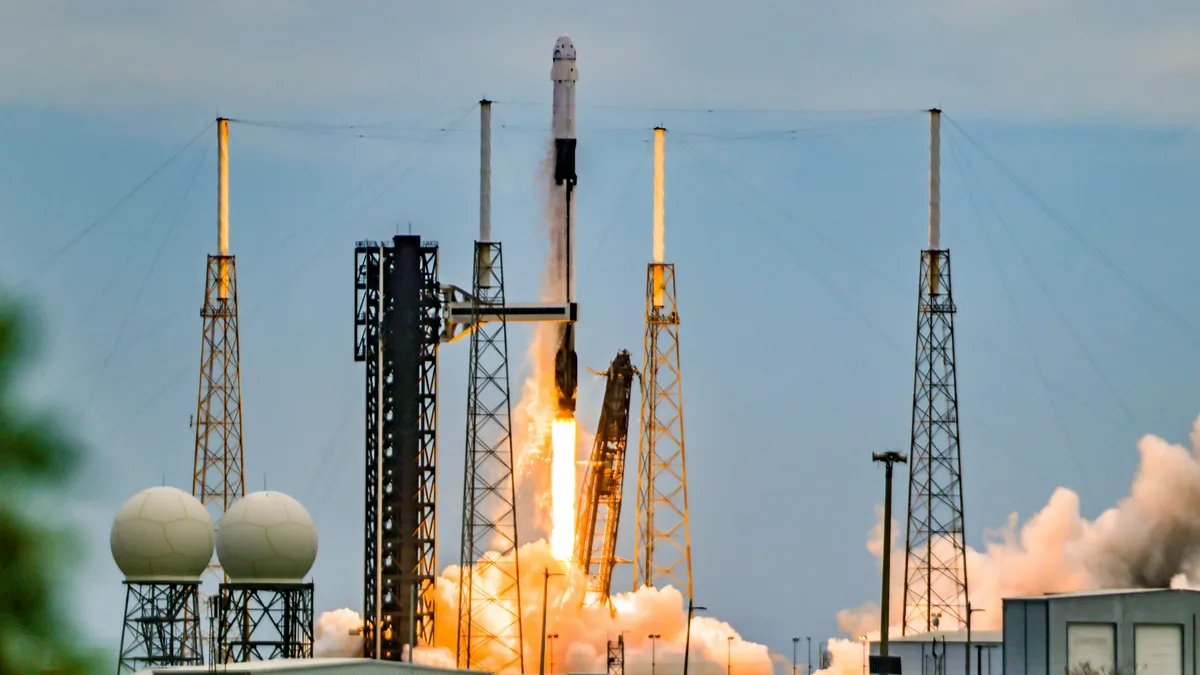
NASA and SpaceX Launch Crew-13 to the International Space Station Thursday, October 1, 2026
NASA Selects Astronaut Woody Hoburg to Command Boeing Starliner-2 Mission Monday, September 28, 2026
Space-Related Birthdays
| Astronaut | Birthday | Birth Year | FCC Callsign | Flights | Notes |
| Stephanie D. Wilson | September 27 | 1966 | KD5DZE | STS-121, STS-120, STS-131 | Logged over 42 days in space across three Shuttle missions and was the second African American woman in space. She operated the robotic arm for inspections and module installations. |
| Luca Parmitano | September 27 | 1976 | KF5KDP | Soyuz TMA-09M, Soyuz MS-13 | Italian ESA astronaut with 366 days in orbit and first Italian ISS Commander. He has completed six spacewalks totaling over 33 hours. |
| James D. Halsell Jr. | September 29 | 1956 | KC5RNI | STS-65, STS-74, STS-83, STS-94, STS-101 | Logged over 1,250 hours in space on five Shuttle missions, piloting and commanding flights including a Shuttle-Mir docking. He holds an FCC amateur radio license. |
| Bill Nelson | September 29 | 1942 | None | STS-61-C | Flew as a payload specialist on STS-61-C while serving in Congress, completing 12 experiments. He later became the 14th Administrator of NASA. |
| Stephen N. Frick | September 30 | 1964 | KB5UAC | STS-110, STS-122 | Logged over 565 hours in space piloting and commanding Shuttle missions that installed the S0 Truss and Columbus module. He has been a licensed radio amateur since age 11. |
| Michel Tognini | September 30 | 1949 | KD5EJZ | Soyuz TM-15, STS-93 | French ESA astronaut who spent 19 days in orbit across two missions to Mir and Shuttle. He helped deploy the Chandra X-ray Observatory. |
| Eric A. Boe | October 1 | 1964 | None | STS-126, STS-133 | Piloted two Shuttle missions totaling 28 days in space, including the final flight of Discovery. He later served in NASA’s Commercial Crew program. |
| Boris Morukov | October 1 | 1950 | None | STS-106 | Russian cosmonaut who flew on STS-106 to help outfit the early ISS. He later directed the 520-day Mars-500 simulation. |
| Yuri Glazkov | October 2 | 1939 | None | Soyuz 24 | Soviet cosmonaut who flew to Salyut 5 in 1977 for 18 days of military and technical operations. He performed an emergency partial atmosphere replacement on the station. |
| Robert H. Lawrence Jr. | October 2 | 1935 | None | USAF MOL | First African-American astronaut selected for the USAF Manned Orbiting Laboratory program. He died in a jet crash in 1967, leaving a lasting legacy. |
| Charles M. Duke Jr. | October 3 | 1935 | None | Apollo 16 | Flew as Lunar Module Pilot on Apollo 16, becoming the 10th person to walk on the Moon. He logged over 20 hours of lunar EVAs in the Descartes Highlands. |
| Kathryn D. Sullivan | October 3 | 1951 | N6GGM | STS-41-G, STS-31, STS-45 | First American woman to perform a spacewalk and participant in deploying Hubble. She also became the first person to both walk in space and dive to Challenger Deep. |
This Week in Space History
Launch of NASA’s Dawn Mission to the Asteroid Belt (September 27, 2007)
Launch of Space Shuttle Discovery on STS-26 (“Return to Flight”) (September 29, 1988)
ESA’s Rosetta Spacecraft Concludes Mission on Comet 67P (September 30, 2016)
NASA Officially Begins Operations (October 1, 1958)
Maiden Launch of Space Shuttle Atlantis (STS-51-J) (October 3, 1985)
NASA Powers Down Voyager 2’s Plasma Science Instrument to Extend Mission Life (October 2, 2026)
Miss Carolyn’s Constellation of the Week
8. Space Launches For This Week
Tom KE5ICX
Space Flight Now Launch Schedule
October 10 Falcon 9 • Starlink 15-25
Launch time: TBD
Launch site: SLC-4E, Vandenberg Space Force Base, California
A SpaceX Falcon 9 rocket will launch a batch of 27 Starlink V2 Mini optimized satellites into low Earth orbit. The first stage booster, tail number B1082, launching for a 25th time, will land on the droneship, Of Course I Still Love You, positioned in the Pacific Ocean. Delayed from Sept. 30.
Updated: September 22
NET October 19/20 H3 • Martian Moons eXploration (MMX)
Launch time: 4:41:03 JST on Oct. 20 (3:41:03 p.m. EDT / 1941:03 UTC on Oct. 19)
Launch site: Yoshinobu Launch Complex, JAXA Tanegashima Space Center
An H3 launch vehicle, a rocket developed through a partnership between Mitsubishi Heavy Industries and JAXA (Japan Aerospace Exploration Agency), will launch the Martian Moons eXplorer (MMX) mission to survey the Martian moons, Phobos and Deimos. This is set to be the first sample return mission from the Martian sphere of influence with the samples from Phobos expected to return to Earth in fiscal year 2031. The mission is supported by NASA, CNES, DLR, and ESA.
Updated: August 26
TBD Atlas 5 • Boeing Starliner-1
Launch time: TBD
Launch site: SLC-41, Cape Canaveral Space Force Station, Florida
A United Launch Alliance Atlas 5 rocket will launch Boeing’s CST-100 Starliner spacecraft to the International Space Station. Originally planned as the first post-certification flight with a four-person crew, this will instead be an uncrewed cargo flight to test changes to the vehicle made in the aftermath of the Crewed Flight Test that launched in 2024.
Updated: April 09
NET Q4 2026 Vulcan Centaur • Dream Chaser 1
Launch time: TBD
Launch site: SLC-41, Cape Canaveral Space Force Station, Florida
A United Launch Alliance Vulcan Centaur rocket will launch on its second demonstration flight with Sierra Space’s Dream Chaser cargo vehicle for the International Space Station. The Dream Chaser is a lifting body resupply spacecraft that will launch on top of a rocket and land on a runway. This will be the Dream Chaser’s first flight to space. The Vulcan Centaur rocket will fly in the VC4L configuration with four GEM-63XL solid rocket boosters, a long-length payload fairing, and two RL10 engines on the Centaur upper stage. Delayed from August 2022, December 2023, January 2024, April 2024 and September 2024. Delayed from 2025.
Updated: August 11
NET Q4 2026 Alpha • FLTA008
Launch time: TBD
Launch site: SLC-2, Vandenberg Space Force Base, California
A Firefly Aerospace Alpha rocket will launch on mission for a yet unannounced customer. This will be the debut of the Block 2 iteration of the rocket, which features larger liquid oxygen tanks on both the first and second stages, increasing the overall length of the rocket by two meters. Delayed from Summer 2026.
Updated: September 20
NET July 5, 2028 Falcon Heavy • Dragonfly
Launch time: TBD
Launch site: Launch Complex 39A, Kennedy Space Center, Florida
A SpaceX Falcon Heavy rocket will launch NASA’s Dragonfly mission, which consists of a rotorcraft designed by the Johns Hopkins Applied Physics Laboratory (APL) that will explore Saturn’s icy moon, Titan. The mission was originally selected in 2019 and went through multiple plan iterations across fiscal years 2020 through 2022. It passed its Preliminary Design Review in March 2023 and then its Critical Design Review in April 2025. The mission has a total lifecycle cost of $3.35 billion, of which, $256.6 million was awarded to SpaceX to provide launch services and other mission related costs. The 20-day launch window opens on July 5, 2028.
Updated: April 25
We currently have the following people checked in via w5fc.org… You can check-in via the club website by clicking on the hotlink provided.
(Read check ins so far)
I’ll now take check-ins or comments
At this point we should be reaching our 90 minute cut-off point, so NCS can decide whether to cut any of these topics due to lack of time.
9. Visible satellite passages over the next couple of days.
You can use the http://www.heavens-above.com website to find out what’s in orbit and
where to look during fly-overs
Tom can cover this one as well, otherwise follow the instructions below…
Net Control Note: Look for the highest magnitude and read those with highest point info. As an example: May 20th is the next, good pass.
All times are “local” (Dallas) time.
ISS – NO PASSES