
Saturday’s DARC SkyNet is at 9PM CT.
Discussion Topic of the Evening.
“NASA’s SunRISE Mission”

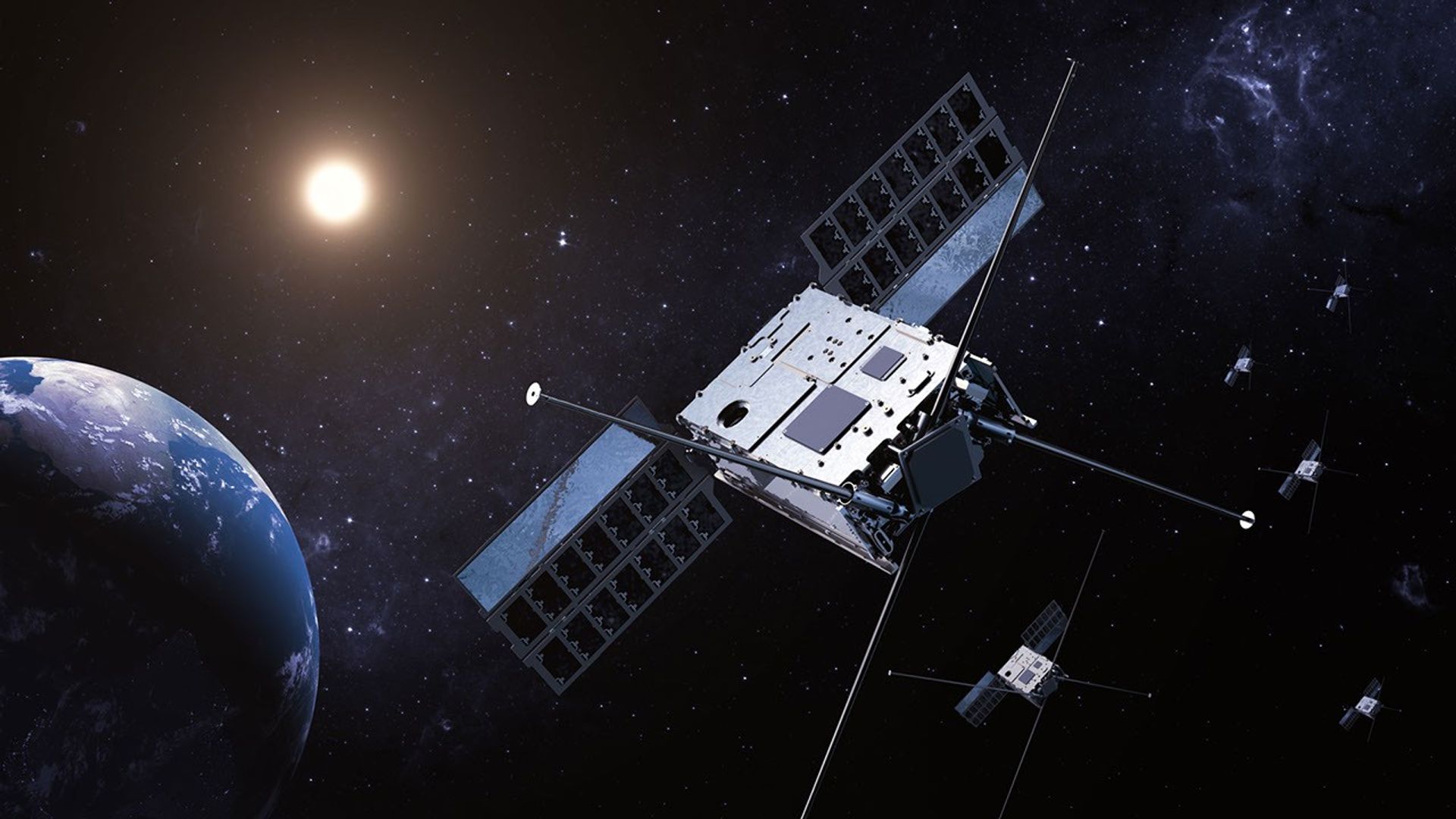

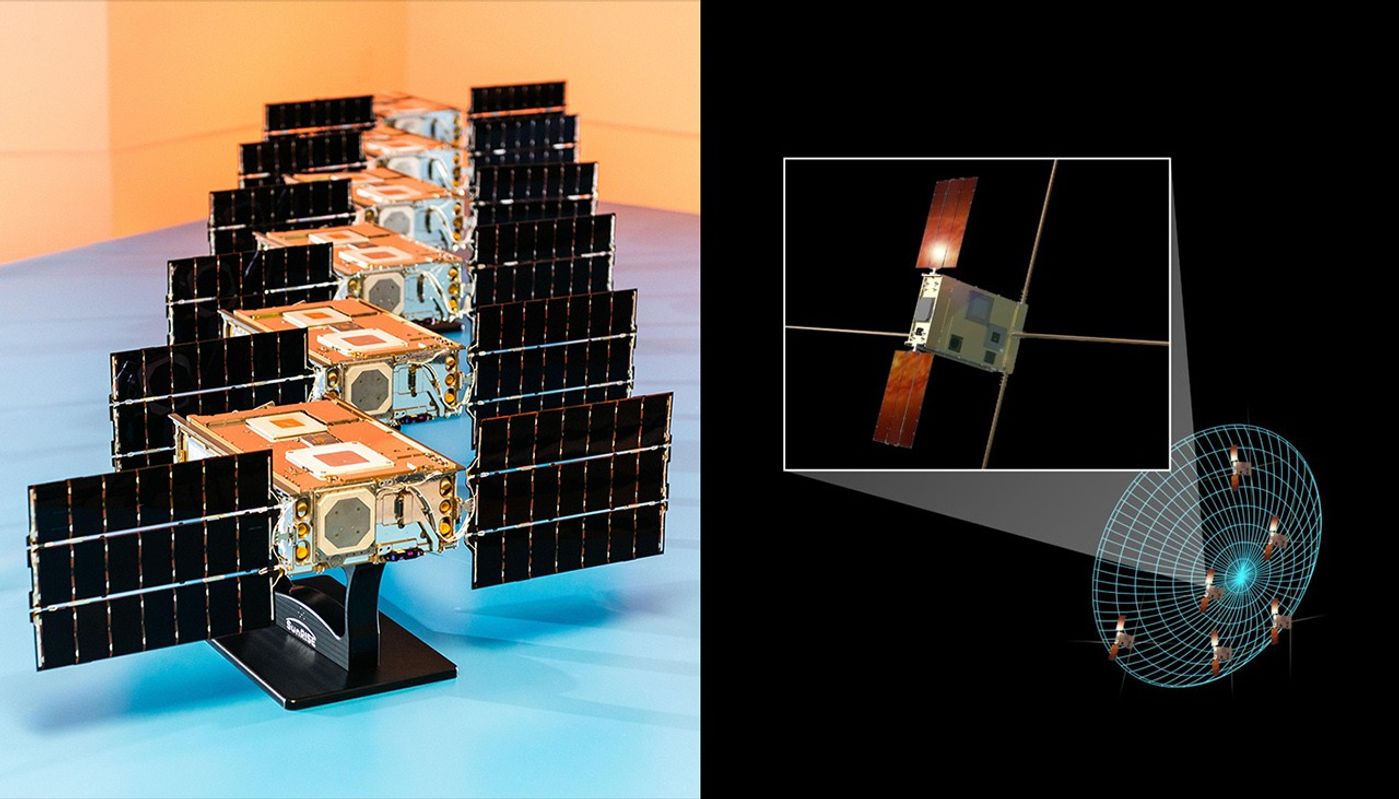
Waz Up
Space Exploration and Space History
Space Exploration News
Soyuz MS-25 Lands in Kazakhstan: Kononenko Sets All-Time 1,111-Day Space Endurance Record — September 23, 2026

China Launches Jielong-3 Commercial Rocket from Offshore Sea Platform — September 24, 2026
NASA and SpaceX Complete Crew-9 Flight Readiness Review for Historic SLC-40 Liftoff — September 24–25, 2026
JWST Discovers Carbon Dioxide and Hydrogen Peroxide on Pluto’s Moon Charon — September 21, 2026
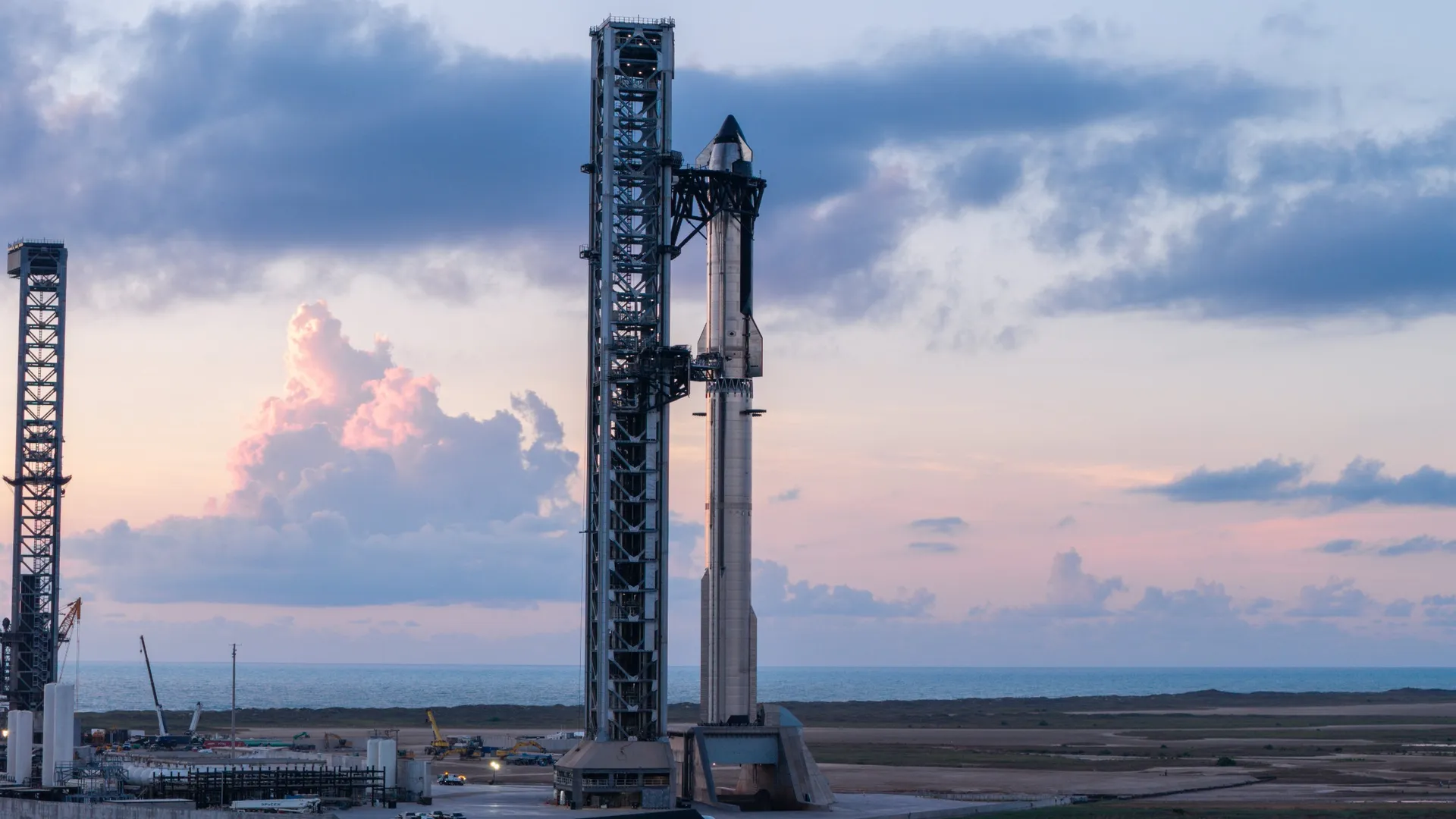
SpaceX Concludes Final Wet Dress Rehearsal at Starbase Ahead of Starship Flight 14 — September 25, 2026
SpaceX Concludes Final Wet Dress Rehearsal at Starbase Ahead of Starship Flight 14 — September 25, 2026
Space-Related Birthdays
| Astronaut | Birthday | Birth Year | FCC Callsign | Flights | Notes |
| James A. Pawelczyk | September 20 | 1960 | None | STS-90 | An American physiologist and researcher at Penn State University, Pawelczyk flew as a payload specialist aboard Space Shuttle Columbia during the STS-90 Neurolab mission in 1998. |
| Richard J. Hieb | September 21 | 1955 | KC5ZSX | STS-39, STS-49, STS-65 | NASA astronaut and licensed amateur radio operator (KC5ZSX) who logged over 770 hours in space across three shuttle flights. |
| Bjarni Tryggvason | September 21 | 1945 | None | STS-85 | An Icelandic-born Canadian engineer and Canadian Space Agency payload specialist, Tryggvason flew aboard Space Shuttle Discovery on the 12-day STS-85 mission in 1997. |
| Robert L. Satcher Jr. | September 22 | 1965 | None | STS-129 | An orthopedic oncology surgeon, chemical engineer, and NASA astronaut who flew as a mission specialist aboard Space Shuttle Atlantis on STS-129 in November 2009. |
| Loren J. Shriver | September 23 | 1944 | None | STS-51-C, STS-31, STS-46 | A veteran NASA astronaut and retired U.S. Air Force Colonel who logged 386 hours in space across three missions. |
| William C. “Willie” McCool | September 23 | 1961 | None | STS-107 | A U.S. Navy Commander, aeronautical engineer, and NASA astronaut who served as the pilot of Space Shuttle Columbia on the dedicated multidisciplinary science mission STS-107 in January–February 2003. |
| Alexander Misurkin | September 23 | 1977 | None | Soyuz TMA-08M (Expedition 35/36), Soyuz MS-06 (Expedition 53/54), Soyuz MS-20 | A veteran Russian cosmonaut who logged 346 days in space across three spaceflights and completed four spacewalks totaling 28 hours and 13 minutes. |
| John W. Young | September 24 | 1930 | None | Gemini 3, Gemini 10, Apollo 10, Apollo 16, STS-1, STS-9 | One of the most accomplished astronauts in human spaceflight history, Young was the first person to fly in space six times and the ninth person to walk on the Moon. |
| Nick Hague | September 24 | 1975 | KG5TMV | Soyuz MS-10 (aborted), Soyuz MS-12 (Expedition 59/60), SpaceX Crew-9 (Expedition 72) | NASA astronaut and U.S. Space Force Brigadier General who survived the high-altitude ballistic abort of Soyuz MS-10 in 2018. |
| Vladimír Remek | September 26 | 1948 | None | Soyuz 28 | Flying aboard the Soviet Soyuz 28 mission to the Salyut 6 space station in March 1978 under the Intercosmos program, Remek made history as the first Czechoslovak cosmonaut. |
| Clifton C. “C.C.” Williams Jr. | September 26 | 1932 | None | Selected NASA Group 3 (backup Gemini 10) | A U.S. Marine Corps naval aviator, test pilot, and NASA astronaut selected in Group 3 in 1963. |
This Week in Space History
Soviet Luna 16 Lands on the Moon (First Robotic Lunar Sample Return) — September 20, 1970
NASA’s Galileo Spacecraft Concludes Historic Mission with Plunge into Jupiter — September 21, 2003
Deep Space 1 Completes Precision Flyby of Comet 19P/Borrelly — September 22, 2001

Discovery of Planet Neptune by Johann Gottfried Galle — September 23, 1846
ISRO’s Mangalyaan (Mars Orbiter Mission) Enters Martian Orbit — September 24, 2014
Launch of China’s Shenzhou 7 Mission (First Chinese Spacewalk) — September 25, 2008
NASA’s DART Spacecraft Impacts Asteroid Dimorphos in First Planetary Defense Test — September 26, 2022
Miss Carolyn’s Constellation of the Week
Space Launches For This Week
Space Flight Now Launch Schedule
NET September 28 Starship • Flight 14
Launch time: Window opens at 7:15 a.m. CDT (8:15 a.m. EDT / 1215 UTC)
Launch site: Pad 2, Starbase, Texas
SpaceX’s SpaceX Starship-Super Heavy rocket (collectively referred to as Starship) will from Starbase, Texas, on a what is planned to be the first orbital test flight since the integrated rocket began launching in April 2023. SpaceX will launch the mission using the Ship 41 upper stage and Booster 21 as the first stage. SpaceX plans to deploy 26 Starlink Version 3 satellites from S41, marking the first orbital deployment of this iteration of the satellites. Delayed from Sept. 15, 18, and 22.
Updated: September 17
NET October 1 Falcon 9 • NASA’s SpaceX Crew-13
Launch time: 11:10 a.m. EDT (1510 UTC)
Launch site: SLC-40, Cape Canaveral Space Force Station, Florida
A SpaceX Falcon 9 rocket will launch the Crew Dragon spacecraft, tail number C-213 and named Grace, on its second flight to the International Space Station. The first stage booster, tail number B1101, launching for a third time, will return to Landing Zone 40, adjacent to the launch pad. The Crew-13 mission is led by NASA astronaut Jessica Watkins, who is making her second trip to space and will become the first, active NASA astronaut to fly twice onboard a Dragon spacecraft. She’s joined by three, first-time fliers: NASA astronaut and pilot Luke Delaney; Canadian Space Agency (CSA) astronaut and mission specialist Joshua Kutryk; and Roscosmos cosmonaut and mission specialist Sergey Teteryatnikov. The four will spend about six months on the ISS as part of Expedition 75/76. Delayed from Sept. 12 due to an oxidizer leak in the Dragon propulsion system. Delayed from September.
Updated: September 20
October 1/2 Falcon Heavy • NROL-97
Launch time: 11:53 p.m. EDT (0353 UTC)
Launch site: Launch Complex 39A, Kennedy Space Center, Florida
A SpaceX Falcon Heavy rocket will launch a classified payload for the National Reconnaissance Office (NRO). This will be the first NRO payload to fly on a Falcon Heavy rocket following 22 missions using the Falcon 9. This mission is also the first NRO payload to fly that was procured through the National Security Space Launch (NSSL) Phase 3 Lane 2 contract. The two side boosters, tail numbers B1072 and B1104, launching for a fourth and second time respectively, will target landings at Landing Zones 1 and 2 (LZ-1 and LZ-2) at Cape Canaveral Space Force Station. This will be the first LZ-1 landing since it was used by B1094 in support of NASA’s SpaceX Crew-11 mission in August 2025.
Updated: September 24
October 10 Falcon 9 • Starlink 15-25
Launch time: TBD
Launch site: SLC-4E, Vandenberg Space Force Base, California
A SpaceX Falcon 9 rocket will launch a batch of 27 Starlink V2 Mini optimized satellites into low Earth orbit. The first stage booster, tail number B1082, launching for a 25th time, will land on the droneship, Of Course I Still Love You, positioned in the Pacific Ocean. Delayed from Sept. 30.
Updated: September 22
NET October 19/20 H3 • Martian Moons eXploration (MMX)
Launch time: 4:41:03 JST on Oct. 20 (3:41:03 p.m. EDT / 1941:03 UTC on Oct. 19)
Launch site: Yoshinobu Launch Complex, JAXA Tanegashima Space Center
An H3 launch vehicle, a rocket developed through a partnership between Mitsubishi Heavy Industries and JAXA (Japan Aerospace Exploration Agency), will launch the Martian Moons eXplorer (MMX) mission to survey the Martian moons, Phobos and Deimos. This is set to be the first sample return mission from the Martian sphere of influence with the samples from Phobos expected to return to Earth in fiscal year 2031. The mission is supported by NASA, CNES, DLR, and ESA.
Updated: August 26
TBD Atlas 5 • Boeing Starliner-1
Launch time: TBD
Launch site: SLC-41, Cape Canaveral Space Force Station, Florida
A United Launch Alliance Atlas 5 rocket will launch Boeing’s CST-100 Starliner spacecraft to the International Space Station. Originally planned as the first post-certification flight with a four-person crew, this will instead be an uncrewed cargo flight to test changes to the vehicle made in the aftermath of the Crewed Flight Test that launched in 2024.
Updated: April 09
NET Q4 2026 Vulcan Centaur • Dream Chaser 1
Launch time: TBD
Launch site: SLC-41, Cape Canaveral Space Force Station, Florida
A United Launch Alliance Vulcan Centaur rocket will launch on its second demonstration flight with Sierra Space’s Dream Chaser cargo vehicle for the International Space Station. The Dream Chaser is a lifting body resupply spacecraft that will launch on top of a rocket and land on a runway. This will be the Dream Chaser’s first flight to space. The Vulcan Centaur rocket will fly in the VC4L configuration with four GEM-63XL solid rocket boosters, a long-length payload fairing, and two RL10 engines on the Centaur upper stage. Delayed from August 2022, December 2023, January 2024, April 2024 and September 2024. Delayed from 2025.
Updated: August 11
NET Q4 2026 Alpha • FLTA008
Launch time: TBD
Launch site: SLC-2, Vandenberg Space Force Base, California
A Firefly Aerospace Alpha rocket will launch on mission for a yet unannounced customer. This will be the debut of the Block 2 iteration of the rocket, which features larger liquid oxygen tanks on both the first and second stages, increasing the overall length of the rocket by two meters. Delayed from Summer 2026.
Updated: September 20
NET July 5, 2028 Falcon Heavy • Dragonfly
Launch time: TBD
Launch site: Launch Complex 39A, Kennedy Space Center, Florida
A SpaceX Falcon Heavy rocket will launch NASA’s Dragonfly mission, which consists of a rotorcraft designed by the Johns Hopkins Applied Physics Laboratory (APL) that will explore Saturn’s icy moon, Titan. The mission was originally selected in 2019 and went through multiple plan iterations across fiscal years 2020 through 2022. It passed its Preliminary Design Review in March 2023 and then its Critical Design Review in April 2025. The mission has a total lifecycle cost of $3.35 billion, of which, $256.6 million was awarded to SpaceX to provide launch services and other mission related costs. The 20-day launch window opens on July 5, 2028.
Visible satellite passages over the next couple of days.
You can use the http://www.heavens-above.com website to find out what’s in orbit and
where to look during fly-overs

