
IO Group: https://groups.io/g/DARCskynet/topics
Facebook Group: http://www.facebook.com/groups/306498286059167/
Saturday’s DARC SkyNet is at 9PM CT.
Discussion Topic of the Evening.
“Space Odysseys and Hail Marys”
Virginia (NV5F)
Waz Up
Space Exploration and Space History
Space Exploration News
Commercial Launch Involves Microgravity Manufacturing Test (July 4, 2026)
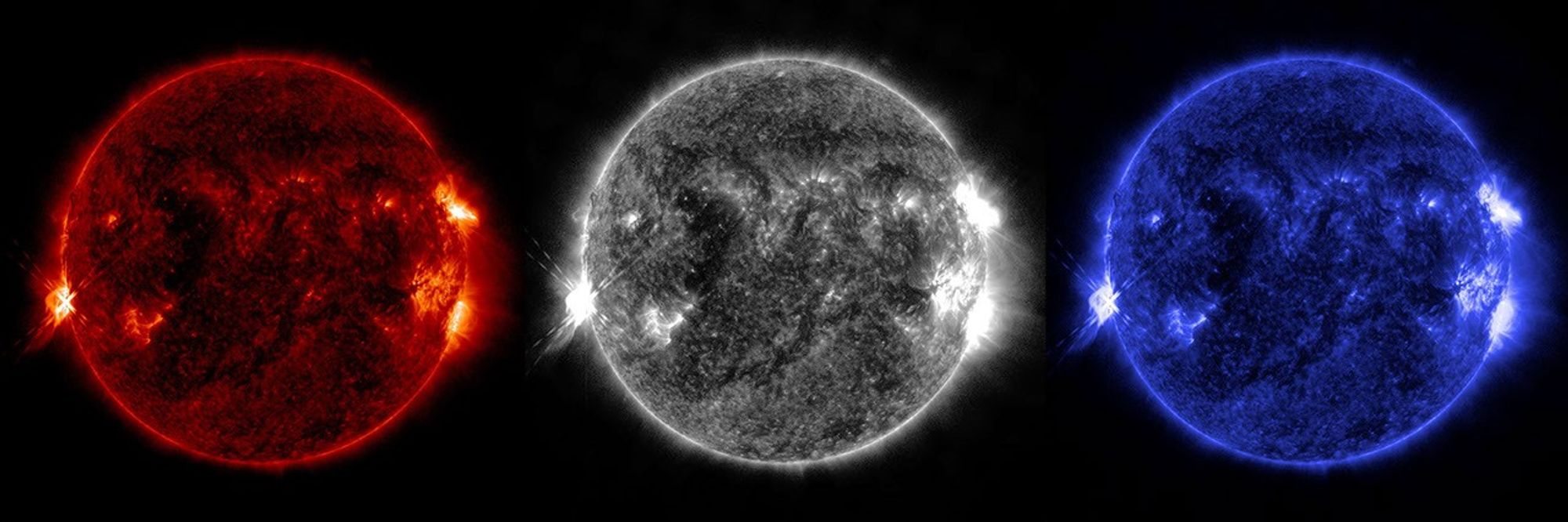
Major Solar Flare Impacts Space Weather (July 4, 2026)
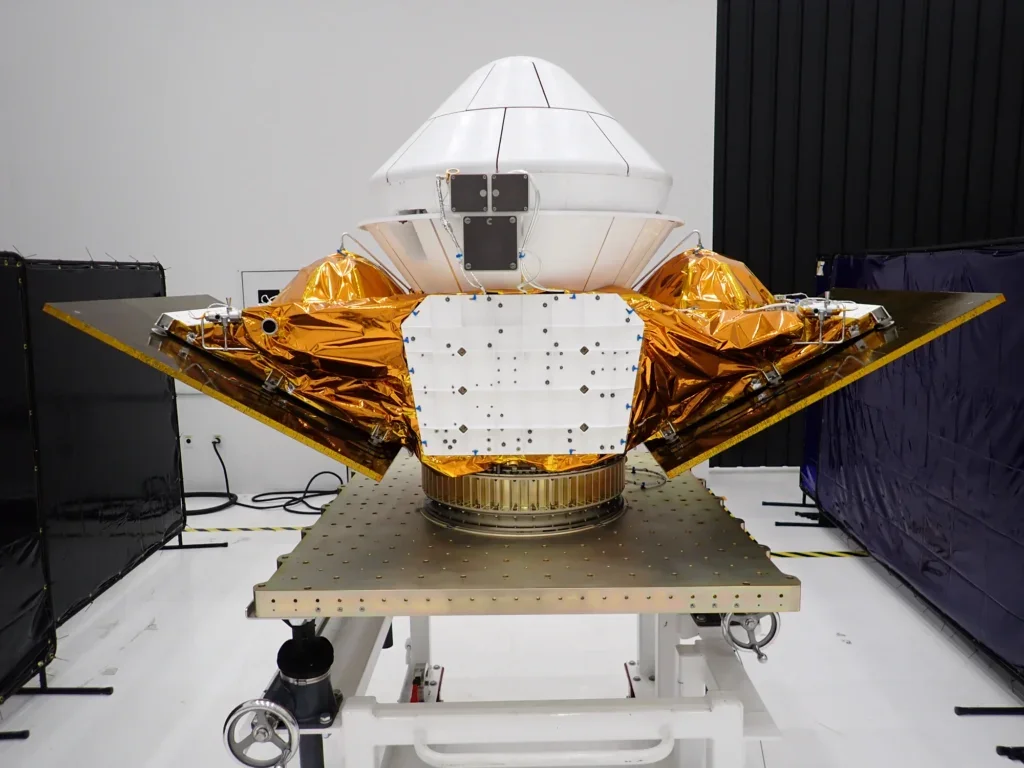
Servicing Spacecraft Begins Life-Extension Mission (July 4, 2026)

China Achieves Milestone in Rocket Reusability (July 10, 2026)
)
Space-Related Birthday
| Astronaut | Birthday | Birth Year | FCC Callsign | Flights | Notes |
| Terence T. Henricks | July 5 | 1952 | None | STS-44, STS-55, STS-70, STS-78 | He piloted STS-44 and STS-55, and commanded STS-70 and STS-78, conducting key military operations and microgravity science. Across these four shuttle missions, he became the first person to fly a shuttle mission with a crew containing two physicians and logged over 42 days in space. |
| Sophie Adenot | July 5 | 1982 | KJ5LTN | None | She was selected as a member of the European Space Agency astronaut class of 2022. She is currently training and preparing for her upcoming mission to the International Space Station. |
| Robert Michael White | July 6 | 1924 | None | X-15 Flight 62 | He was an American test pilot who flew the experimental North American X-15 rocket plane to an altitude of 314,750 feet (59.6 miles) in July 1962. This achievement qualified him for astronaut wings under the military definition of the boundary of space. |
| Kevin A. Ford | July 7 | 1960 | KF5GPS | STS-128, Soyuz TMA-06M (Expedition 33/34) | He piloted the STS-128 mission to deliver key science and cargo to the International Space Station in 2009. He later returned to the station on Soyuz TMA-06M, serving as the Commander of Expedition 34. |
| Vitali Sevastyanov | July 8 | 1935 | None | Soyuz 9, Soyuz 18 | He flew on the historic Soyuz 9 mission in 1970, which set a new crewed spaceflight endurance record of nearly 18 days. He later flew on Soyuz 18, spending over 62 days aboard the Salyut 4 space station. |
| John Casper | July 9 | 1943 | None | STS-36, STS-54, STS-62, STS-77 | He piloted the STS-36 mission in 1990 to deploy a classified Department of Defense satellite. He subsequently commanded STS-54, STS-62, and STS-77, conducting various microgravity science experiments and deploying satellite payloads. |
| Christopher J. “Gus” Loria | July 9 | 1960 | None | None | He was selected as a NASA astronaut candidate in 1996 and was assigned to pilot the STS-113 Space Shuttle mission. Unfortunately, he was medically grounded due to a severe back injury and never flew in space. |
| Pyotr Klimuk | July 10 | 1942 | None | Soyuz 13, Soyuz 18, Soyuz 30 | He commanded the Soyuz 13 mission in 1973, which utilized the Orion 2 Space Observatory to conduct astrophysical observations. He later commanded Soyuz 18 to Salyut 4 and Soyuz 30 to Salyut 6, logging more than 78 days in space. |
| Lawrence J. DeLucas | July 11 | 1950 | None | STS-50 | He served as a payload specialist on the STS-50 mission in 1992, which carried the United States Microgravity Laboratory. During this flight, he conducted numerous experiments in materials science, fluid physics, and biotechnology. |
This Week in Space History
Apollo AS-203 Launch (July 5, 1966)
Soyuz 21 Launch (July 6, 1976)
Opportunity (MER-B) Launch (July 7, 2003)
Space Shuttle Atlantis (STS-135) Launch (July 8, 2011)
Voyager 2 Closest Approach to Jupiter (July 9, 1979)
Telstar 1 Launch (July 10, 1962)
Reentry of Skylab (July 11, 1979)
Miss Carolyn’s Constellation of the Week
Constellation “Hercules the Strong Man”
Space Launches For This Week
Space Flight Now Launch Schedule
July 13 Falcon 9 • Starlink 15-14
Launch time: TBD
Launch site: SLC-4E, Vandenberg Space Force Base, California
A SpaceX Falcon 9 rocket will launch a batch of 24 Starlink V2 Mini Optimized satellites into low Earth orbit. More than eight minutes after liftoff, the first stage booster, tail number B1082, launching for a 23rd time, will land on the drone ship, ‘Of Course I Still Love You,’ positioned in the Pacific Ocean.
Updated: July 01
TBD Spectrum • ‘Onward and Upward’
Launch time: Window opens at 10 p.m. CEST (4 p.m. EDT / 2000 UTC)
Launch site: Launch Complex 1, Andøya Spaceport, Norway
A Spectrum rocket from Isar Aerospace will launch on its second test flight. The two-stage rocket is carrying five CubeSats onboard: CyBEEsat from TU Berlin, TriSat-S from the University of Maribor, Platform 6 from EnduroSat, FramSat-1 from NTNU, and SpaceTeamSat1 from TU Wien Space Team. The sixth and final announced payload is an experiment called “Let it Go” from Dcubed. Exolaunch is responsible for managing payload integration and deployment. Delayed from Jan. 21 due to a pressurization valve issue. Delayed from March 23 due to strong winds. Delayed from March 25 due to boat in the keep out zone. Delayed from April 9 and June 15.
Updated: June 26
Late summer Alpha • FLTA008
Launch time: TBD
Launch site: SLC-2, Vandenberg Space Force Base, California
A Firefly Aerospace Alpha rocket will launch on mission for a yet unannounced customer. This will be the debut of the Block 2 iteration of the rocket, which features larger liquid oxygen tanks on both the first and second stages, increasing the overall length of the rocket by two meters.
Updated: May 05
TBD Falcon 9 • Globalstar 2-R Launch 1
Launch time: TBD
Launch site: SLC-40, Cape Canaveral Space Force Station, Florida
A SpaceX Falcon 9 rocket will launch nine of its HIBLEO-4 satellites into low Earth orbit. This is the first of two launches that constitute a replenishment of its HIBLEO-4 fleet. Nearly 8.5 minutes after liftoff, the Falcon 9 first stage booster, tail number B1090, launching for a 12th time, will target a landing on the drone ship, ‘A Shortfall of Gravitas’, positioned in the Atlantic Ocean. Delayed from May 18. Delayed from May 20.
Updated: June 17
NET Q4 2026 Vulcan Centaur • Dream Chaser 1
Launch time: TBD
Launch site: SLC-41, Cape Canaveral Space Force Station, Florida
A United Launch Alliance Vulcan Centaur rocket will launch on its second demonstration flight with Sierra Space’s Dream Chaser cargo vehicle for the International Space Station. The Dream Chaser is a lifting body resupply spacecraft that will launch on top of a rocket and land on a runway. This will be the Dream Chaser’s first flight to space. The Vulcan Centaur rocket will fly in the VC4L configuration with four GEM-63XL solid rocket boosters, a long-length payload fairing, and two RL10 engines on the Centaur upper stage. Delayed from August 2022, December 2023, January 2024, April 2024 and September 2024. Delayed from 2025.
Updated: December 22
TBD Atlas 5 • Boeing Starliner-1
Launch time: TBD
Launch site: SLC-41, Cape Canaveral Space Force Station, Florida
A United Launch Alliance Atlas 5 rocket will launch Boeing’s CST-100 Starliner spacecraft to the International Space Station. Originally planned as the first post-certification flight with a four-person crew, this will instead be an uncrewed cargo flight to test changes to the vehicle made in the aftermath of the Crewed Flight Test that launched in 2024.
Updated: April 09
NET July 5, 2028 Falcon Heavy • Dragonfly
Launch time: TBD
Launch site: Launch Complex 39A, Kennedy Space Center, Florida
A SpaceX Falcon Heavy rocket will launch NASA’s Dragonfly mission, which consists of a rotorcraft designed by the Johns Hopkins Applied Physics Laboratory (APL) that will explore Saturn’s icy moon, Titan. The mission was originally selected in 2019 and went through multiple plan iterations across fiscal years 2020 through 2022. It passed its Preliminary Design Review in March 2023 and then its Critical Design Review in April 2025. The mission has a total lifecycle cost of $3.35 billion, of which, $256.6 million was awarded to SpaceX to provide launch services and other mission related costs. The 20-day launch window opens on July 5, 2028.
Updated: April 25
Visible satellite passages over the next couple of days.
You can use the http://www.heavens-above.com website to find out what’s in orbit and
where to look during fly-overs
All times are “local” (Dallas) time.

