
IO Group: https://groups.io/g/DARCskynet/topics
Facebook Group: http://www.facebook.com/groups/306498286059167/
Saturday’s DARC SkyNet is at 9PM CT.
Discussion Topic of the Evening.
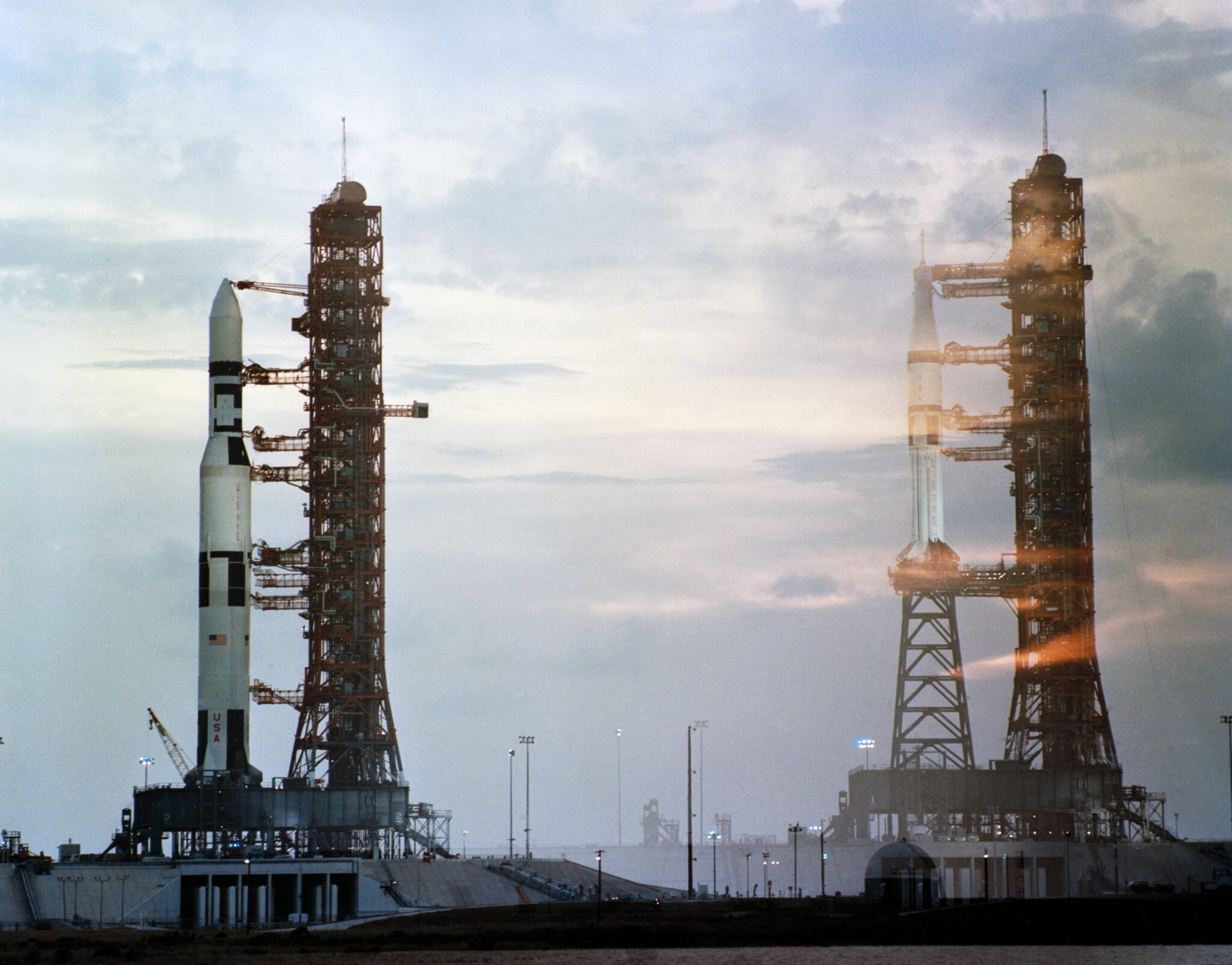
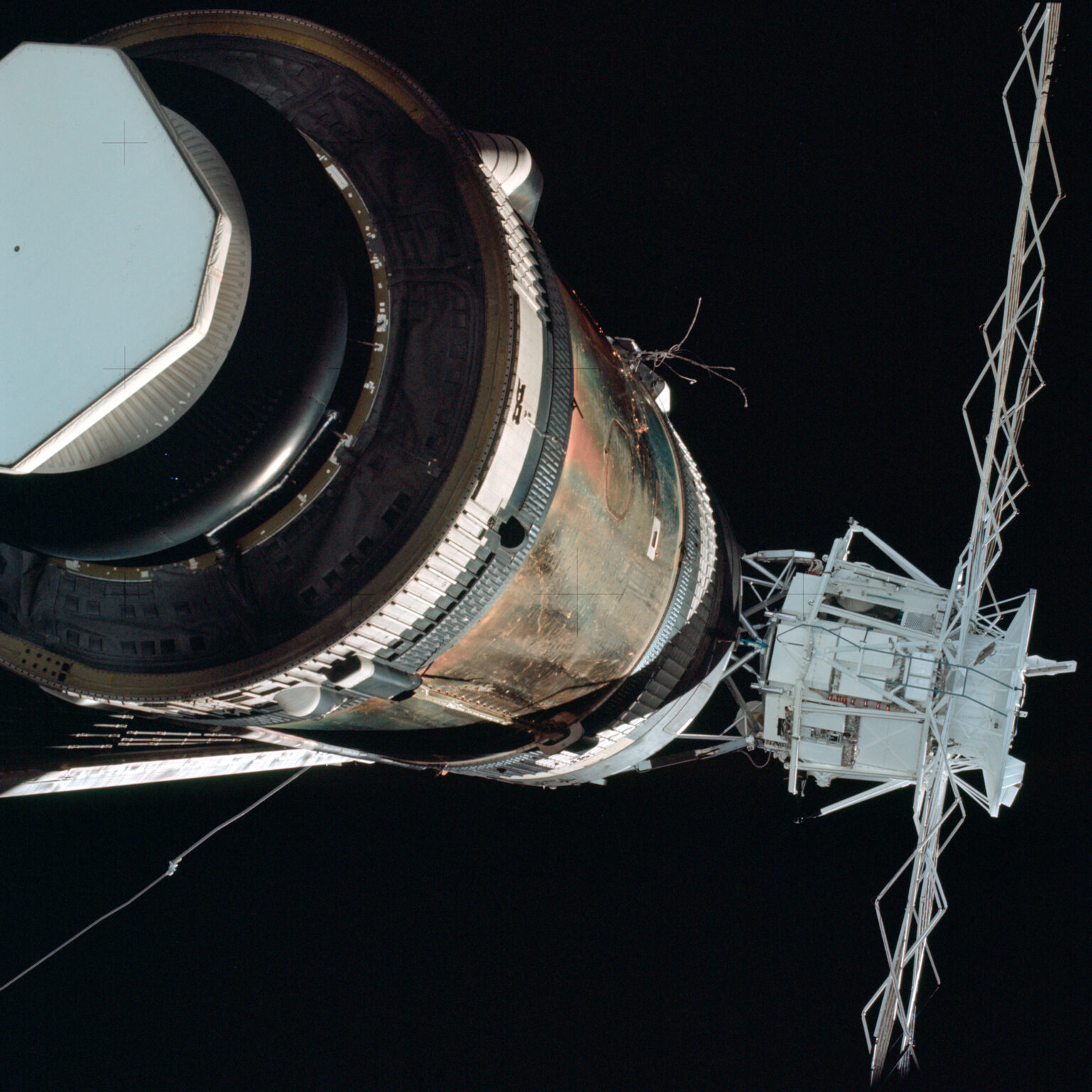
Skylab/Saturn V (Left) – Apollo/Saturn IB (Right)
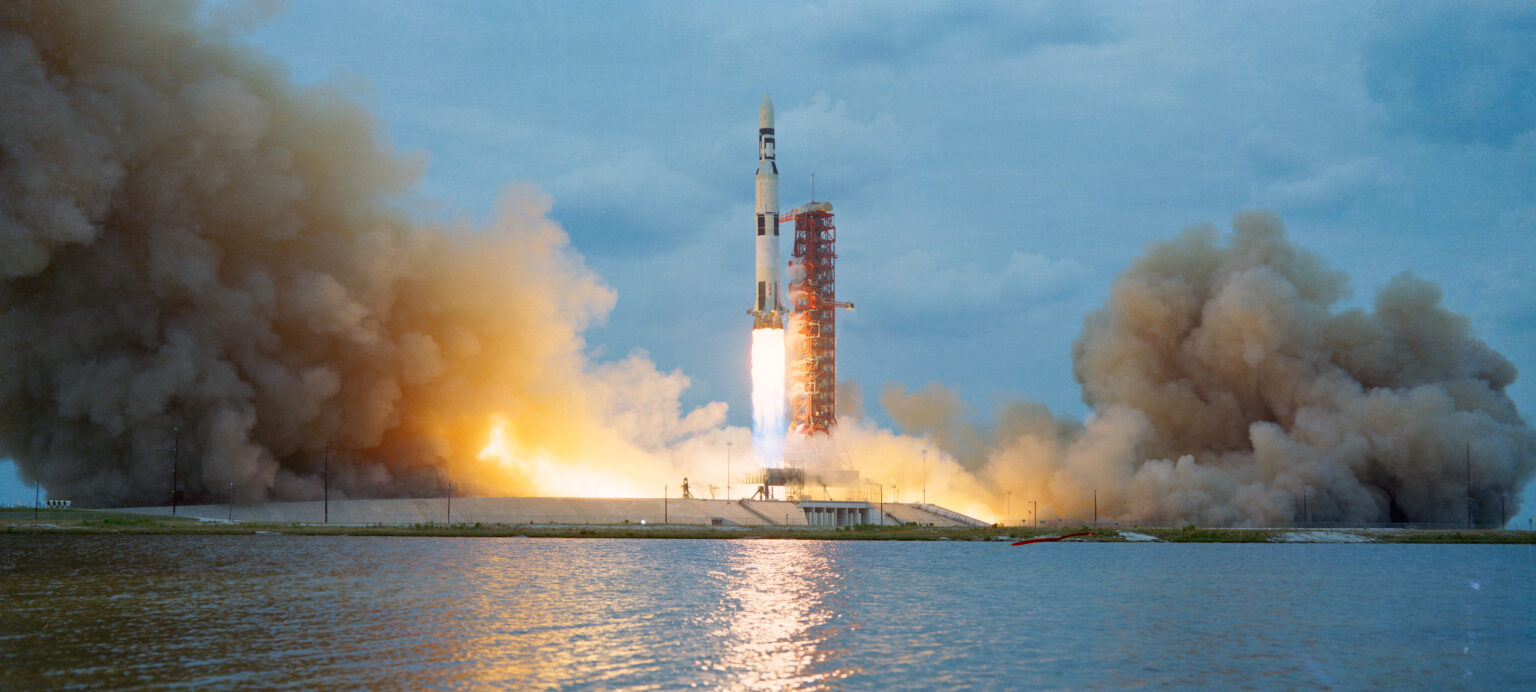
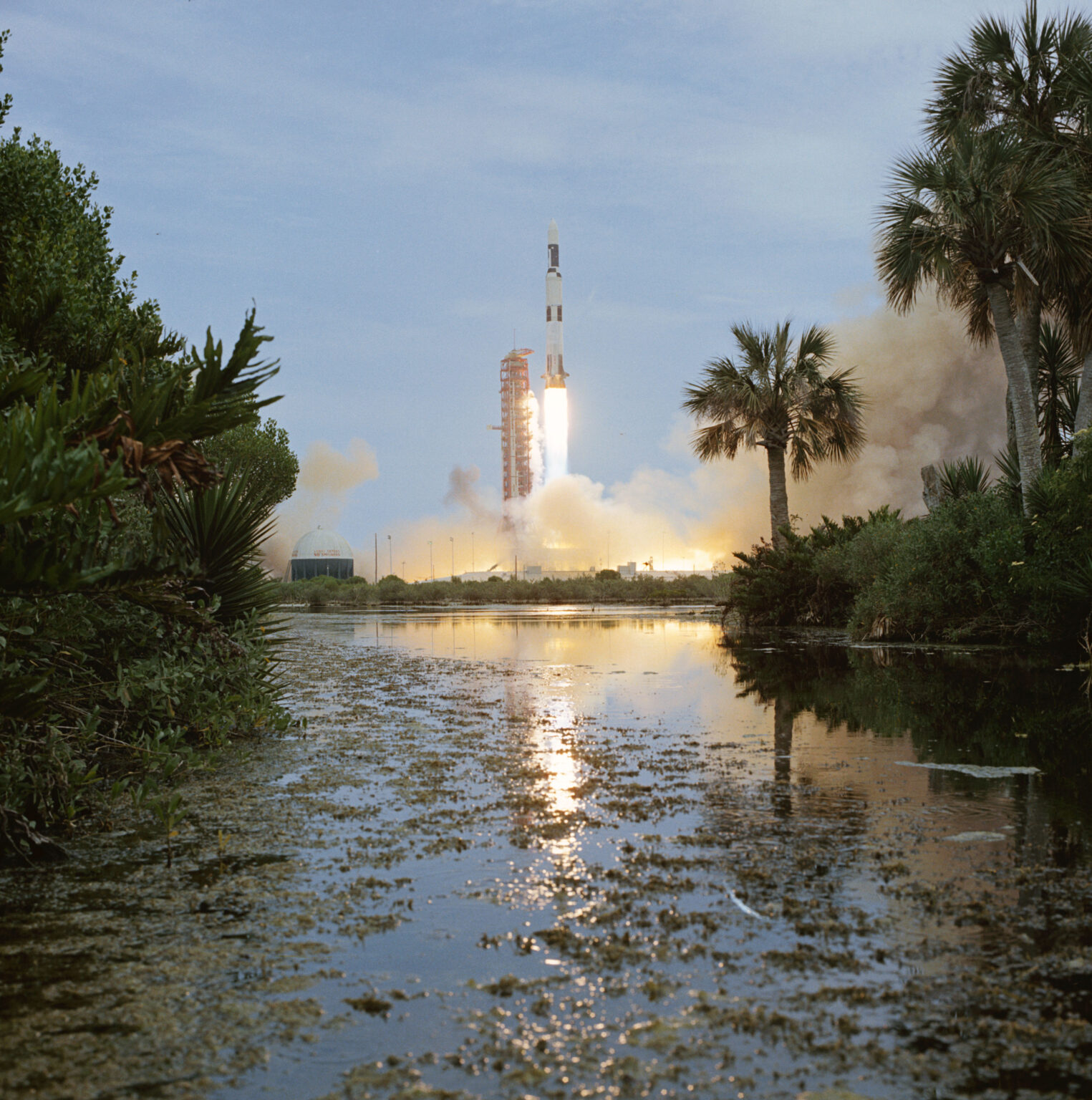
Skylab 1 Launch From Wildlife Preserve
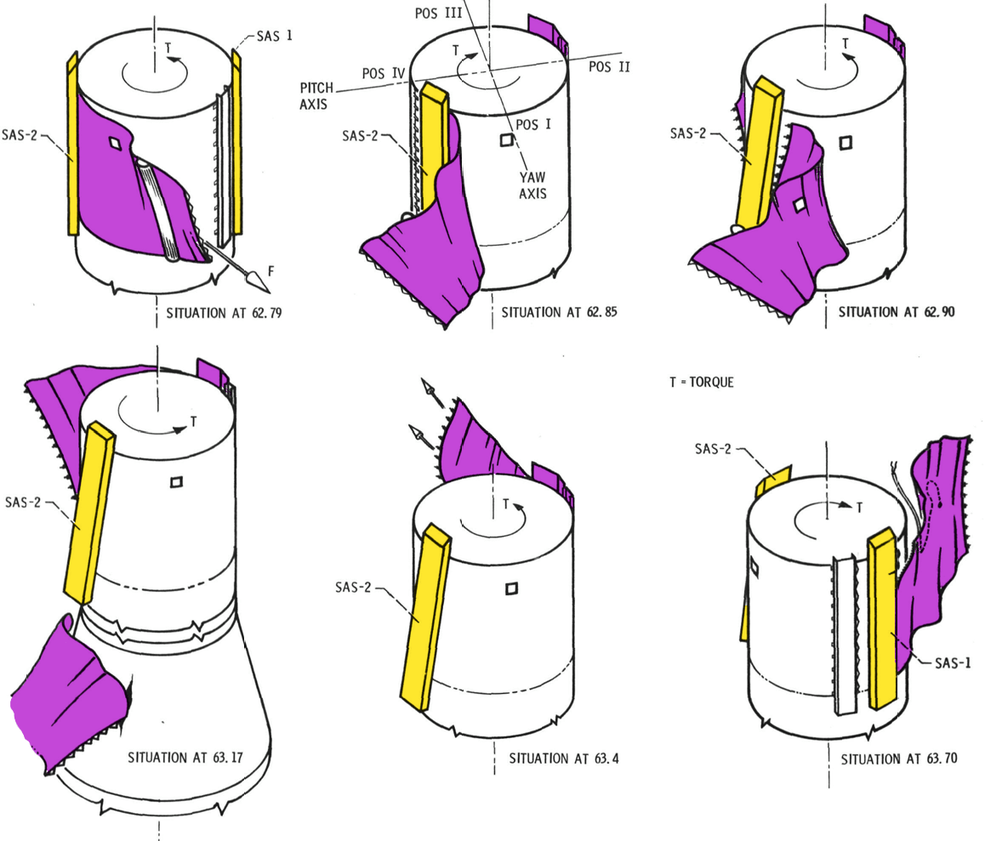
Likely Loss of Micrometeoroid Shield
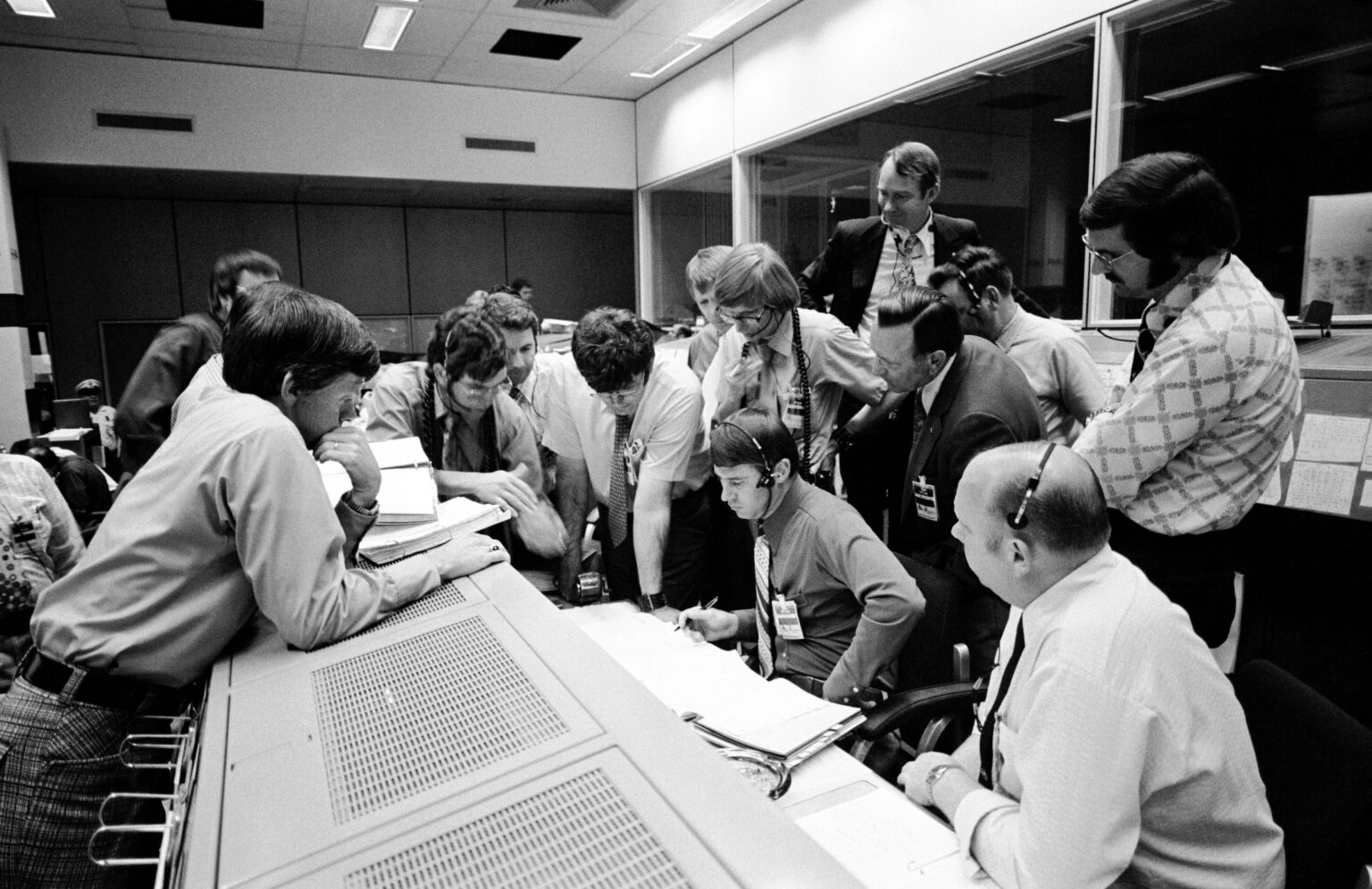
Flight Director Don Purdy and Team
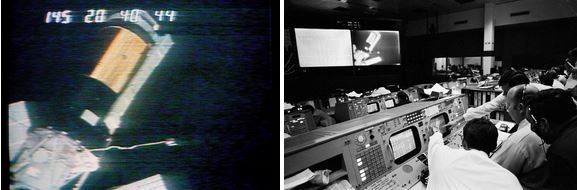

Waz Up
Space Exploration and Space History
Space Exploration News
NASA’s Psyche Spacecraft Performs Mars Gravity Assist (May 15, 2026)
SpaceX Debuts Starship Version 3 on Flight 12 (May 15, 2026)
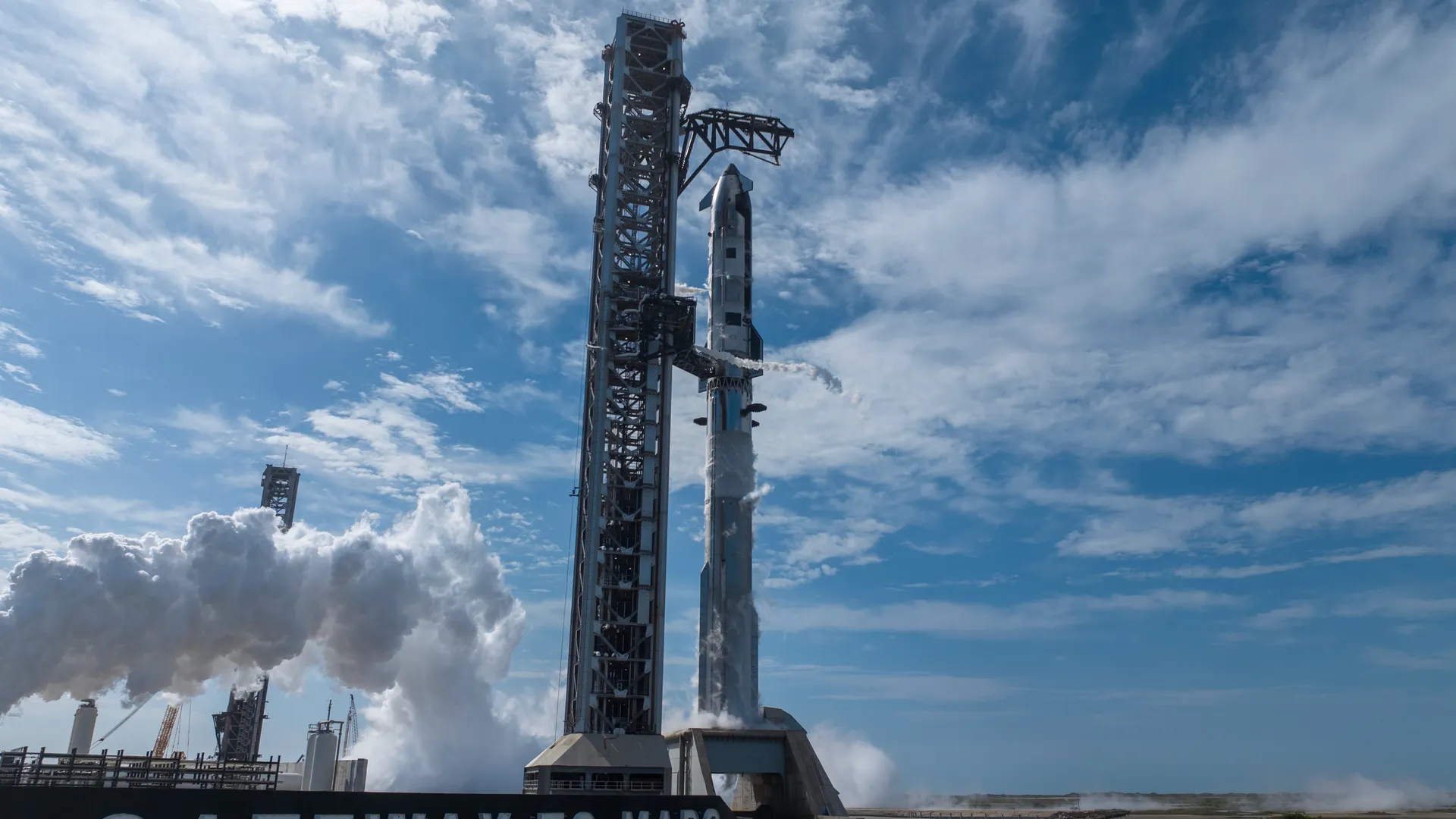
NASA Updates Artemis III Mission to Earth-Orbit Test (May 13, 2026)
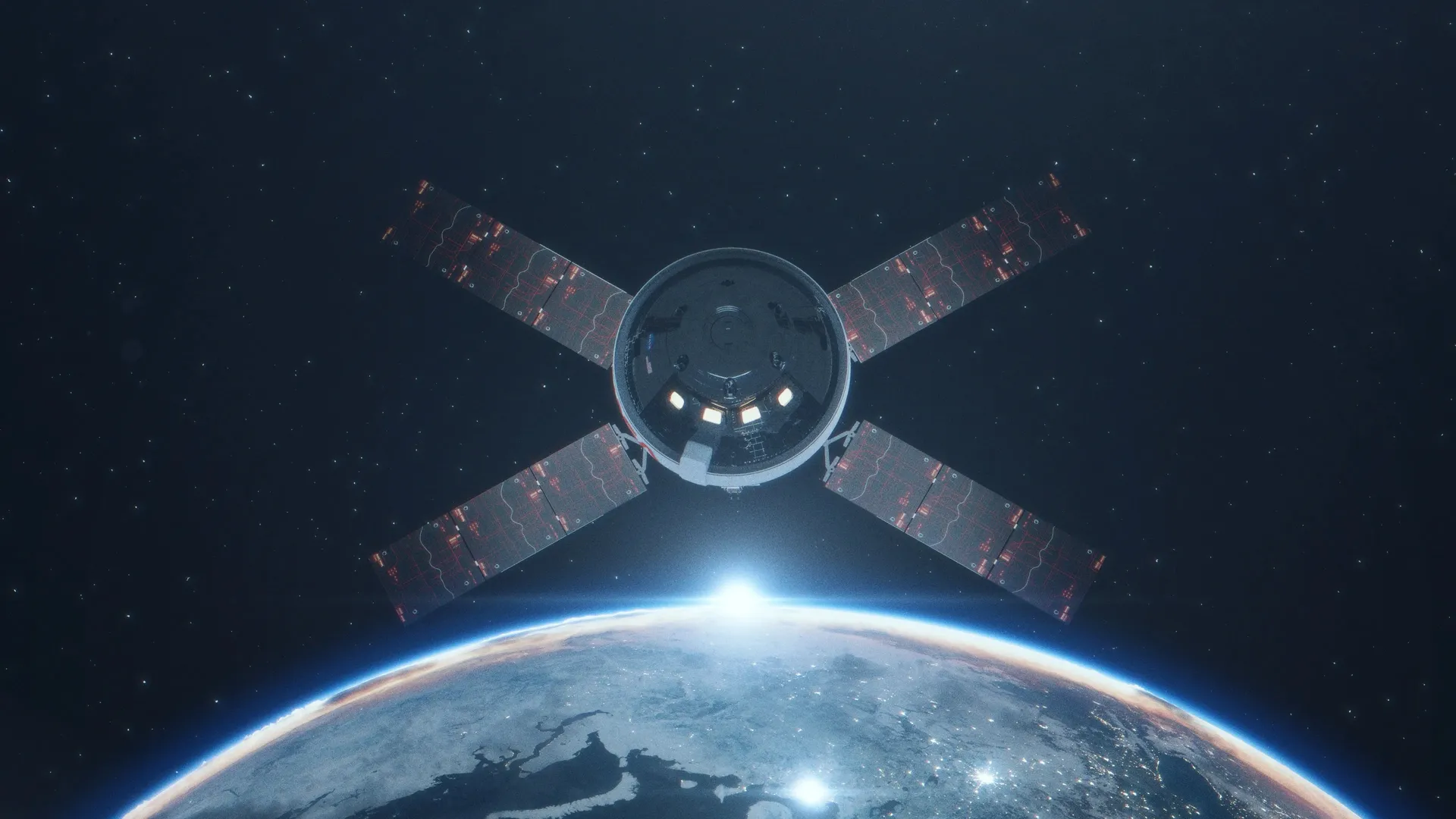
SpaceX Launches NROL-172 Reconnaissance Mission (May 11, 2026)
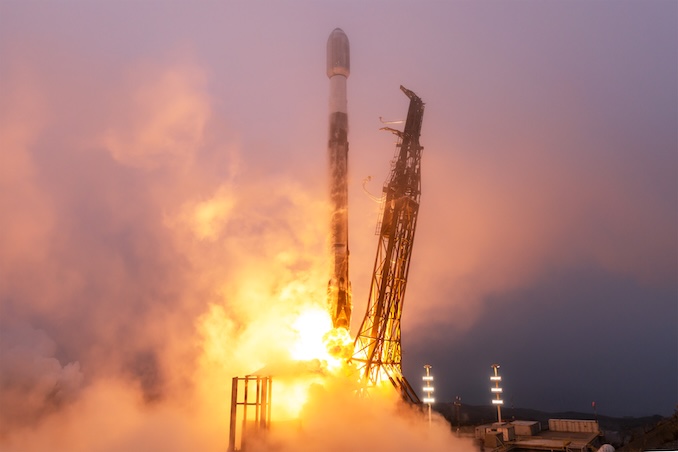
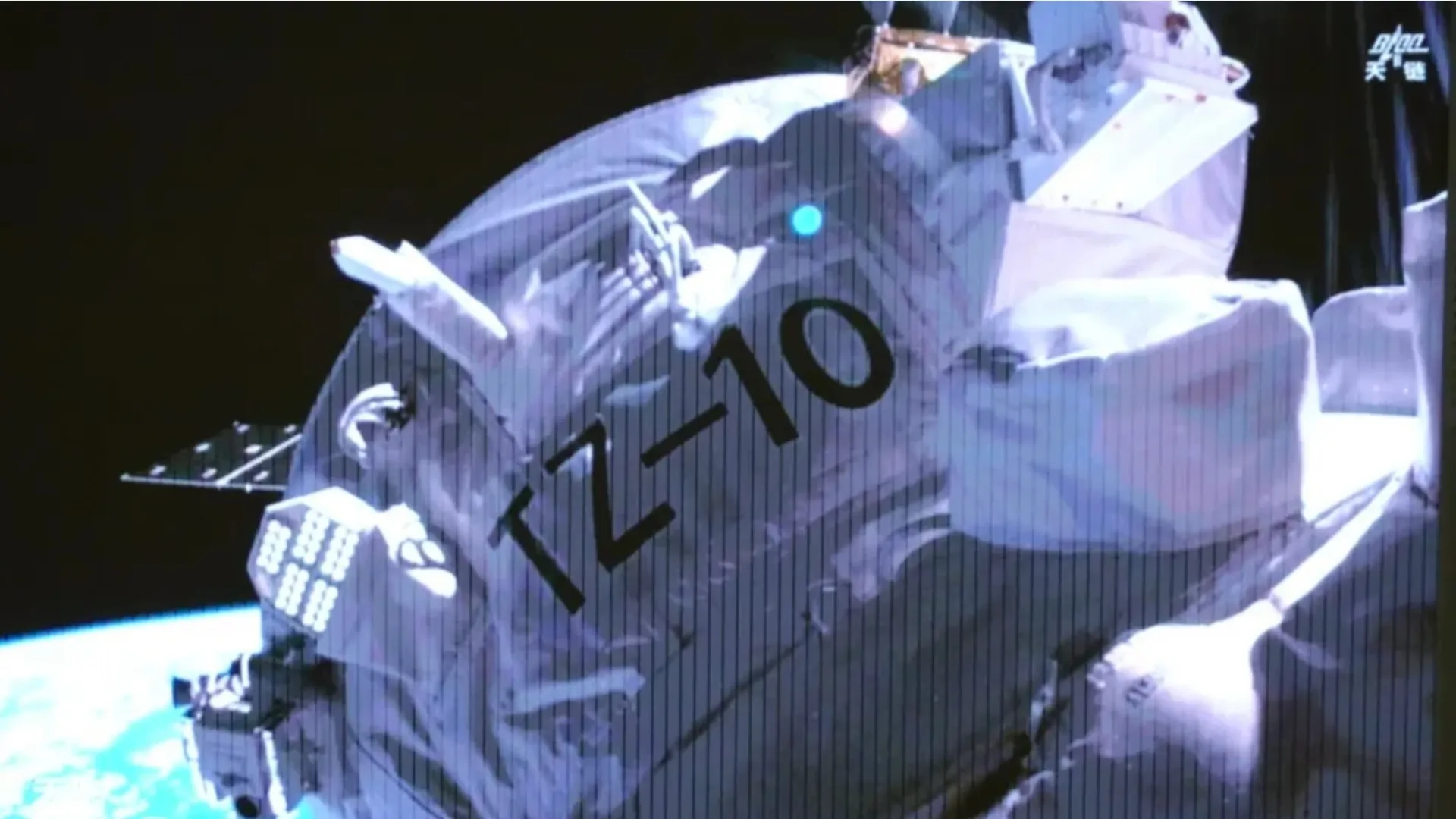
China Docks Tianzhou-10 Cargo Ship with Tiangong Station (May 15, 2026)
Space-Related Birthdays
| Astronaut | Birthday | Birth Year | FCC Callsign | Flights | Notes |
| Ellen Ochoa | May 10 | 1958 | KG5JST | STS-56, STS-66, STS-96, STS-110 | As the first Hispanic woman in space, she participated in four shuttle missions focusing on atmospheric and solar research. She also played a key role in the first shuttle docking with the ISS and later served as the Director of the Johnson Space Center. |
| Lisa Nowak | May 10 | 1963 | KC5VMS | STS-121 | She served as a mission specialist on a critical “Return to Flight” mission that tested shuttle safety procedures after the Columbia disaster. During the mission, she was the primary operator of the shuttle and station robotic arms for cargo transfer and heat shield inspection. |
| Gregory H. Johnson | May 12 | 1962 | KG5GZJ | STS-123, STS-134 | He piloted the Endeavour on its final flight, which delivered the Alpha Magnetic Spectrometer to the International Space Station. His first mission also delivered the first segment of the Japanese Kibo laboratory and the Canadian Dextre robotic system. |
| Vladimir Dzhanibekov | May 13 | 1942 | U2MIR | Soyuz 27, 39, T-6, T-12, T-13 | This veteran commander is famous for performing a daring manual docking to rescue the “dead” Salyut 7 space station after it lost power. He flew five missions in total, including the first flight to visit a crew already in space on the Salyut 6 station. |
| Claudie Haigneré | May 13 | 1957 | FX0STD | Soyuz TM-24, TM-33 | She was the first French woman in space, visiting the Mir space station to conduct physiology and biology experiments. She later became the first European woman to visit the International Space Station during the “Andromède” mission in 2001. |
| Aleksandr Kaleri | May 13 | 1956 | U2MIR | Soyuz TM-14, TM-24, TM-30, TMA-3, TMA-01M | This Russian veteran has spent over 769 days in space across five missions, including the final human mission to the Mir space station. He also served on several long-duration expeditions to the International Space Station as a flight engineer. |
| William G. Gregory | May 14 | 1957 | KC5MKI | STS-67 | He served as the pilot on the Astro-2 mission, which set a record for the longest Space Shuttle flight duration at the time. The mission utilized three ultraviolet telescopes in the cargo bay to observe various astronomical objects and phenomena. |
| James M. Kelly | May 14 | 1964 | KC5SST | STS-102, STS-114 | He piloted the first “Return to Flight” mission after the Columbia accident, testing new techniques for shuttle inspection and repair. He also helped deliver the Expedition 2 crew to the International Space Station while returning the Expedition 1 crew to Earth. |
| Jessica Watkins | May 14 | 1988 | KI5VRE | SpaceX Crew-4 | A geologist by training, she became the first Black woman to complete a long-duration mission on the International Space Station. She spent several months in orbit as a mission specialist, conducting various scientific experiments and station maintenance. |
| Maurizio Cheli | May 15 | 1959 | IZ0UDF | STS-75 | He represented the European Space Agency as a mission specialist on a flight that featured the reflight of the Tethered Satellite System. The mission also involved significant microgravity research using the United States Microgravity Payload. |
| Scott Kelly | May 16 | 1964 | KE5ZGC | STS-103, STS-118, Soyuz TMA-01M, TMA-16M | He is best known for his historic “One-Year Mission” to the ISS, which provided vital data on how the human body adapts to long-term spaceflight. He also commanded multiple missions and participated in a high-stakes Hubble Space Telescope servicing flight. |
This Week in Space History
The First Space Research Flight (May 10, 1946)

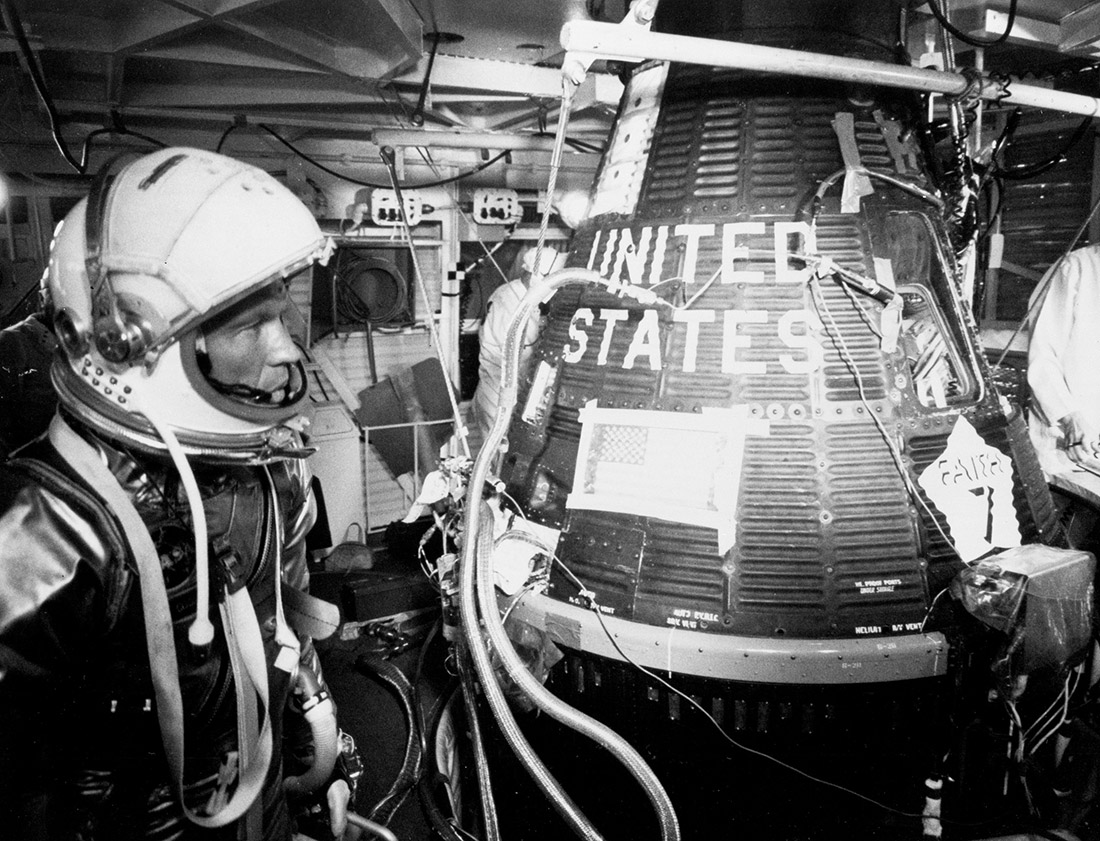
The Launch of Gordon Cooper on Faith 7 (May 15, 1963)
Sputnik 3 Launches as a Comprehensive Space Laboratory (May 15, 1958)

Final Launch of Space Shuttle Atlantis on STS-132 (May 14, 2010)

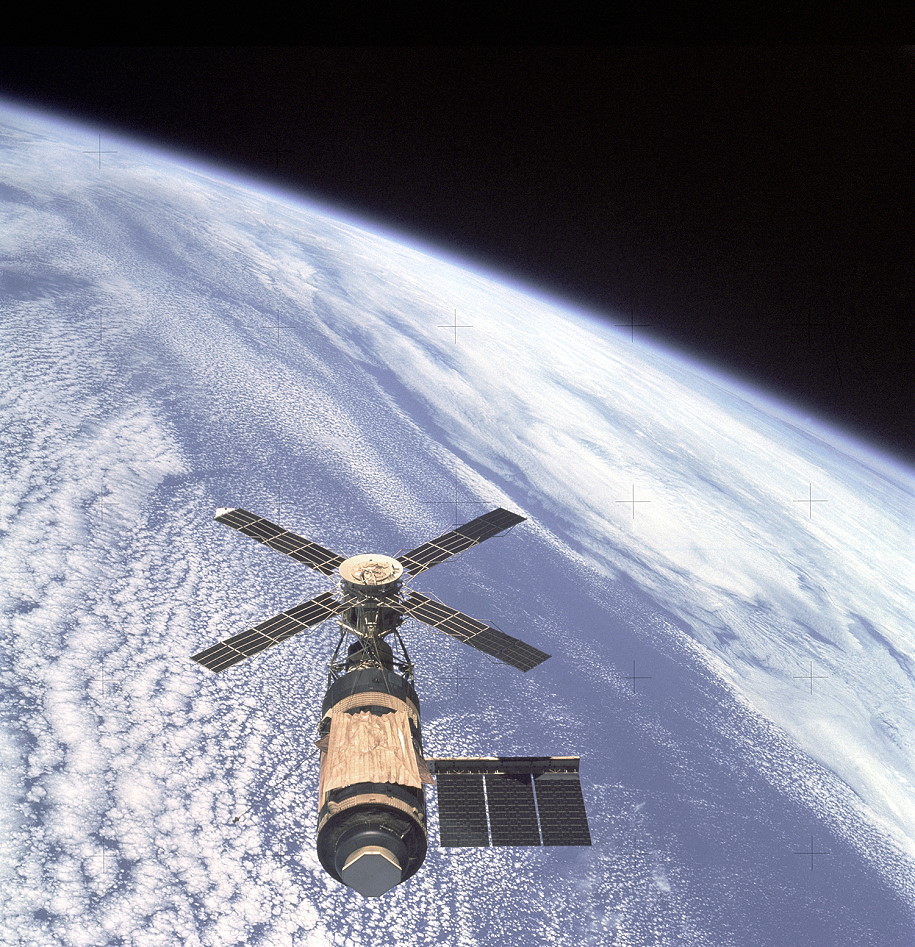
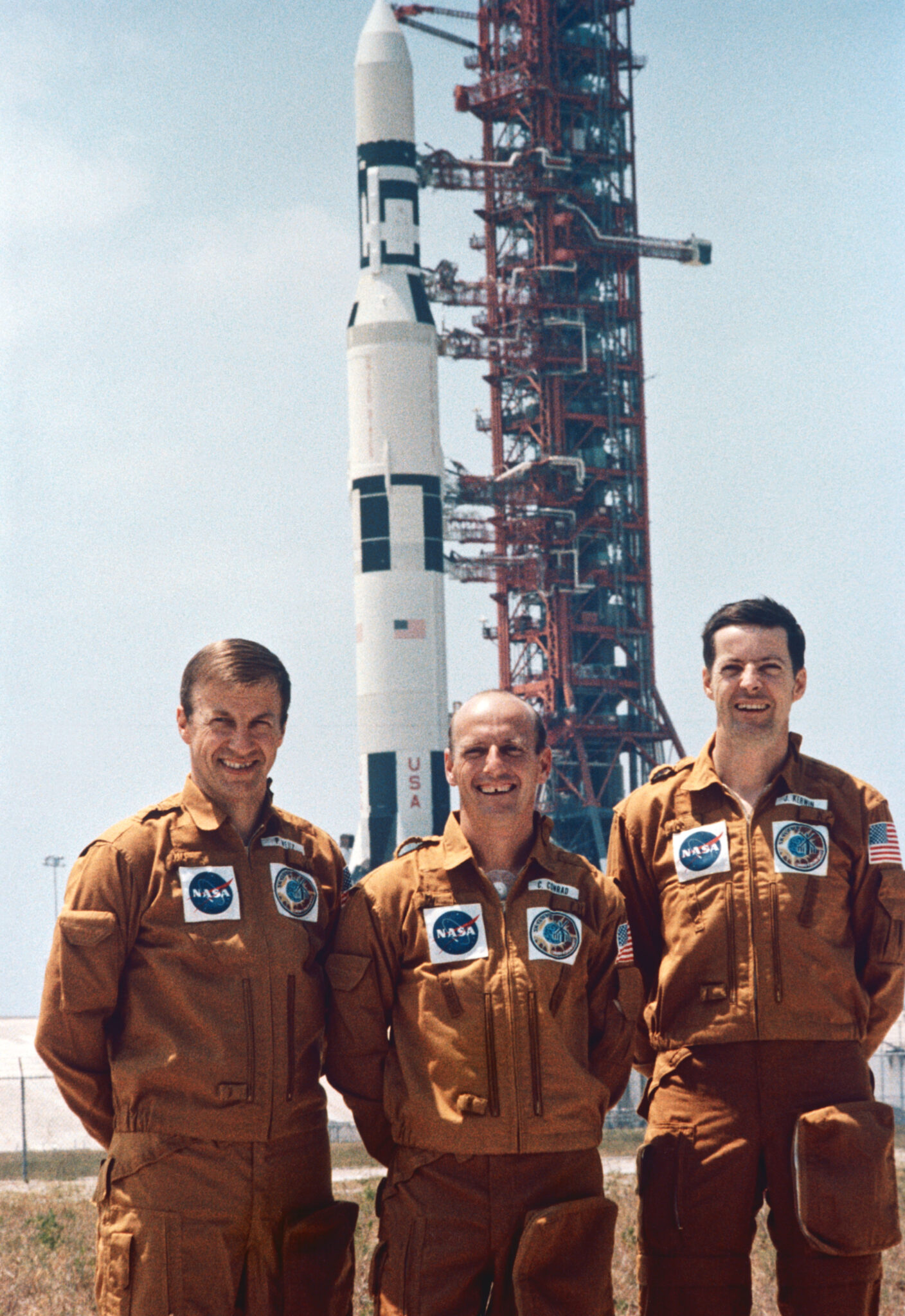
NASA Launches Skylab, the First U.S. Space Station (May 14, 1973)

Miss Carolyn’s Constellation of the Week
Constellations “Coma Berenices, Bernice’s Hair”, and “Canes Venatici, the Hunting Dogs”
Space Launches For This Week
Space Flight Now Launch Schedule
NET May 18/19 Vega-C • Smile
Launch time: 12:52 a.m. local time (11:52 p.m. EDT / 0352 UTC)
Launch site: ZLV pad, Europe’s Spaceport, Kourou, French Guiana
An Avio Vega-C rocket will launch the Smile mission, a collaboration between the European Space Agency (ESA) and the Chinese Academy of Sciences (CAS). The Smile (Solar wind Magnetosphere Ionosphere Link Explorer) is set to deploy from the rocket 57 minutes after liftoff and deploy its solar arrays within 10 minutes after that. It has a planned mission life of three years and will operate in a highly elliptical Earth orbit. According to ESA, “Smile will use four science instruments to study how Earth responds to the solar wind from the Sun. This will improve our understanding of solar storms, geomagnetic storms and the science of space weather.” Delayed from April 9 “due to a technical issue… on a subsystem component production line after VV29 launcher integration.”
Updated: April 23
NET May 19 Starship • Flight 12
Launch time: Window opens at 5:30 p.m. CDT (6:30 p.m. EDT / 2230 UTC)
Launch site: OLP-B, Starbase, Texas
A SpaceX Starship-Super Heavy rocket (collectively referred to as Starship) will launch from Starbase, Texas, on a suborbital flight. This will be the 12th flight of the integrated launch vehicle and the first launch of a version 3 rocket. SpaceX will launch the mission using the Ship 39 upper stage and Booster 19 first stage. As of May 4, SpaceX hasn’t said whether or not it will attempt to catch the Super Heavy booster back at the launch site. Delayed from May 15.
Updated: May 12
NET May 19/20 Falcon 9 • Starlink 17-42
Launch time: Window opens at 7:11 p.m. PDT (10:11 p.m. EDT / 0211 UTC)
Launch site: SLC-4E, Vandenberg Space Force Base, California
A SpaceX Falcon 9 rocket will launch a batch of 24 Starlink V2 Mini Optimized satellites into low Earth orbit. More than eight minutes after liftoff, the first stage will land on the drone ship, ‘Of Course I Still Love You,’ positioned in the Pacific Ocean. Delayed from May 16, 17 and 18.
Updated: May 15
May 20 Falcon 9 • Globalstar 2-R Launch 1
Launch time: Window opens at 8:04 a.m. EDT (1204 UTC)
Launch site: SLC-40, Cape Canaveral Space Force Station, Florida
A SpaceX Falcon 9 rocket will launch nine of its HIBLEO-4 satellites into low Earth orbit. This is the first of two launches that constitute a replenishment of its HIBLEO-4 fleet. Nearly 8.5 minutes after liftoff, the Falcon 9 first stage booster, tail number B1090, launching for a 12th time, will target a landing on the drone ship, ‘A Shortfall of Gravitas’, positioned in the Atlantic Ocean. Delayed from May 18.
Updated: May 14
May 22 Falcon 9 • Starlink 10-31
Launch time: Launch window opens 5:04 a.m. EDT (0904 UTC)
Launch site: SLC-40, Cape Canaveral Space Force Station, Florida
A SpaceX Falcon 9 rocket will launch 29 Starlink V2 Mini Optimized satellites into low Earth orbit. The first stage booster, tail number 1077, launching for a 28th time, will land on the drone ship, ‘A Shortfall of Gravitas,’ positioned in the Atlantic Ocean.
Updated: May 13
NET May 22 Electron • ‘Viva La StriX’
Launch time: 9:30 p.m. NZST (5:30 a.m. EDT / 0930 UTC)
Launch site: Launch Complex 1, Mahia, New Zealand
A Rocket Lab Electron rocket will launch a StriX satellite, an Earth observation Synthetic Aperture Radar (SAR) spacecraft, on behalf of Japan-based company, Synspective. This is the ninth mission for Synspective on an Electron rocket. The satellite will be deployed into a circular 572 km orbit at a 44.8 degree inclination.
Updated: May 01
NET May 22 Atlas 5 • Leo Atlas 07
Launch time: Window opens at 2:56:30 p.m. EDT (1856:30 UTC)
Launch site: SLC-41, Cape Canaveral Space Force Station, Florida
A United Launch Alliance Atlas 5 rocket will launch a batch of 29 Amazon Leo satellites into low Earth orbit. This is the penultimate mission that the tech giant booked on an Atlas 5 rocket.
Updated: May 12
May 23 Falcon 9 • Starlink 17-37
Launch time: Window opens at 7 a.m. PDT (10 a.m. EDT / 1400 UTC)
Launch site: SLC-4E, Vandenberg Space Force Base, California
A SpaceX Falcon 9 rocket will launch a batch of 24 Starlink V2 Mini Optimized satellites into low Earth orbit. More than eight minutes after liftoff, the first stage booster, tail number B1100, launching for a second time, will land on the drone ship, ‘Of Course I Still Love You,’ positioned in the Pacific Ocean. Booster previously listed as B1097 and B1103. Delayed from May 9 and 10. Delayed from May 14, 15 & 17.
Updated: May 15
Late summer Alpha • FLTA008
Launch time: TBD
Launch site: SLC-2, Vandenberg Space Force Base, California
A Firefly Aerospace Alpha rocket will launch on mission for a yet unannounced customer. This will be the debut of the Block 2 iteration of the rocket, which features larger liquid oxygen tanks on both the first and second stages, increasing the overall length of the rocket by two meters.
Updated: May 05
NET Q4 2026 Vulcan Centaur • Dream Chaser 1
Launch time: TBD
Launch site: SLC-41, Cape Canaveral Space Force Station, Florida
A United Launch Alliance Vulcan Centaur rocket will launch on its second demonstration flight with Sierra Space’s Dream Chaser cargo vehicle for the International Space Station. The Dream Chaser is a lifting body resupply spacecraft that will launch on top of a rocket and land on a runway. This will be the Dream Chaser’s first flight to space. The Vulcan Centaur rocket will fly in the VC4L configuration with four GEM-63XL solid rocket boosters, a long-length payload fairing, and two RL10 engines on the Centaur upper stage. Delayed from August 2022, December 2023, January 2024, April 2024 and September 2024. Delayed from 2025.
Visible satellite passages over the next couple of days.
You can use the http://www.heavens-above.com website to find out what’s in orbit and
where to look during fly-overs
All times are “local” (Dallas) time.

