
IO Group: https://groups.io/g/DARCskynet/topics
Facebook Group: http://www.facebook.com/groups/306498286059167/
Saturday’s DARC SkyNet is at 9PM CT.
Discussion Topic of the Evening.
Artemis II Mission
The Artemis program is NASA’s plan to get humans back to the Moon and establish a lunar base. The last trip by humans to the Moon was Apollo 17 in December, 1972.
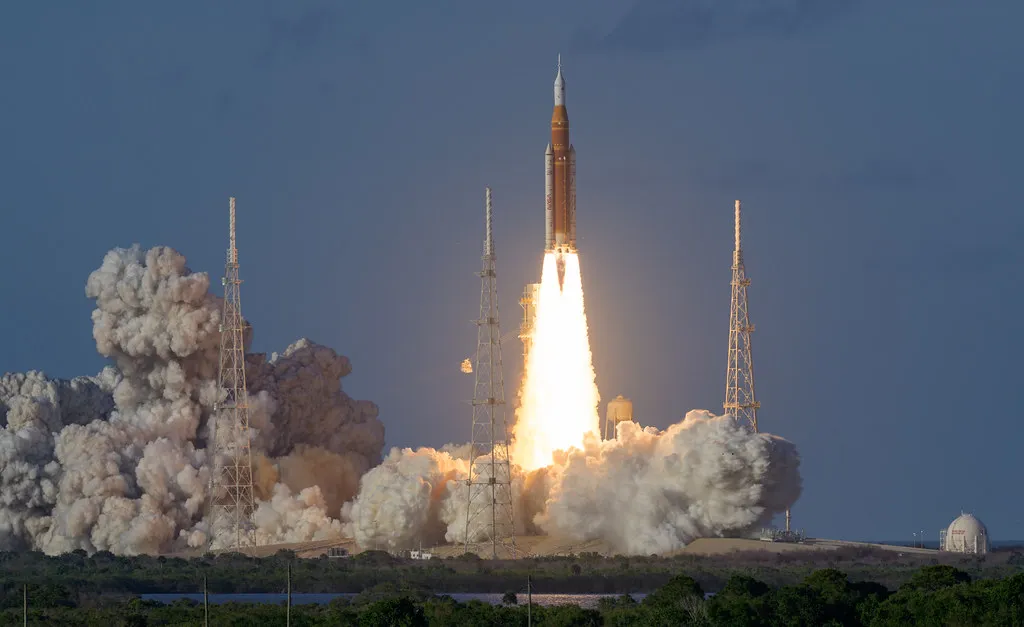
Artemis II launched with very few glitches at 5:35:12 CT on Wednesday, April 1, from LC-39B at Kennedy Space Center in Florida. To see the NASA official YouTube continuous recording of the mission, go to:
An initial NASA news conference with administrator Jared Isaacman and several other officials started Wednesday at about 7:15 PM CT. There have been press conferences every day since then with mission updates.
Artemis I was a test flight to check hardware performance in space during a trip to the Moon. Artemis II and III are test flights to check hardware (including life support systems) and the ability of astronauts to control and monitor the performance of the Orion capsule during a Moon trip. The goal is to prepare for landing on the Moon with our 21st Century hardware on Artemis IV and V.
- Artemis I was an uncrewed test of the Orion capsule on the new SLS rocket. One major reason for this test was to test the heat shield allowing high speed entry of Orion during return from the Moon.
- Artemis II is a crewed test of the Orion capsule launched on a SLS rocket. The launch eject system was armed and life support systems on Orion is being tested. The Orion reentry heat shield was modified after issues noted on Artemis I. The free-return trajectory provides a high speed (25,000 miles per hour) return entry into Earth’s atmosphere, the fastest reentry ever attempted for a crewed capsule. Artemis II has some similarities with Apollo 8, the first crewed spacecraft to reach the Moon n 1968.
- Artemis III is planned to be a crewed test in low Earth orbit of docking of at least one, but possibly both of the lunar landers from SpaceX and Blue Origin respectively, with the Orion capsule, they will also test out propulsion, life support, and communication systems of the the landers, and testing the new spacesuits that will be used on the moon, the Axiom Extravehicular Mobility Unit (AxEMU). This will be a very busy mission for the crew!
- Artemis IV and V are planned to be the first two crewed landings on the Moon in this century.
The Artemis II mission has nothing to do with testing the two landers, which are not yet ready for launch. The goal of Artemis II is to test the hardware (and crew control of that hardware) which is currently available:
- SLS launch rocket (liquid fuel main rocket with two solid boosters similar to the Space Shuttle launch system)
- Interim Cryogenic Propulsion Stage (ICPS) upper stage of the SLS rocket
- European Service Module (which supplies propulsion and power to the Orion capsule after separation from ICPS after launch until shortly before reentry at Earth)
- Orion launch escape system, which allows the Orion capsule to be pulled away from the SLS rocket if there are problems during launch
- Orion capsule, which is carrying 4 astronauts around the Moon
The current plan is to replace the ICPS with the ULA Centaur V for Artemis IV and later missions.
Artemis III is planned to test the two HLS (Human Landing System) systems currently under development and funded by NASA:
- SpaceX Starship HLS – this requires launching many (perhaps 10) Starship fuel ships to a fuel depot in Earth orbit. This would be the source of the methane and LOX required for the lander mission to and from the Moon.
- Blue Origin consortium Blue Moon Mark 2 HLS – this requires multiple launches of the New Glenn rocket to get the Cislunar Transporter (reusable space tug and tanker) to Earth orbit. The Mark 2 HLS would also be launched to Earth orbit by a New Glenn rocket. A technology critical for the operation of Blue Moon is a solar-powered propellant boiloff mitigation mechanism intended to enable long-term storage of liquid oxygen and liquid hydrogen at temperatures as low as 20 K. Such a system will enable the spacecraft to loiter in orbit or on the surface of the Moon, potentially allowing a permanent lunar presence or supporting nuclear thermal propulsion.
The Blue Moon system seems to be best for long-term operation of a Moon base, since it is fueled by liquid hydrogen and oxygen that could be obtained in-situ on the Moon via electrolysis of ice found near the south pole of the Moon. This is the reason that Artemis IV and V are planned to land near the south pole.
Rotating Mission Video Snippets
Waz Up
Space Exploration and Space History
Space Exploration News
Artemis II: Humanity Returns to the Moon (April 1, 2026)
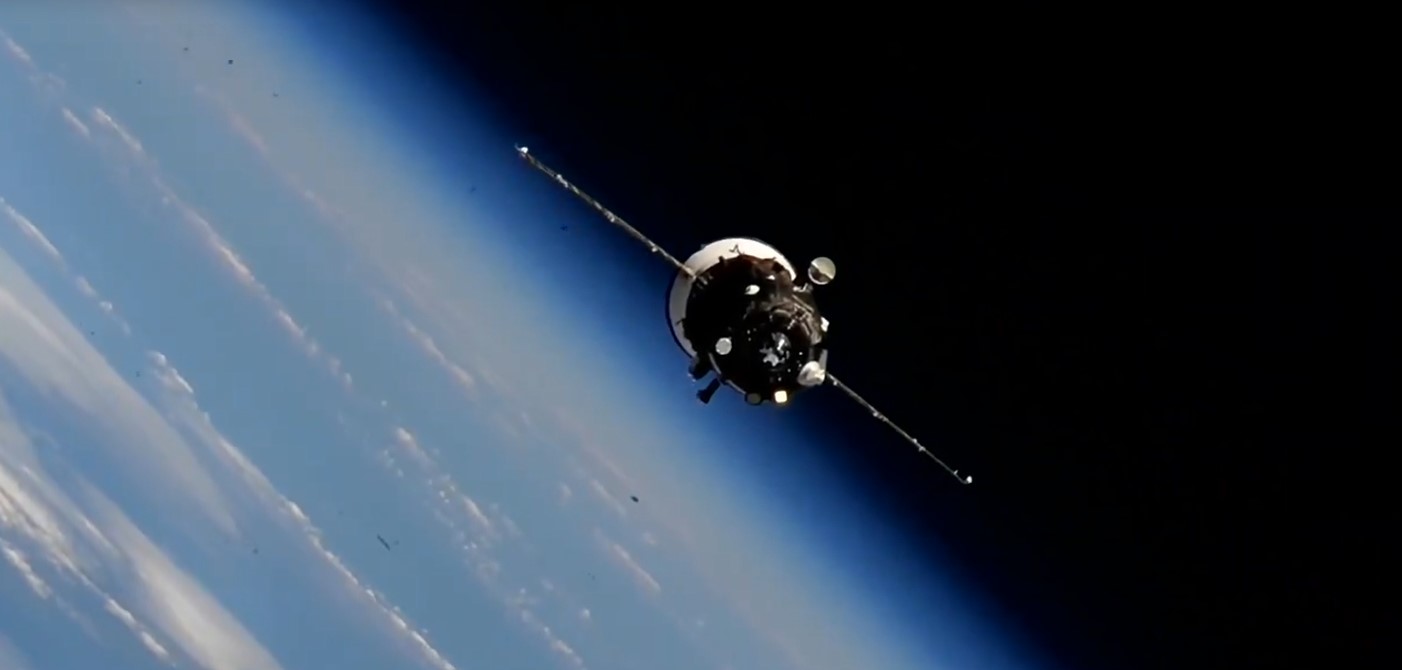
International Space Station Operations and Resupply (March 28 – April 3)
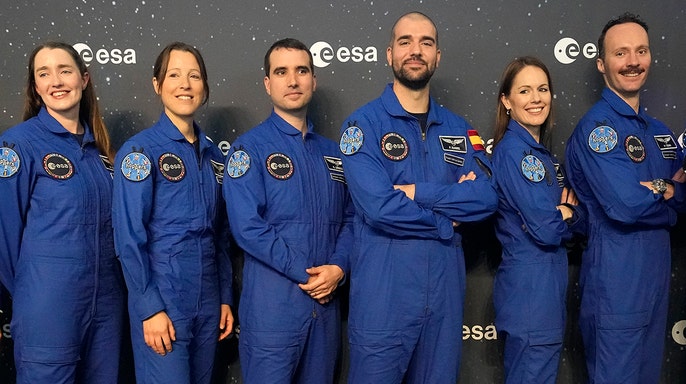
ESA Announces EPIC Project for Astronaut Experience (March 25, 2026)
Celestial Highlights: The Pink Moon and Planetary Alignments (April 2-3, 2026)

Solar Activity Monitoring for Artemis II (March 30, 2026)
Space-Related Birthdays
| Astronaut | Birthday | Birth Year | FCC Callsign | Flights | Notes |
| Wubbo Ockels | March 28 | 1946 | PE1LFO | STS-61-A | The first Dutch citizen in space, flying on the Space Shuttle Challenger in 1985. He conducted over 75 experiments in microgravity focusing on materials science and human physiology. |
| Sian Proctor | March 28 | 1970 | KF7GOP | Inspiration4 | The first African-American woman to pilot a spacecraft, serving on the historic all-civilian Inspiration4 mission. She is also a geoscientist and artist who created the first Afrofuturist art in orbit. |
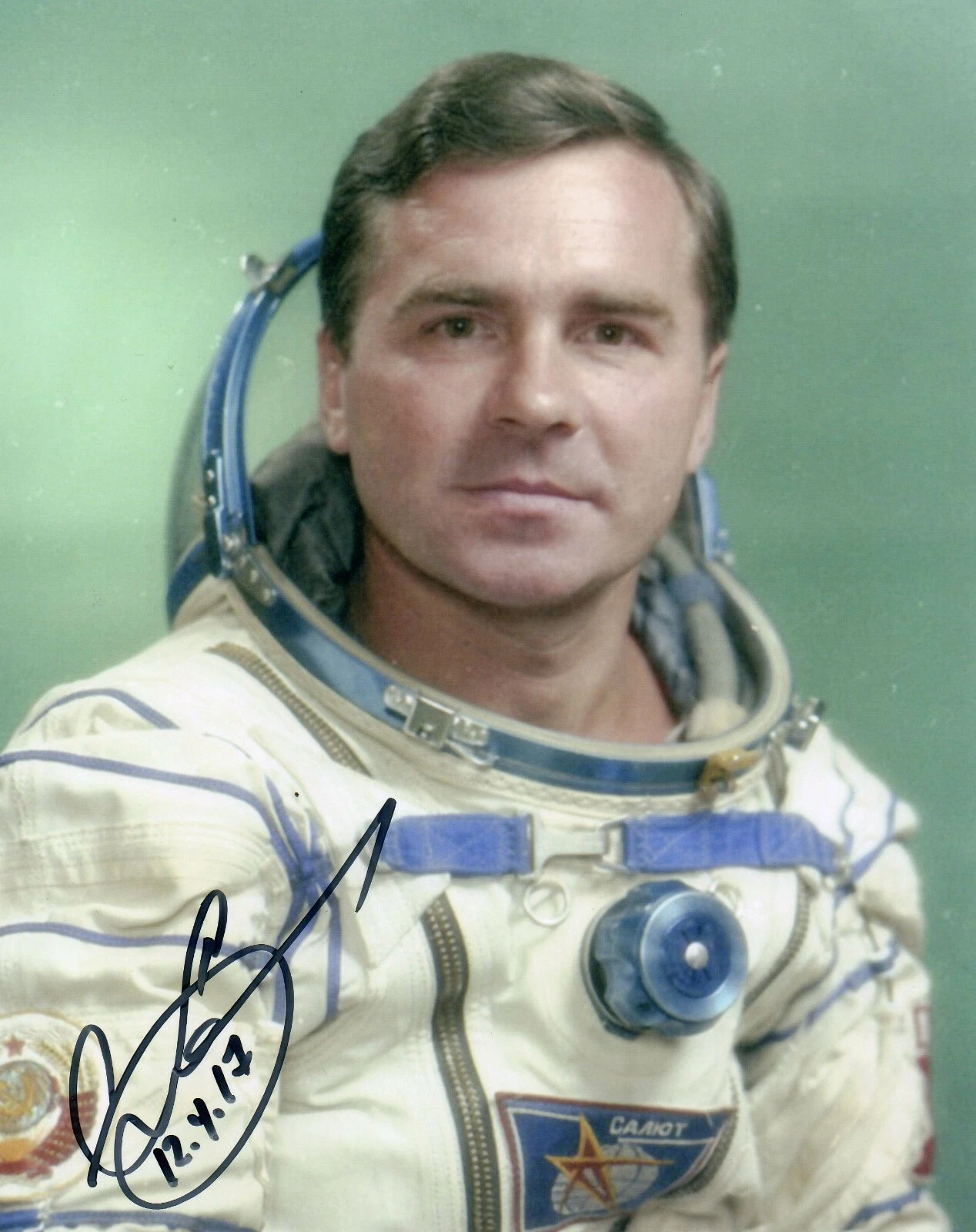
| Aleksei Gubarev | March 29 | 1931 | N/A | Soyuz 17, Soyuz 28 | Commanded the first crew to board the Salyut 4 space station and the first Interkosmos flight. His second mission included the first person in space who was not from the USSR or USA. |
| Aleksandr Viktorenko | March 29 | 1947 | U6MIR | Soyuz TM-3, TM-8, TM-14, TM-20 | Commanded four missions to the Mir space station and spent over 489 days in space. He notably tested the “space motorcycle” untethered propulsion unit and performed six spacewalks. |
| Michael Foreman | March 29 | 1957 | N/A | STS-123, STS-129 | Logged more than 637 hours in space and performed five spacewalks during his two Space Shuttle missions. He was instrumental in the assembly of the International Space Station, delivering key modules. |
| William Oefelein | March 29 | 1965 | N/A | STS-116 | Piloted the Space Shuttle Discovery on a mission to continue construction of the International Space Station in 2006. The mission successfully rewired the station’s power system and delivered a new structural segment. |
| Yelena Kondakova | March 30 | 1957 | N/A | Soyuz TM-20, STS-84 | The first woman to complete a long-duration spaceflight, spending 169 days aboard the Mir space station in 1994. She later flew on the Space Shuttle Atlantis to visit Mir during the Shuttle-Mir program. |
| Patrick Forrester | March 31 | 1957 | N/A | STS-105, STS-117, STS-128 | Flew on three Space Shuttle missions and performed four spacewalks to help build and maintain the International Space Station. He later served as the Chief of the Astronaut Office at NASA. |
| William Fisher | April 1 | 1946 | N/A | STS-51-I | Logged 170 hours in space and performed two spacewalks to repair the Syncom IV-3 satellite during his mission. He also served as a medical doctor and was part of the astronaut selection board. |
| Sergei Volkov | April 1 | 1973 | RU3DIS | Soyuz TMA-12, TMA-02M, TMA-18M | The first second-generation space traveler, following in the footsteps of his father, cosmonaut Aleksandr Volkov. He commanded the ISS and has spent a total of 547 days in orbit. |
| Gus Grissom | April 3 | 1926 | N/A | Mercury-Redstone 4, Gemini 3 | One of the original Mercury Seven astronauts and the second American to fly in space during the Liberty Bell 7 mission. He later commanded the first crewed Gemini mission before tragically passing away in the Apollo 1 fire. |
| Aleksandr Yablontsev | April 3 | 1955 | N/A | N/A | A Soviet cosmonaut selected for the Buran space shuttle program who trained extensively as a test pilot. Although he never flew in space, he was a key figure in the development of Soviet reusable spacecraft. |

This Week in Space History
Luna 10: First Spacecraft to Orbit the Moon (April 3, 1966)

Mariner 10: First Mercury Flyby (March 29, 1974)

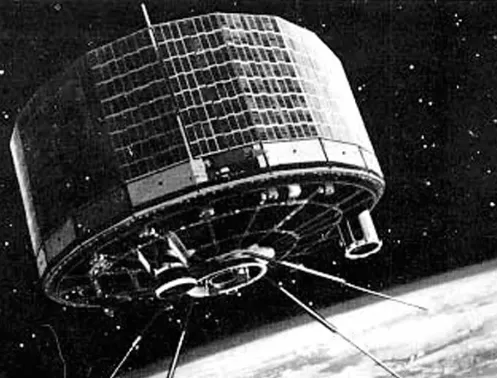
TIROS-1: World’s First Weather Satellite (April 1, 1960)
Apollo 6: Final Uncrewed Saturn V Test (April 4, 1968)

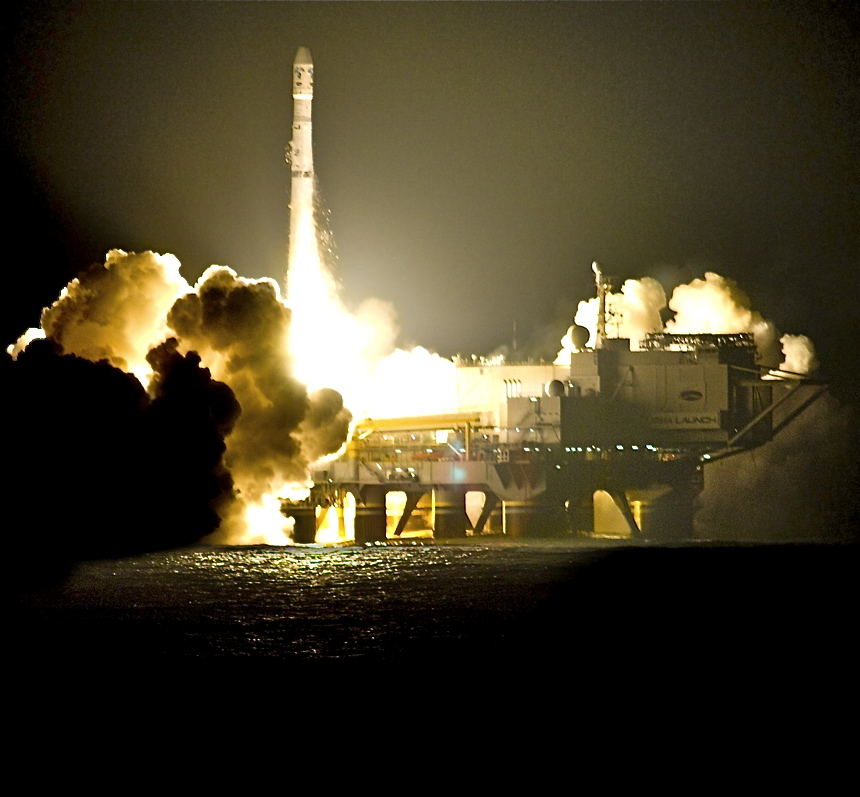
Sea Launch: First Commercial Payload from Sea (March 28, 1999)
Miss Carolyn’s Constellation of the Week
Constellations “Leo the Lion” and “Leo Minor the Small Lion”
Space Launches For This Week
Space Flight Now Launch Schedule
April 4 Falcon 9 • Starlink 17-35
Launch time: Window opens at 4:03 p.m. PDT (7:03 p.m. EDT / 2303 UTC)
Launch site: SLC-4E, Vandenberg Space Force Base, California
A SpaceX Falcon 9 rocket will launch a batch of 25 Starlink V2 Mini Optimized satellites into low Earth orbit. More than eight minutes after liftoff, the first stage booster, likely tail number B1103, launching for a first time, will land on the drone ship, ‘Of Course I Still Love You,’ positioned in the Pacific Ocean. Booster previously listed as B1093. Delayed from March 28. Delayed from April 1 & 2.
Updated: April 02
April 4 Atlas 5 • Amazon Leo 5
Launch time: TBD
Launch site: SLC-41, Cape Canaveral Space Force Station, Florida
A United Launch Alliance Atlas 5 rocket will launch a batch of broadband internet satellites for Amazon Leo’s low Earth orbit constellation. This is the sixth out of nine Atlas 5 rockets purchased by Amazon to fly its satellites. Delayed from March 29.
Updated: April 02
April 7 Falcon 9 • Starlink 17-21
Launch time: TBD
Launch site: SLC-4E, Vandenberg Space Force Base, California
A SpaceX Falcon 9 rocket will launch a batch of 25 Starlink V2 Mini Optimized satellites into low Earth orbit. More than eight minutes after liftoff, the first stage booster, tail number B1063, launching for a 32nd time, will land on the drone ship, ‘Of Course I Still Love You,’ positioned in the Pacific Ocean. Delayed from April 1 and 6.
Updated: March 27
April 8 Falcon 9 • NG-24
Launch time: 8:52 a.m. EDT (1252 UTC)
Launch site: SLC-40, Cape Canaveral Space Force Station, Florida
A SpaceX Falcon 9 rocket will launch a Northrop Grumman Cygnus spacecraft, a cargo vehicle, to the International Space Station. The spacecraft was named the S.S. Steven R. Nagel in honor of the former NASA astronaut who flew four space shuttle flights and amassed 723 hours in space.
Updated: April 02
NET April 9 Vega-C • Smile
Launch time: 3:29 a.m. GFT (2:29 a.m. EDT / 0629 UTC)
Launch site: ZLV pad, Europe’s Spaceport, Kourou, French Guiana
An Avio Vega-C rocket will launch the Smile mission, a collaboration between the European Space Agency (ESA) and the Chinese Academy of Sciences (CAS). The Smile (Solar wind Magnetosphere Ionosphere Link Explorer) is set to deploy from the rocket 57 minutes after liftoff and deploy its solar arrays within 10 minutes after that. It has a planned mission life of three years and will operate in a highly elliptical Earth orbit. According to ESA, “Smile will use four science instruments to study how Earth responds to the solar wind from the Sun. This will improve our understanding of solar storms, geomagnetic storms and the science of space weather.”
Updated: March 20
NET April 10 New Glenn • BlueBird 7
Launch time: TBD
Launch site: Launch Complex 36, Cape Canaveral Space Force Station
A Blue Origin New Glenn rocket will launch AST SpaceMobile’s BlueBird 7satellite into low Earth orbit. This is the second satellite in AST SpaceMobile’s next-generation satellite constellation and is designed to support space-based cellular broadband for commercial and government customers. This will be the third launch of a New Glenn rocket to date. As of Jan. 22, Blue Origin hasn’t stated if it intends to attempt a booster recovery on this mission.
Updated: March 30
TBD Atlas 5 • Boeing Starliner-1
Launch time: TBD
Launch site: SLC-41, Cape Canaveral Space Force Station, Florida
A United Launch Alliance Atlas 5 rocket will launch Boeing’s CST-100 Starliner spacecraft to the International Space Station. Originally planned as the first post-certification flight with a four-person crew, this will instead be an uncrewed cargo flight to test changes to the vehicle made in the aftermath of the Crewed Flight Test that launched in 2024.
Updated: March 08
TBD Spectrum • ‘Onward and Upward’
Launch time: Window opens at 9 p.m. CET (4 p.m. EDT / 2000 UTC)
Launch site: Launch Complex 1, Andøya Spaceport, Norway
A Spectrum rocket from Isar Aerospace will launch on its second test flight. The two-stage rocket is carrying five CubeSats onboard: CyBEEsat from TU Berlin, TriSat-S from the University of Maribor, Platform 6 from EnduroSat, FramSat-1 from NTNU, and SpaceTeamSat1 from TU Wien Space Team. The sixth and final announced payload is an experiment called “Let it Go” from Dcubed. Exolaunch is responsible for managing payload integration and deployment. Delayed from Jan. 21 due to a pressurization valve issue. Delayed from March 23 due to strong winds. Delayed from March 25 due to boat in the keep out zone.
Updated: March 30
Visible satellite passages over the next couple of days.
You can use the http://www.heavens-above.com website to find out what’s in orbit and
where to look during fly-overs
All times are “local” (Dallas) time.
No ISS Passes
