
IO Group: https://groups.io/g/DARCskynet/topics
Facebook Group: http://www.facebook.com/groups/306498286059167/
Saturday’s DARC SkyNet is at 9PM CT.
Discussion Topic of the Evening.
NASA Still Has a Lot of Work to Do to Return to the Moon
Waz Up
Space Exploration and Space History
Space Exploration News
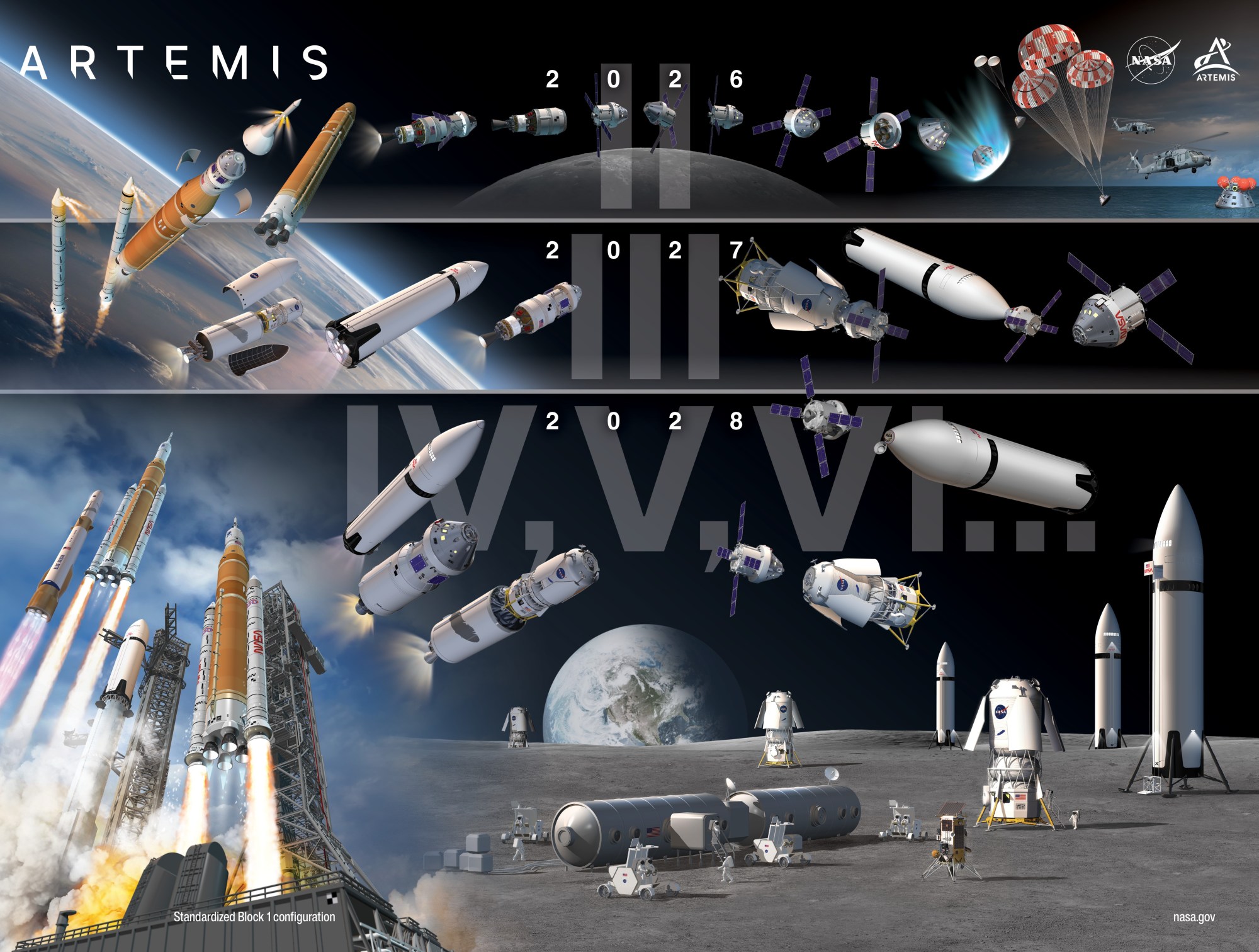
NASA Adds Mission to Artemis Lunar Program (March 1, 2026)
https://www.nasa.gov/wp-content/uploads/2026/02/artemis-program-infographic.jpg?resize=2000,1512
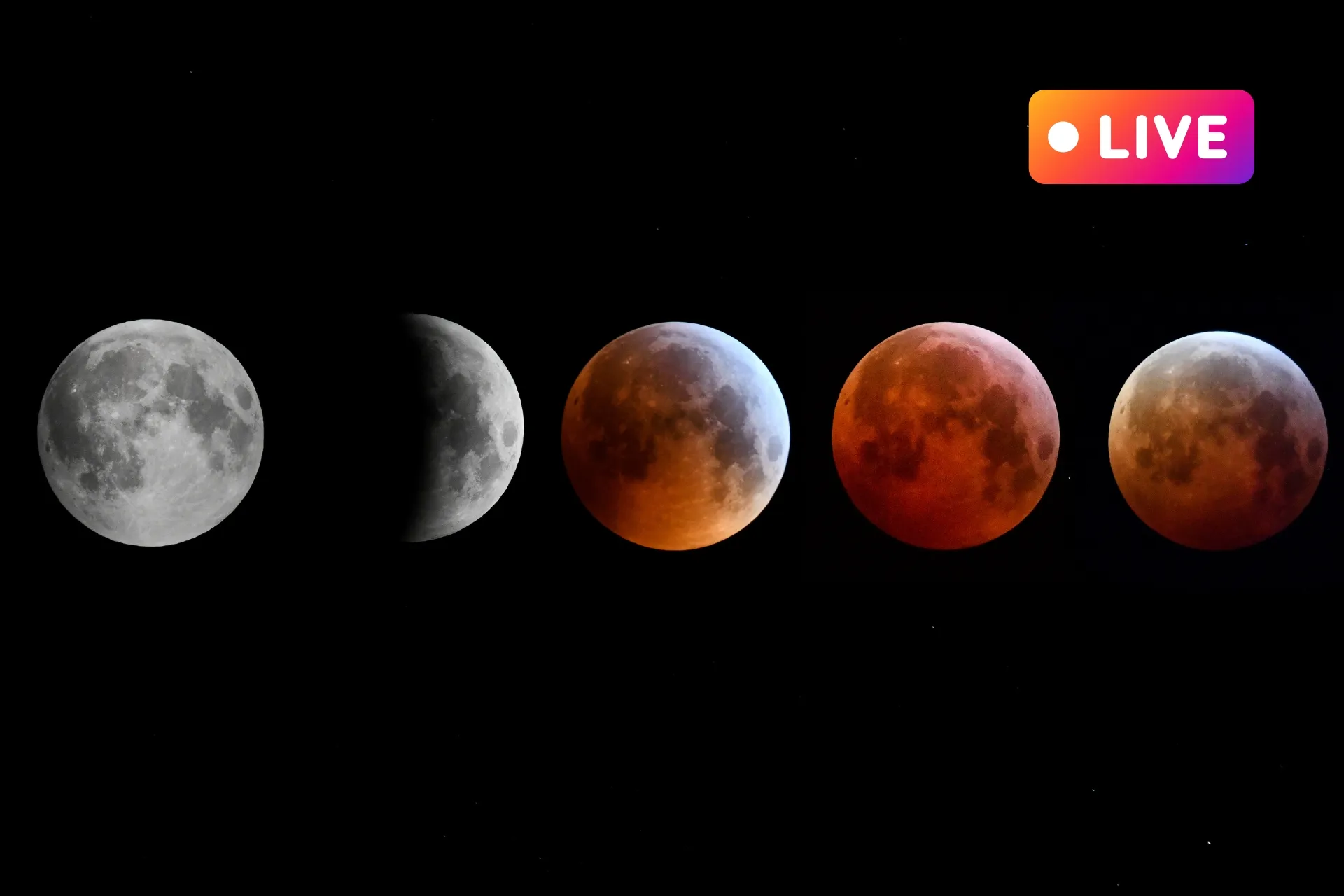
Total Lunar Eclipse Observed in North America and Asia (March 3, 2026)
https://cdn.mos.cms.futurecdn.net/4GuvHpZAqAEM9jPBtFp3ok-1920-80.jpg.webp
JWST Discovers Most Distant “Jellyfish Galaxy” Ever Seen (March 3, 2026)
https://scx1.b-cdn.net/csz/news/800a/2026/scientists-observe-dis.jpg

NASA Selects Centaur 5 for Future SLS Upper Stage (March 7, 2026)
https://i0.wp.com/spacenews.com/wp-content/uploads/2026/03/orion-centaur.jpeg?w=1279&ssl=1

Space-Related Birthdays
| Astronaut | Birthday | Birth Year | FCC Callsign | Flights | Notes |
| Deke Slayton | March 1 | 1924 | KC5ST | 1 | One of the original Mercury Seven astronauts who was grounded for years due to a heart condition. He finally flew in 1972 as the docking module pilot for the historic Apollo-Soyuz Test Project. |
| Duane Graveline | March 2 | 1931 | N/A | 0 | Selected as a scientist-astronaut in NASA’s fourth group in 1965 but resigned shortly after for personal reasons. He was a pioneer in research on the physiological effects of prolonged weightlessness and countermeasures. |
| Mikhail Tyurin | March 2 | 1960 | KD5TVQ | 3 | A veteran Russian cosmonaut who served on three long-duration missions to the International Space Station, including Expeditions 3, 14, and 38/39. He conducted five spacewalks and logged over 532 days in space during his career. |
| Bonnie J. Dunbar | March 3 | 1949 | N/A | 5 | A veteran of five Space Shuttle missions, she logged over 50 days in space and conducted extensive microgravity research. Her notable missions included two dockings with the Russian Mir space station during the Shuttle-Mir program. |
| Philip K. Chapman | March 5 | 1935 | N/A | 0 | The first Australian-born astronaut, selected by NASA as a scientist-astronaut in 1967. He served as the mission scientist for the Apollo 14 lunar mission but resigned before flying in space. |
| Gordon Cooper | March 6 | 1927 | K6ZRT | 2 | One of the original Mercury Seven, he piloted the final Mercury mission, Faith 7, becoming the first American to sleep in space. He later commanded the Gemini 5 mission, setting a new space endurance record at the time. |
| Valentina Tereshkova | March 6 | 1937 | N/A | 1 | The first woman to fly in space, she orbited the Earth 48 times aboard Vostok 6 in June 1963. She remains the only woman to have completed a solo space mission and is the youngest woman to fly in space. |
This Week in Space History
Venera 3: First Impact on Another Planet (March 1, 1966)

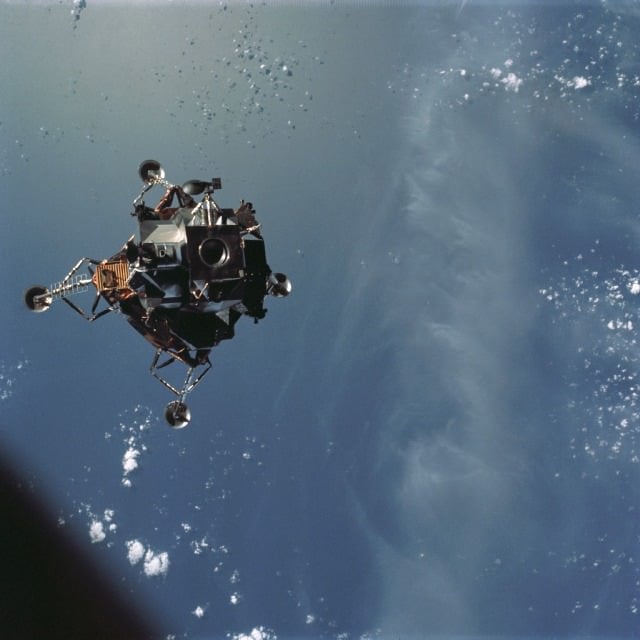
Apollo 9: Testing the Lunar Module (March 3, 1969)
https://www.universetoday.com/article_images/apollo_9_spider.jpg
Mars 6: Atmospheric Descent Data (March 3, 1974)

OSO 1: The First Orbiting Solar Observatory (March 7, 1962)
https://whiteeagleaerospace.wordpress.com/wp-content/uploads/2011/03/oso-1.jpg

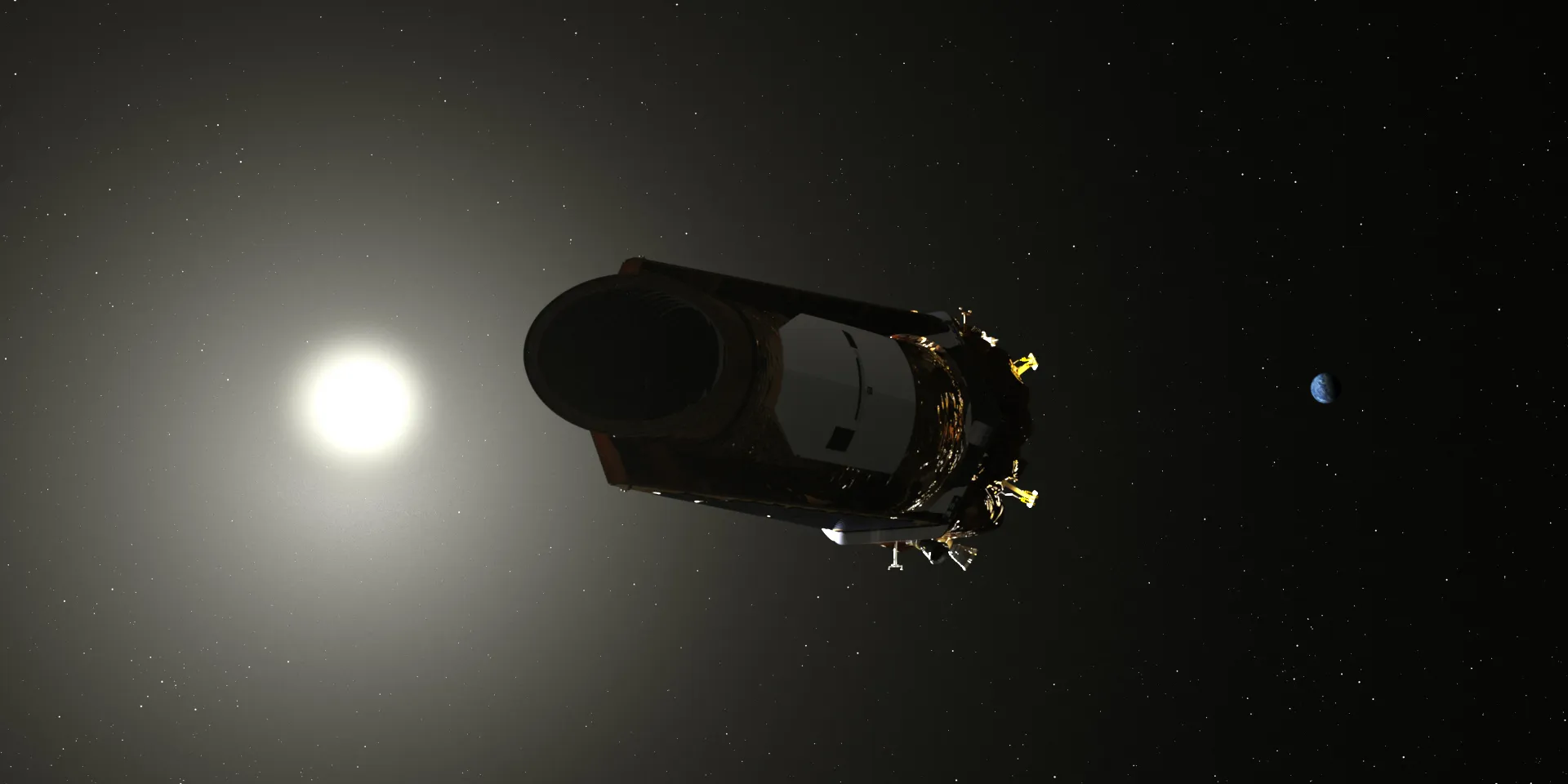
Kepler Space Telescope: Hunting for Exoplanets (March 7, 2009)
https://cdn.mos.cms.futurecdn.net/s8CZyThrf5MtYKyU73599e-1920-80.jpg.webp
Miss Carolyn’s Constellation of the Week
Constellations “Canis Minor the Little Dog” and “Monoceros the Unicorn”
Space Launches For This Week
Space Flight Now Launch Schedule
NET March 9/10 Alpha • ‘Stairway to Seven’
Launch time: Window opens at 5:50 p.m. PDT (8:50 p.m. EDT / 0050 UTC)
Launch site: SLC-2, Vandenberg Space Force Base, California
Firefly Aerospace will launch its Alpha rocket on a return to flight mission following an anomaly seen during Alpha Flight 6. The rocket will carry what the company calls a “test demo” payload. It will also test out new systems that will fully roll out with Firefly’s Block 2 configuration of the rocket on Alpha Flight 8. Delayed from Feb. 18. Delayed from Feb. 27, 28, and March 1/2 “due to high upper-level winds.”
Updated: March 06
March 9/10 Falcon 9 • EchoStar 25
Launch time: 149-minute window opens at 11:14 p.m. EDT (0314 UTC)
Launch site: SLC-40, Cape Canaveral Space Force Station, Florida
A SpaceX Falcon 9 rocket will launch EchoStar’s EchoStar 25 satellite into a geosynchronous transfer orbit. The direct broadcast satellite is a collaboration between EchoStar and its subsidiary, Dish, as well as Lanteris Space Systems, a subsidiary of Intuitive Machines. More than 8.5 minutes after liftoff, the first stage booster, tail number B1085, launching for a 14th time, will land on the drone ship, ‘A Shortfall of Gravitas,’ positioned in the Atlantic Ocean.
Updated: March 03
March 11 Falcon 9 • Starlink 17-31
Launch time: Window opens at 3:58 a.m. PDT (6:58 a.m. EDT / 1058 UTC)
Launch site: SLC-4E, Vandenberg Space Force Base, California
A SpaceX Falcon 9 rocket will launch a batch of 25 Starlink V2 Mini Optimized satellites into low Earth orbit. More than eight minutes after liftoff, the first stage booster, tail number B1071, launching for a 32nd time, will land on the drone ship, ‘Of Course I Still Love You,’ positioned in the Pacific Ocean. Delayed from March 8.
Updated: March 06
March 12 Falcon 9 • Starlink 10-48
Launch time: Window opens at 6 a.m. EDT (1000 UTC)
Launch site: SLC-40, Cape Canaveral Space Force Station, Florida
A SpaceX Falcon 9 rocket will launch 29 Starlink V2 Mini Optimized satellites into low Earth orbit. The first stage booster, tail number 1095, launching for a sixth time, will target a landing on the drone ship, ‘Just Read the Instructions,’ positioned in the Atlantic Ocean.
Updated: March 06
March 14/15 Falcon 9 • Starlink 17-24
Launch time: Window opens at 7:37 p.m. PDT (10:37 p.m. EDT / 0237 UTC)
Launch site: SLC-4E, Vandenberg Space Force Base, California
A SpaceX Falcon 9 rocket will launch a batch of 25 Starlink V2 Mini Optimized satellites into low Earth orbit. More than eight minutes after liftoff, the first stage booster, tail number B1088, launching for a 14th time, will land on the drone ship, ‘Of Course I Still Love You,’ positioned in the Pacific Ocean. Delayed from March 11/12.
Updated: March 06
March 15 Falcon 9 • Starlink 10-46
Launch time: Window opens at 7:11 a.m. EDT (1111 UTC)
Launch site: SLC-40, Cape Canaveral Space Force Station, Florida
A SpaceX Falcon 9 rocket will launch 29 Starlink V2 Mini Optimized satellites into low Earth orbit. The first stage booster, tail number 1090, launching for an 11th time, will target a landing on the drone ship, ‘A Shortfall of Gravitas,’ positioned in the Atlantic Ocean.
Updated: March 06
NET March 19 Spectrum • ‘Onward and Upward’
Launch time: TBD
Launch site: Launch Complex 1, Andøya Spaceport, Norway
A Spectrum rocket from Isar Aerospace will launch on its second test flight. The two-stage rocket is carrying five CubeSats onboard: CyBEEsat from TU Berlin, TriSat-S from the University of Maribor, Platform 6 from EnduroSat, FramSat-1 from NTNU, and SpaceTeamSat1 from TU Wien Space Team. The sixth and final announced payload is an experiment called “Let it Go” from Dcubed. Exolaunch is responsible for managing payload integration and deployment. Delayed from Jan. 21 due to a pressurization valve issue.
Updated: February 16
NET March New Glenn • BlueBird 7
Launch time: TBD
Launch site: Launch Complex 36, Cape Canaveral Space Force Station
A Blue Origin New Glenn rocket will launch AST SpaceMobile’s BlueBird 7satellite into low Earth orbit. This is the second satellite in AST SpaceMobile’s next-generation satellite constellation and is designed to support space-based cellular broadband for commercial and government customers. This will be the third launch of a New Glenn rocket to date. As of Jan. 22, Blue Origin hasn’t stated if it intends to attempt a booster recovery on this mission.
Updated: February 26
Visible satellite passages over the next couple of days.
You can use the http://www.heavens-above.com website to find out what’s in orbit and
where to look during fly-overs
All times are “local” (Dallas) time.
ISS

Tiangong
