
IO Group: https://groups.io/g/DARCskynet/topics
Facebook Group: http://www.facebook.com/groups/306498286059167/
Saturday’s DARC SkyNet is at 9PM CT.
Recent Astronomical Discoveries
Mysterious “little red dots” could reveal how the first black holes formed
https://www.sciencedaily.com/releases/2025/08/250819072201.htm
Black Hole Stars
https://www.sciencedaily.com/images/1920/distant-red-galaxies-black-hole-stars.webp
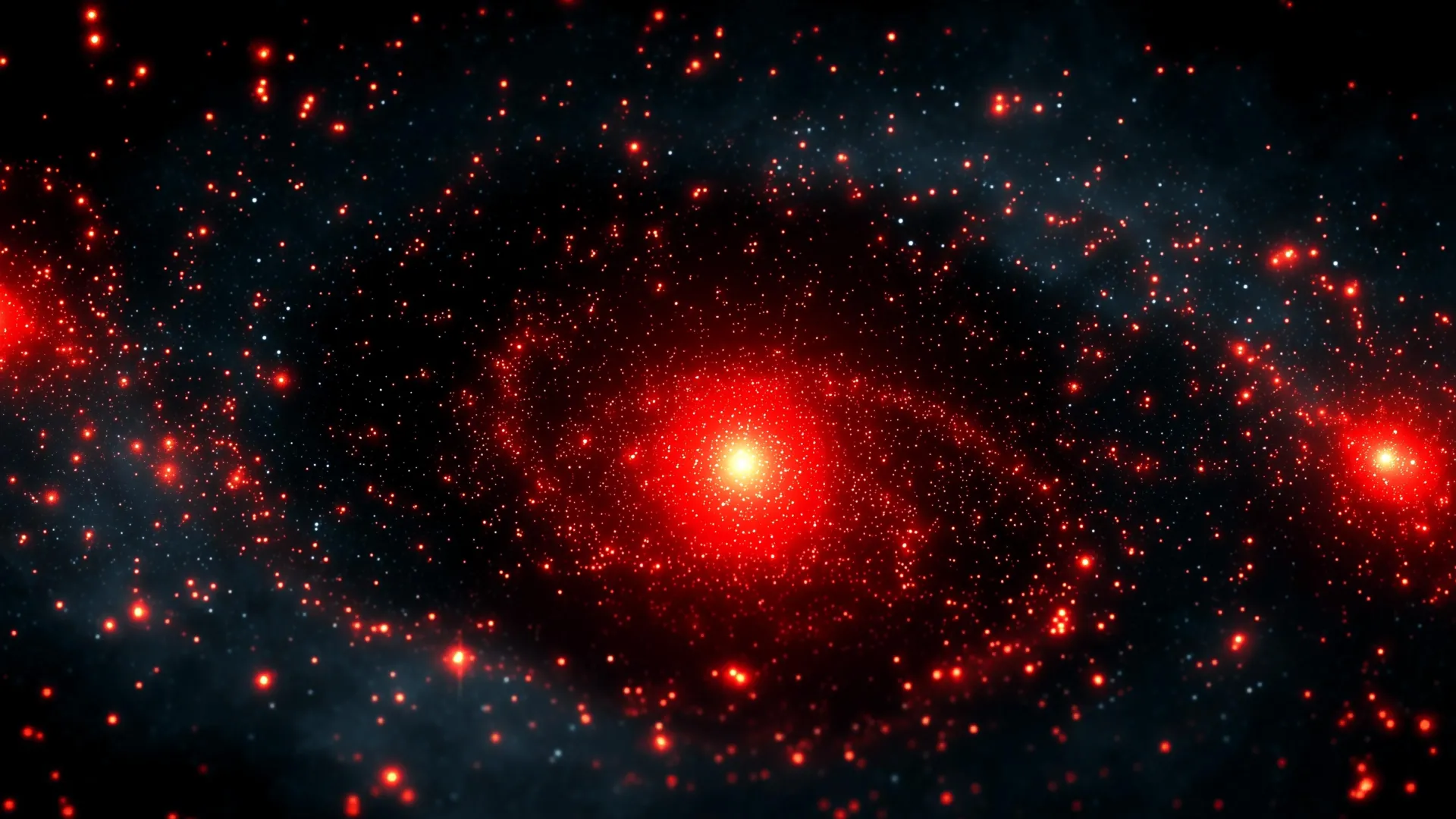
Discussion Topic of the Evening.
The Giant Magellan Telescope
https://en.wikipedia.org/wiki/Giant_Magellan_Telescope
Time Exposure and Rendering of GMT

GMT Construction Site

Profile View

Light Path
https://upload.wikimedia.org/wikipedia/commons/2/24/Light_Path_on_GMT_%28Lightpath_series%29.jpg

Primary Mirror Back Surface
Large Telescope Mirror Face-off Page
https://upload.wikimedia.org/wikipedia/commons/c/c5/Comparison_optical_telescope_primary_mirrors.svg

Secondary Mirror Rendering

Waz Up
Space Exploration and Space History
Space Exploration News
Astronomers intrigued by odd light emitted by interstellar visitor 3I/ATLAS
https://img-s-msn-com.akamaized.net/tenant/amp/entityid/AA1KT3Cb.img?w=768&h=566&m=6
NASA’s Bennu Samples Reveal Complex Origins, Dramatic Transformation
Space-Related Birthdays
Thomas J. Hennen August 17, 1952 STS-44

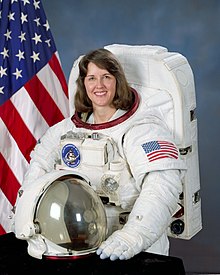
Kathryn C. Thornton August 17, 1952 STS-33 STS-49 STS-61 STS-73

Story Musgrave August 19, 1935 STS-6, STS-51-F, STS-33, STS-44, STS-61, STS-80
https://upload.wikimedia.org/wikipedia/commons/f/ff/StoryMusgrave.jpg
Charles Bolder August 19, 1946 STS-61-C STS-31 STS-45, STS-60 https://upload.wikimedia.org/wikipedia/commons/1/10/Charles_F._Bolden%2C_Jr.jpg

Mike Massimino August 19, 1962 STS-109 STS-125 https://upload.wikimedia.org/wikipedia/commons/c/ca/Michael_Massimino.jpg

Jean-Loup Chretien, August 20, 1938 Soyuz T-6 Salyut 7, Soyuz TM-7 Mir, Soyuz TM-6 Mir, STS-86 Mir

Gerald Carr August 22, 1932 Skylab 4https://upload.wikimedia.org/wikipedia/commons/a/a4/Gerald_P._Carr_2.jpg

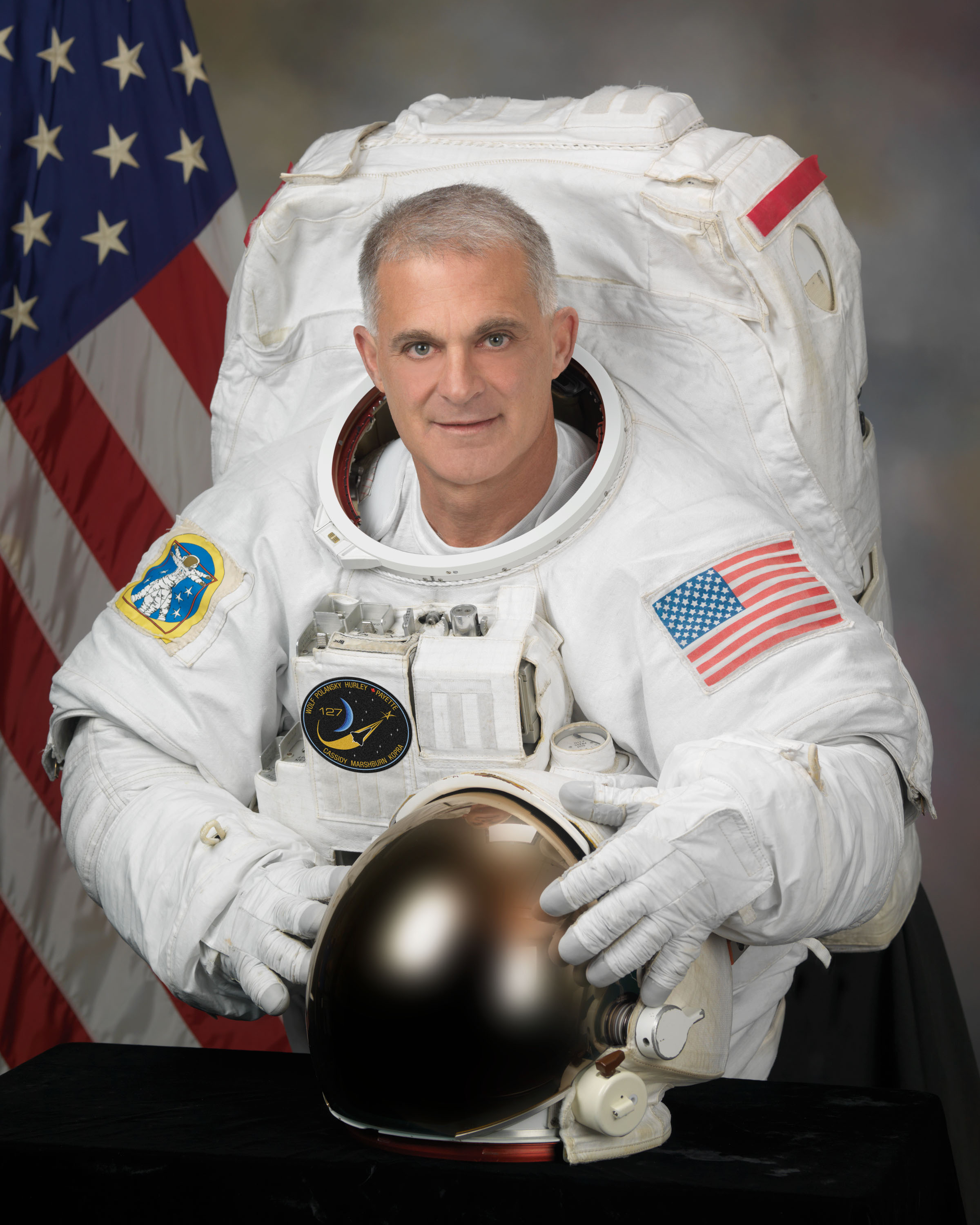
David Wold August 23, 1956 STS-58, STS-86/STS-89 – Mir 24, STS-112, STS-127
https://upload.wikimedia.org/wikipedia/commons/3/3a/DavidWolfv2.jpg
Dominic Antonelli August 23, 1967 STS-119, STS-132
https://upload.wikimedia.org/wikipedia/commons/1/15/Antonelli.jpg

This Week in Space History
Aug 17-23
August 18, 1868 A French astronomer named Pierre Jules César Janssen discovered helium while observing a total solar eclipse in India. https://media.sciencephoto.com/image/c0498964/800wm/C0498964-Jules_Janssen,_French_astronomer.jpg

August 21, 1914
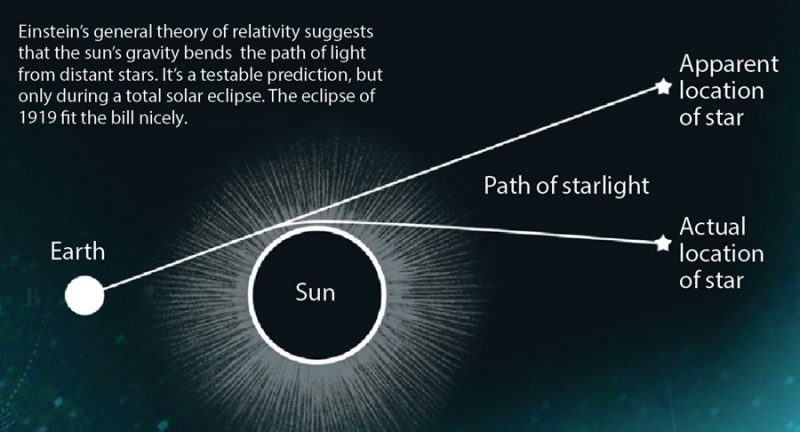
On Aug. 21, 1914, a total solar eclipse temporarily darkened skies across Europe and Asia confirmed Einstein’s Theory of Relativity https://earthsky.org/upl/2019/05/eclipse-solar-light-bends-star-positions-GSFC-NASA-e1559038971248.jpg
August 21, 2017: A solar eclipse, dubbed the “Great American Eclipse” by the media, was a total solar eclipse visible within a band that spanned the entire contiguous United States, passing from the Pacific to the Atlantic coasts. https://www.newsherald.com/gcdn/authoring/2017/05/20/NTNH/ghows-DA-4fde5991-d4f7-063e-e053-0100007f06ed-f109f814.jpeg?width=600&height=632&fit=crop&format=pjpg&auto=webp

Miss Carolyn’s Constellation of the Week
Constellation “Aquila the Eagle”
Space Launches For This Week
Space Flight Now Launch Schedule
August 24 Falcon 9 • CRS-33
Launch time: 2:45 a.m. EDT (0645 UTC)
Launch site: SLC-40, Cape Canaveral Space Force Station, Florida
A SpaceX Falcon 9 rocket will launch a Cargo Dragon spacecraft with more than 5,000 of pounds of science and supplies to the International Space Station. The Dragon flying this mission will include a new propulsion system within the vehicle’s trunk that will allow it to perform a boost of the space station’s orbit. This is a milestone in SpaceX’s development of the ISS Deorbit Vehicle, which will help slowly lower the orbit of the space station at the end of its functional life around the 2030/2031 timeframe. SpaceX will launch the mission using the Falcon 9 first stage booster, tail number B1090, which will launch for a seventh time. A little more than 8.5 minutes after liftoff, B1090 will target a landing on the SpaceX droneship, ‘A Shortfall of Gravitas,’ which will be positioned in the Atlantic Ocean. Delayed from Aug. 21.
Updated: August 21
NET August 24 Starship • Flight 10
Launch time: Window opens at 6:30 p.m. CDT (7:30 p.m. EDT / 2330 UTC)
Launch site: OLP-A, Starbase, Texas
A SpaceX Starship-Super Heavy rocket (collectively referred to as Starship) will launch from Starbase, Texas, on a suborbital flight. This will be the 10th flight of the integrated launch vehicle. Similarly to Flight 9, SpaceX will not attempt to perform a catch of the Super Heavy booster and instead attempt a controlled splashdown in the Gulf. The Ship upper stage will also target an aquatic ending and will also attempt multiple demonstrations, like deploying eight Starlink simulators and relighting a single Raptor engine during the coast phase of the mission.
Updated: August 15
August 26 Falcon 9 • NAOS
Launch time: Window opens at 11:53 a.m. PDT (2:53 p.m. EDT / 1853 UTC)
Launch site: SLC-4E, Vandenberg Space Force Base, California
A SpaceX Falcon 9 rocket will launch OHB Italia’s NAOS (National Advanced Optical System) spacecraft on a rideshare mission alongside seven other satellites. NAOS is part of the Luxembourg government’s Directorate of Defense’s Luxembourg Earth Observation (LUXEOSys) program and will operate in a 450 km polar low Earth orbit. The satellite was originally scheduled to launch in the second half of 2023 on an Arianespace Vega-C rocket, but the Government of Luxembourg shifted the 382 million euro mission to the Falcon 9 because of the issues with Vega-C. The launch onboard Falcon 9 was then planned for sometime between October 2024 and January 2025. Alongside the main satellite is Dhruva Space’s LEAP-1; Planet’s Pelican-3 and Pelican-4; and Exolaunch’s Acadia-6, FFLY-1, FFLY-2, and FFLY-3. SpaceX will launch the mission using the Falcon 9 first stage booster, tail number B1063, launching for a 27th time. A little less than eight minutes after liftoff, B1063 will target a landing back at Landing Zone 4 (LZ-4).
Updated: August 18
August 27 Falcon 9 • Starlink 10-11
Launch time: Window opens 1:49 a.m. EDT (0549 UTC)
Launch site: Launch Complex 39A, Kennedy Space Center, Florida
A SpaceX Falcon 9 rocket will launch 28 Starlink V2 Mini satellites into low Earth orbit. Nearly 8.5 minutes after liftoff, the first stage booster, tail number B1067, launching for a 30th time, will target a landing on the droneship, ‘A Shortfall of Gravitas,’ positioned in the Atlantic Ocean. Previously assigned to Falcon 9 booster tail number B1095, launching from Space Launch Complex 40 at Cape Canaveral Space Force Station. Delayed from Aug. 13. Delayed from Aug. 15. Delayed from Aug. 16. Delayed from Aug. 25.
Updated: August 21
August 27 Falcon 9 • Starlink 10-56
Launch time: Window opens at 6:53 a.m. EDT (1053 UTC)
Launch site: SLC-40, Cape Canaveral Space Force Station, Florida
A SpaceX Falcon 9 rocket will launch 28 Starlink V2 Mini satellites into low Earth orbit. Nearly 8.5 minutes after liftoff, the Falcon 9 first stage booster, tail number B1095, launching for a second time, will target a landing on the droneship, ‘Just Read the Instructions,’ positioned in the Atlantic Ocean.
Updated: August 21
August 29/30 Falcon 9 • Starlink 17-7
Launch time: Window opens at 7:05 p.m. PDT (10:05 p.m. EDT / 0205 UTC)
Launch site: SLC-4E, Vandenberg Space Force Base, California
A SpaceX Falcon 9 rocket will launch 24 Starlink V2 Mini satellites into low Earth orbit. Nearly 8.5 minutes after liftoff, the first stage booster, tail number B1082, flying for a 15th time, will target a landing on the droneship, ‘Of Course I Still Love You,’ positioned in the Pacific Ocean. Booster switched from B1063. Delayed from Aug. 20. Delayed from Aug. 22. Delayed from Aug. 24.
Updated: August 21
NET August 30 Falcon 9 • Starlink 10-14
Launch time: Window opens at 7:38 a.m. EDT (1138 UTC)
Launch site: SLC-40, Cape Canaveral Space Force Station, Florida
A SpaceX Falcon 9 rocket will launch 28 Starlink V2 Mini satellites into low Earth orbit. A little less than 8.5 minutes after liftoff, the Falcon 9 first stage booster, tail number B1077, launching for a 23rd time, will target a landing on the droneship, ‘Just Read the Instructions,’ positioned in the Atlantic Ocean.
Updated: August 21
NET September 15 Falcon 9 • NG-23
Launch time: TBD
Launch site: SLC-40, Florida
A SpaceX Falcon 9 rocket will launch a Cygnus spacecraft from Northrop Grumman on a resupply mission to the International Space Station. This will be the 22nd launch of a Cygnus spacecraft and the first launch of a Cygnus XL spacecraft, which is capable of carrying 1,250 kg more cargo than the previous version of the Cygnus spacecraft. The spacecraft is named the S.S. William ‘Willie’ C. McCool. The NG-22 mission was delayed indefinitely after the spacecraft was damaged during transport to Florida.