
IO Group: https://groups.io/g/DARCskynet/topics
Facebook Group: http://www.facebook.com/groups/306498286059167/
Saturday’s DARC SkyNet is at 9PM CT.
Recent Astronomical Discoveries
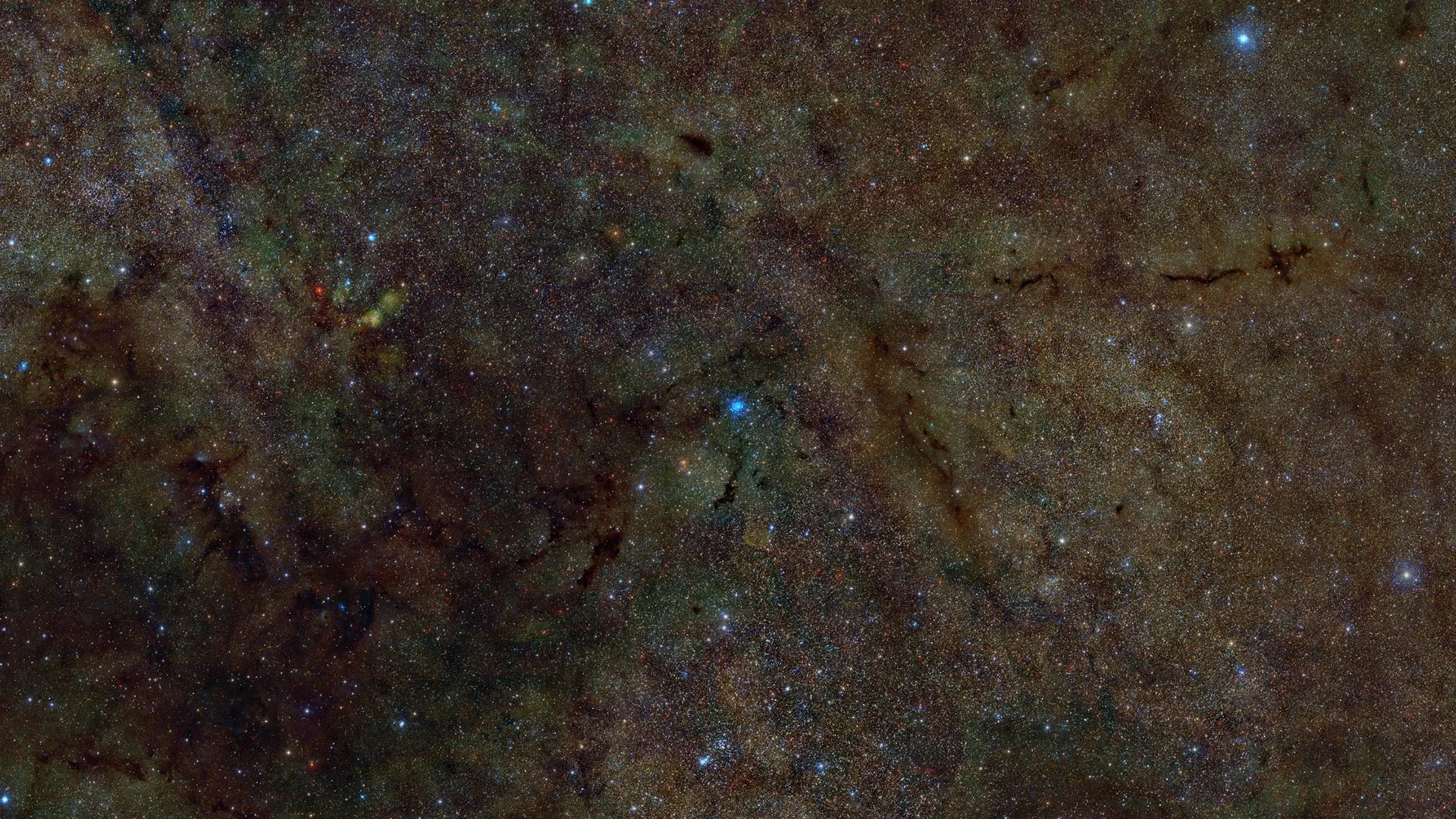
NASA and Japan’s XRISM just found sulfur hiding between the stars
https://www.sciencedaily.com/releases/2025/08/250805041628.htm
X-Ray Binary GX340+0 – XRISM Photo
https://www.sciencedaily.com/images/1920/x-ray-binary-gx-3400.webp
Discussion Topic of the Evening.
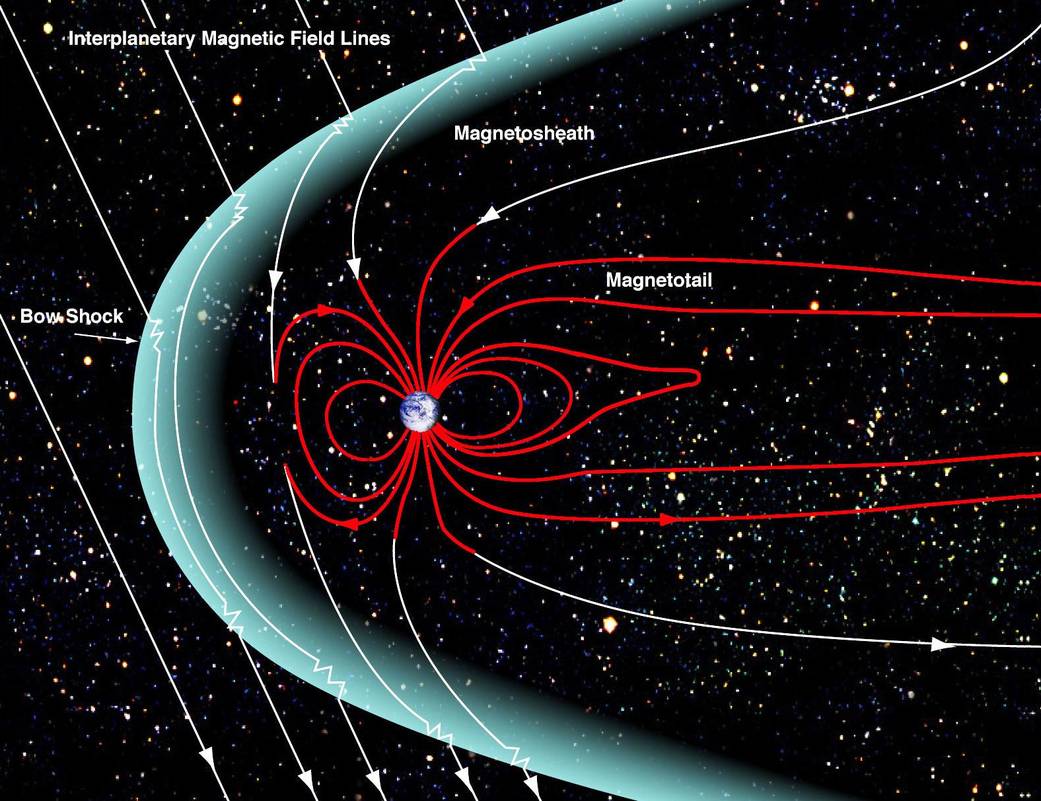
How to create an artificial magnetosphere for Mars
Mars Magnetosphere…
https://www.universetoday.com/article_images/torus-1024×784.jpg

Earth’s Magnetic Field
https://www.nasa.gov/wp-content/uploads/2023/03/470162main_magnetosphere-orig_full.jpg?w=1041
Earth/Mars Atmospheric Composition

Mars
Waz Up
Space Exploration and Space History
Space Exploration News
This Week on the ISS
NASA’s new sun-studying mission ‘PUNCH’ attains its final form in Earth orbit

Space-Related Birthdays
Aug 10 – 16
Frederick W. Sturckow August 11, 1961, STS-88, STS-105, STS-117, STS-128, VP-03, Unity 21, Unity 25, Galactic 02, Galactic 04, Galactic 06
https://upload.wikimedia.org/wikipedia/commons/thumb/7/7c/Rick_Sturckow.jpg/220px-Rick_Sturckow.jpg

Charles E. Brady Jr.August 12, 1951 STS-78

Robert L. Stewart August 13, 1942 STS-41-B, STS-51-J
https://upload.wikimedia.org/wikipedia/commons/thumb/d/d7/Stewart-rl.jpg/800px-Stewart-rl.jpg

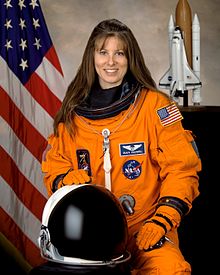
Tracy Caldwell Dyson August 14, 1969 STS-118, TMA-18 (Expedition 23/24), MS-25 (Expedition 70/71)
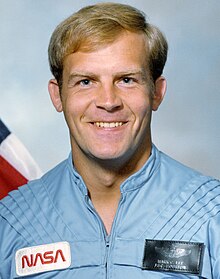
Jon McBride August 14, 1943 STS-41-G, STS-61-E
https://upload.wikimedia.org/wikipedia/commons/thumb/6/6d/Mcbride-ja.jpg/220px-Mcbride-ja.jpg

Mark C. Lee August 14, 1952 STS-30, STS-47, STS-64, STS-82
Scott Altman August 15, 1947 STS-90, STS-106, STS-109, STS-125
Sonny Carter August 15, 1991 STS-33
https://upload.wikimedia.org/wikipedia/commons/thumb/5/50/Manley_Carter.jpg/220px-Manley_Carter.jpg
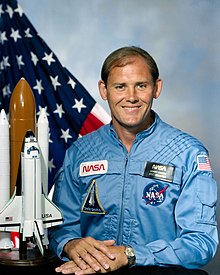
Peter Wisoff August 16, 1958 STS-57, STS-68, STS-81, STS-92

Stuart Roosa August 16, 1933 Apollo 14

This Week in Space History
Aug 10 – 16
August 13, 1969 Apollo 11 parade

August 13, 1972 Explorer 46 launched

August 12, 1977 HEAO-1 Launched

Miss Carolyn’s Constellation of the Week
“Scutum the Shield and Corona Austrina the Southern Crown”
Space Launches For This Week
Space Flight Now Launch Schedule
August 18 Falcon 9 • Starlink 17-5
Launch time: Window opens at 8:44 a.m. PDT (11:44 a.m. / 1544 UTC)
Launch site: SLC-4E, Vandenberg Space Force Base, California
A SpaceX Falcon 9 rocket will launch 24 Starlink V2 Mini satellites into low Earth orbit. Nearly 8.5 minutes after liftoff, the first stage booster, tail number B1088, launching for a ninth time, will target a landing on the droneship, ‘Of Course I Still Love You,’ positioned in the Pacific Ocean. Delayed from Aug. 17.
Updated: August 15
August 21 Falcon 9 • USSF-36
Launch time: TBD
Launch site: Launch Complex 39A, Kennedy Space Center, Florida
A SpaceX Falcon 9 rocket will launch the eighth mission of the X-37B Orbital Test Vehicle (OTV-8), a cargo spaceplane built by Boeing on behalf of the U.S. Space Force in cooperation with the Air Force Rapid Capabilities Office. The mission, also referred to as USSF-36, will demonstrate space-based communications using laser links between the spaceplane and “proliferated commercial satellite networks in Low Earth Orbit.” Officials haven’t said if this will involve SpaceX’s Starlink constellation or the Starshield satellites developed for government use. It will also demonstrate what USSF calls “the highest performing quantum inertial sensor ever tested in space” in order to show navigation capabilities without the use of the GPS satellite constellation. The day-to-day operations of the X-37B are managed by the Fifth Space Operations Squadron within USSF Delta 9.
Updated: August 03
NET August 22 Falcon 9 • Starlink 17-6
Launch time: Window opens at 8:44 a.m. PDT (11:44 a.m. / 1544 UTC)
Launch site: SLC-4E, Vandenberg Space Force Base, California
A SpaceX Falcon 9 rocket will launch 24 Starlink V2 Mini satellites into low Earth orbit. Nearly 8.5 minutes after liftoff, the first stage booster, tail number B1081, launching for a 17th time, will target a landing on the droneship, ‘Of Course I Still Love You,’ positioned in the Pacific Ocean. Delayed from Aug. 20 and booster switched from B1063. Delayed from Aug. 21
Updated: August 15
August 24 Falcon 9 • CRS-33
Launch time: 2:45 a.m. EDT (0645 UTC)
Launch site: SLC-40, Cape Canaveral Space Force Station, Florida
A SpaceX Falcon 9 rocket will launch a Cargo Dragon spacecraft with more than 5,000 of pounds of science and supplies to the International Space Station. The Dragon flying this mission will include a new propulsion system within the vehicle’s trunk that will allow it to perform a boost of the space station’s orbit. This is a milestone in SpaceX’s development of the ISS Deorbit Vehicle, which will help slowly lower the orbit of the space station at the end of its functional life around the 2030/2031 timeframe. Delayed from Aug. 21.
Updated: August 14
NET August 24 Starship • Flight 10
Launch time: Window opens at 6:30 p.m. CDT (7:30 p.m. EDT / 2330 UTC)
Launch site: OLP-A, Starbase, Texas
A SpaceX Starship-Super Heavy rocket (collectively referred to as Starship) will launch from Starbase, Texas, on a suborbital flight. This will be the 10th flight of the integrated launch vehicle. Similarly to Flight 9, SpaceX will not attempt to perform a catch of the Super Heavy booster and instead attempt a controlled splashdown in the Gulf. The Ship upper stage will also target an aquatic ending and will also attempt multiple demonstrations, like deploying eight Starlink simulators and relighting a single Raptor engine during the coast phase of the mission.
Updated: August 15
NET August 26 Falcon 9 • Starlink 10-11
Launch time: TBD
Launch site: SLC-40, Cape Canaveral Space Force Station, Florida
A SpaceX Falcon 9 rocket will launch 28 Starlink V2 Mini satellites into low Earth orbit. Nearly 8.5 minutes after liftoff, the first stage booster, tail number B1095, launching for a second time, will target a landing on the droneship, ‘A Shortfall of Gravitas,’ positioned in the Atlantic Ocean. Delayed from Aug. 13. Delayed from Aug. 15. Delayed from Aug. 16. Delayed from Aug. 25.
Updated: August 15
August 29 Falcon 9 • Starlink 17-7
Launch time: TBD
Launch site: SLC-4E, Vandenberg Space Force Base, California
A SpaceX Falcon 9 rocket will launch 24 Starlink V2 Mini satellites into low Earth orbit. Nearly 8.5 minutes after liftoff, the first stage booster, tail number B1063, flying for a 27th time, will target a landing on the droneship, ‘Of Course I Still Love You,’ positioned in the Pacific Ocean. Delayed from Aug. 20. Delayed from Aug. 22. Delayed from Aug. 24.
Updated: August 15
NET Mid-September Falcon 9 • NG-23
Launch time: TBD
Launch site: LC-39A or SLC-40, Florida
A SpaceX Falcon 9 rocket will launch a Cygnus spacecraft from Northrop Grumman on a resupply mission to the International Space Station. This will be the 22nd launch of a Cygnus spacecraft. The NG-22 mission was delayed indefinitely after the spacecraft was damaged during transport to Florida.
Updated: July 03
NET September 29 New Glenn • EscaPADE
Launch time: TBD
Launch site: Launch Complex 36, Cape Canaveral Space Force Station
A Blue Origin New Glenn rocket will launch a pair of identical spacecraft on NASA’s Escape and Plasma Acceleration and Dynamics Explorers (EscaPADE) mission. The two satellites, named Blue and Gold, will make a roughly 11-month journey to Mars where they will then perform about an 11-month science mission while orbiting the Red Planet. Blue and Gold were manufactured by Rocket Lab over about 3.5 years and carry science experiments from the University of California, Berkeley. This launch of the New Glenn rocket will also feature a landing attempt on its landing barge in the Atlantic Ocean. Delayed from Oct. 13, 2024. Delayed from mid-August.
Visible satellite passages over the next couple of days.
You can use the http://www.heavens-above.com website to find out what’s in orbit and
where to look during fly-overs
All times are “local” (Dallas) time.
ISS
Aug 17
Aug 18
Aug 18
Aug 19
Aug 21
Tiangong
Aug 19
Aug 20
Aug 21