
IO Group: https://groups.io/g/DARCskynet/topics
Facebook Group: http://www.facebook.com/groups/306498286059167/
Saturday’s DARC SkyNet is at 9PM CT.
Recent Astronomical Discoveries
Particles energized by magnetic reconnection in the nascent solar wind
https://www.sciencedaily.com/releases/2025/06/250603114631.htm
Parker Solar Probe
https://th.bing.com/th?id=OVFT.m0r0NvHbEGCPRnvFcRHLYi&pid=News&w=300&h=186&c=14&rs=2&qlt=90
MMS (Artist’s Conception
https://mms.gsfc.nasa.gov/images/MMS_mission.jpg
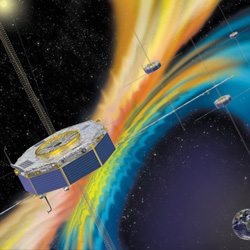
HCS/MMS Data Callouts

Coronal Mass Ejections (May 10 and 11, 2024)

Discussion Topic of the Evening.
Scientists finally discover what’s inside a black hole
Proposed Black Hole Composition
https://img-s-msn-com.akamaized.net/tenant/amp/entityid/AA1t1JcO.img?w=768&h=526&m=6
Proposed Universe is Actually Flat

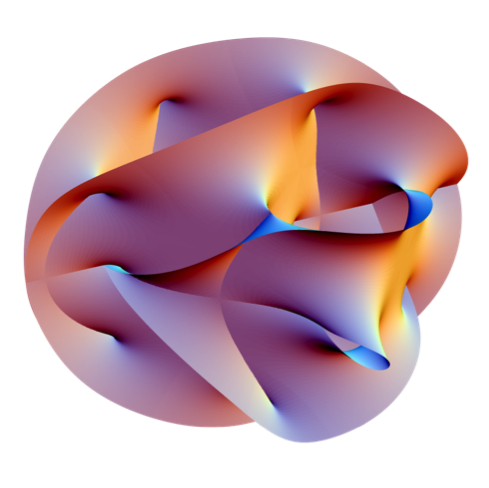
Calabi-Yau Manifold (Compacting Extra Dimensions in String Theory)
https://misciwriters.com/wp-content/uploads/2017/01/molly_2.png
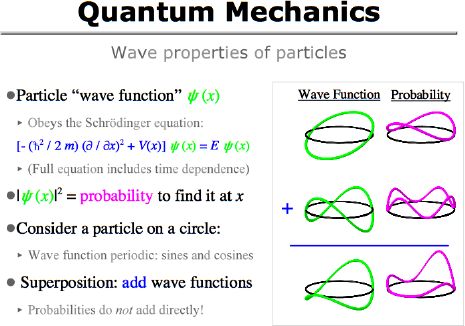
Quantum Wave Properties of Particles
http://www.slimy.com/~steuard/research/StringIntro/jpgs/slide11.jpg
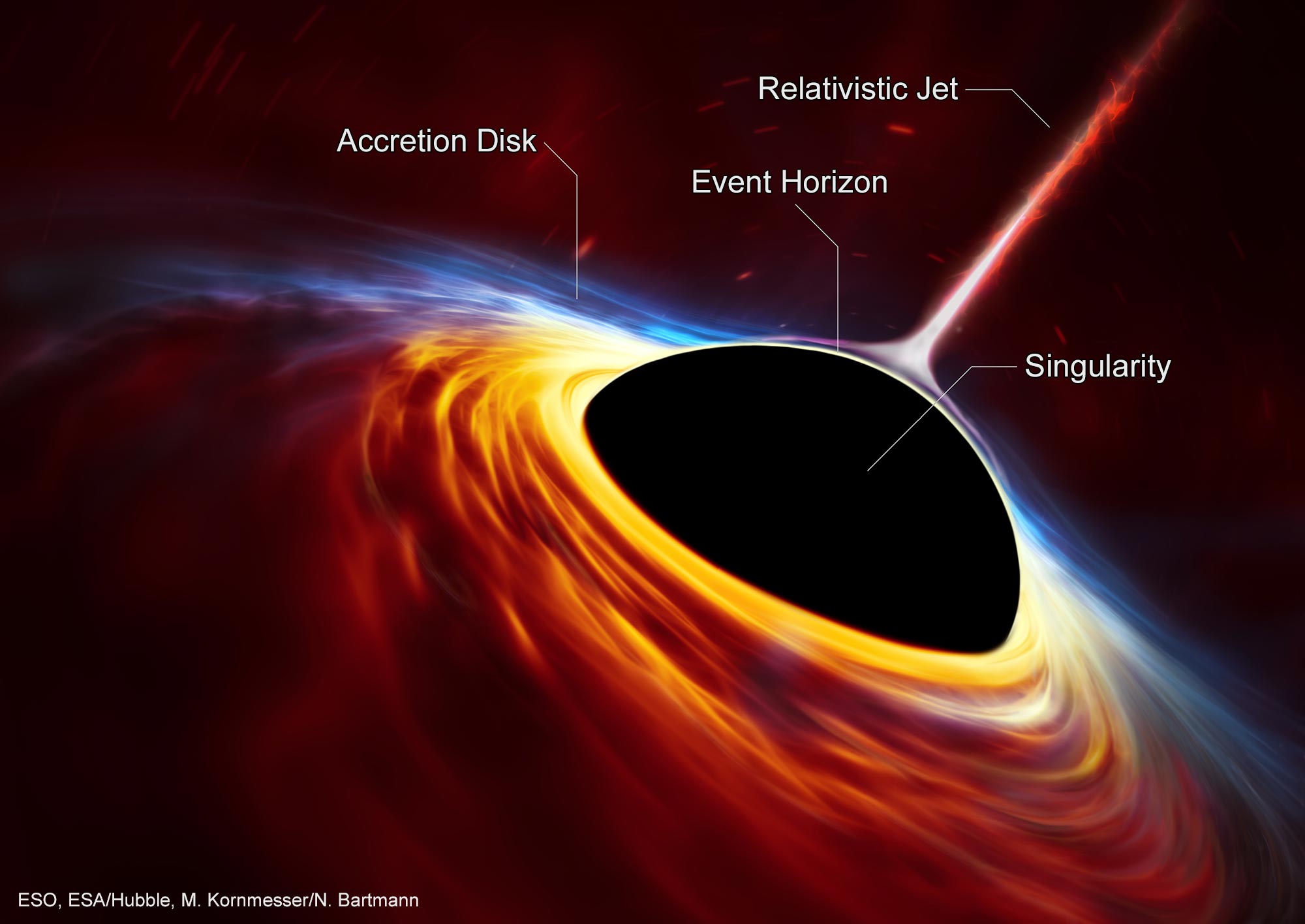
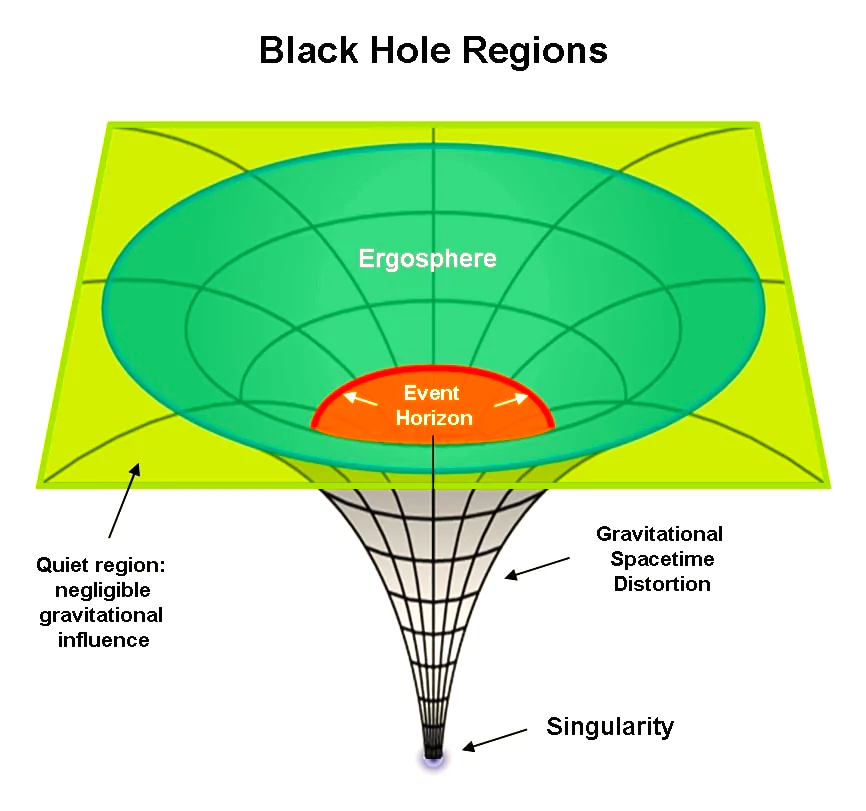
Black Hole (Event Horizon)
https://scitechdaily.com/images/Black-Hole-Anatomy.jpg
Warped Space/Photo Sphere Schematic

Accretion Disk (Call Out)
Ergosphere
https://pwonlyias.com/wp-content/uploads/2024/02/untitled-20-65c204b682424.webp
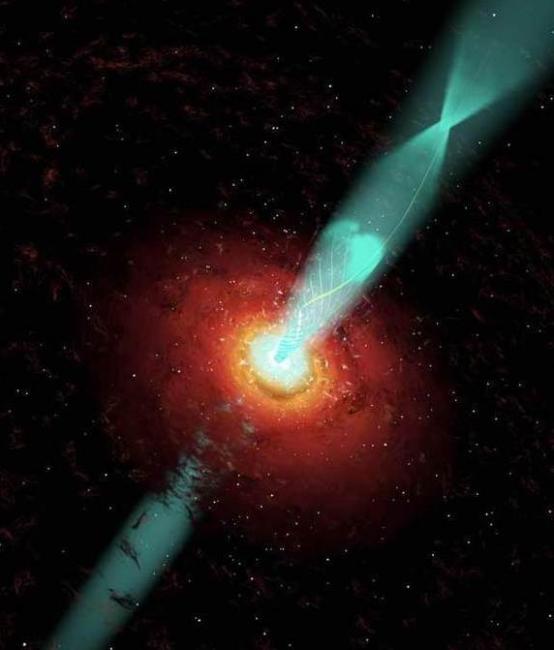
Black Hole Galaxy Jets
Superstring Matrix Model (video)
Waz Up
Space Exploration and Space History
Space Exploration News
SpaceX rocket explodes in Texas, a setback to company’s Mars mission
SpaceX’s massive Starship spacecraft exploded into a dramatic fireball during testing in Brownsville.

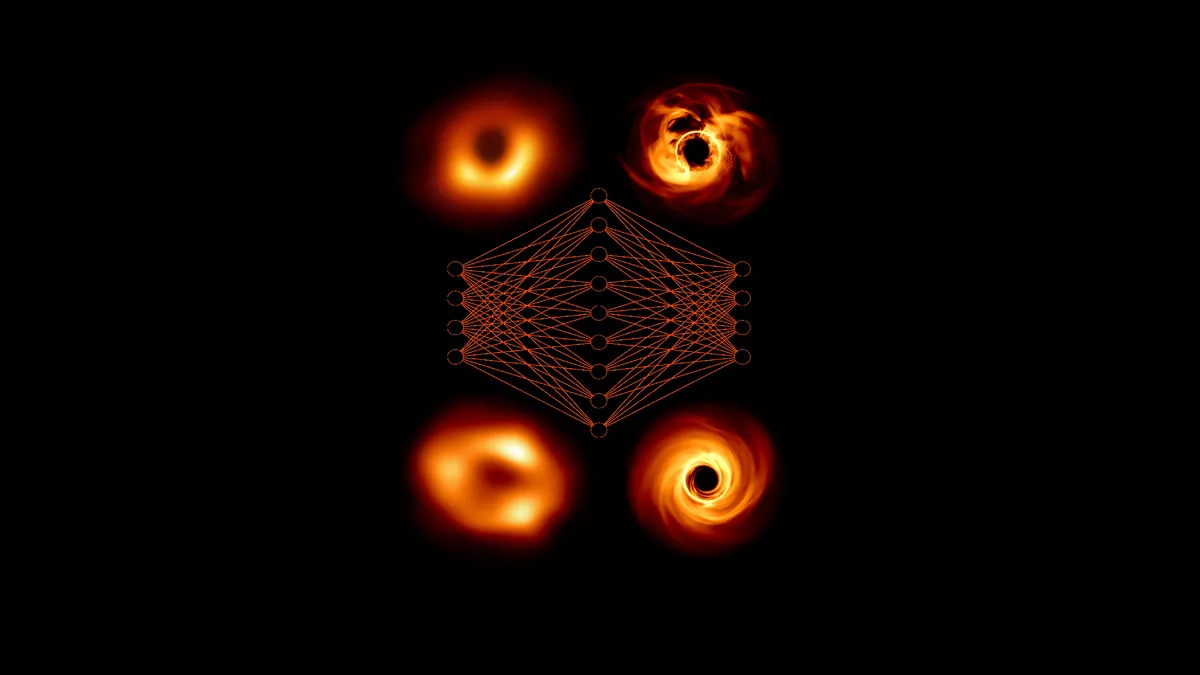
Nobel laureate concerned about AI-generated image of black hole at the center of our galaxy
https://cdn.mos.cms.futurecdn.net/aCA8DVSDgyakY729FC4PgU-1200-80.jpg.webp
Space-Related Birthdays
6/15 – 6/21
Taylor Wang June 16, 1940 STS-51-B

Brian Duffy June 20, 1953 STS-45, STS-57, STS-72, STS-92
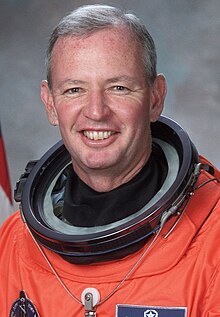
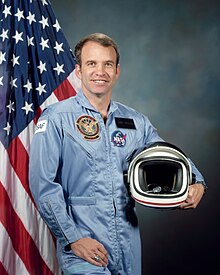
James Buchli June 20, 1945 STS-51-C, STS-61-A, STS-29, STS-48
https://upload.wikimedia.org/wikipedia/commons/thumb/5/5f/James_Buchli.jpg/220px-James_Buchli.jpg

Gary Payton June 20, 1948 STS-51-C
https://upload.wikimedia.org/wikipedia/commons/thumb/e/e4/Gary_Payton.jpg/220px-Gary_Payton.jpg
This Week in Space History
6/15 – 6/21
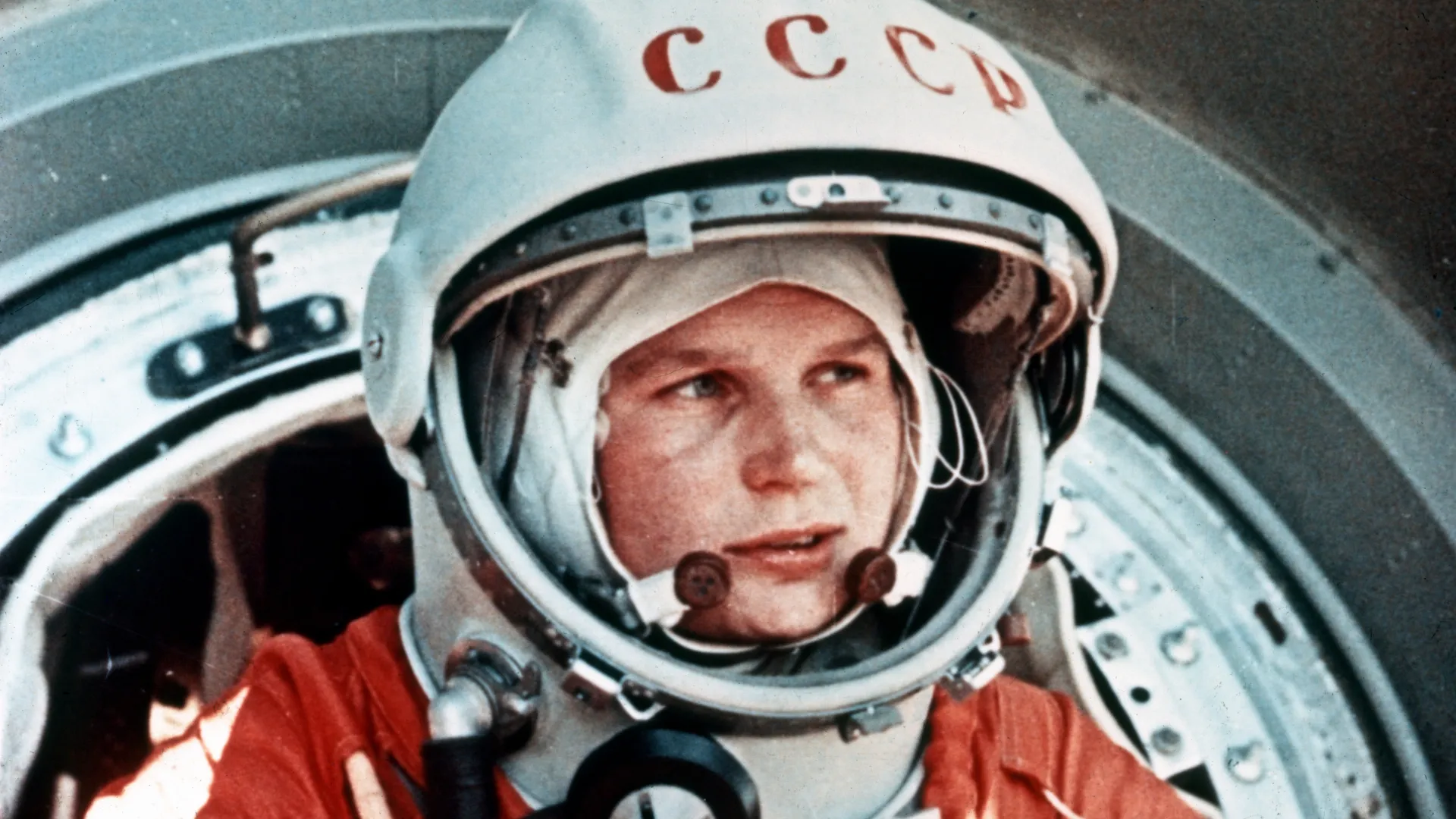
June 16, 1963
Soviet cosmonaut Valentina Tereshkova became the first woman in space.
https://cdn.mos.cms.futurecdn.net/UMrJ6JarwgPzBPCrL3Tcnn-1920-80.jpg.webp
June 18, 1983
When the Space Shuttle Challenger lifted off from the Kennedy Space Center (KSC) on June 18, 1983, Ride became the first American woman to fly in space, and the third woman overall.
:max_bytes(150000):strip_icc():focal(749x0:751x2):format(webp)/sally-ride-031825-c4a9d737c8574be6a9b9c644ab434f88.jpg)
A documentary about Sally Ride recently debuted on the National Geographic Streaming Channel (June 16th, 2025) and Disney+/Hulu on June 17th, “Sally” (2025).
June 16, 1963
Valentina Tereshkova became the first woman in space with the launch of Vostok 6.

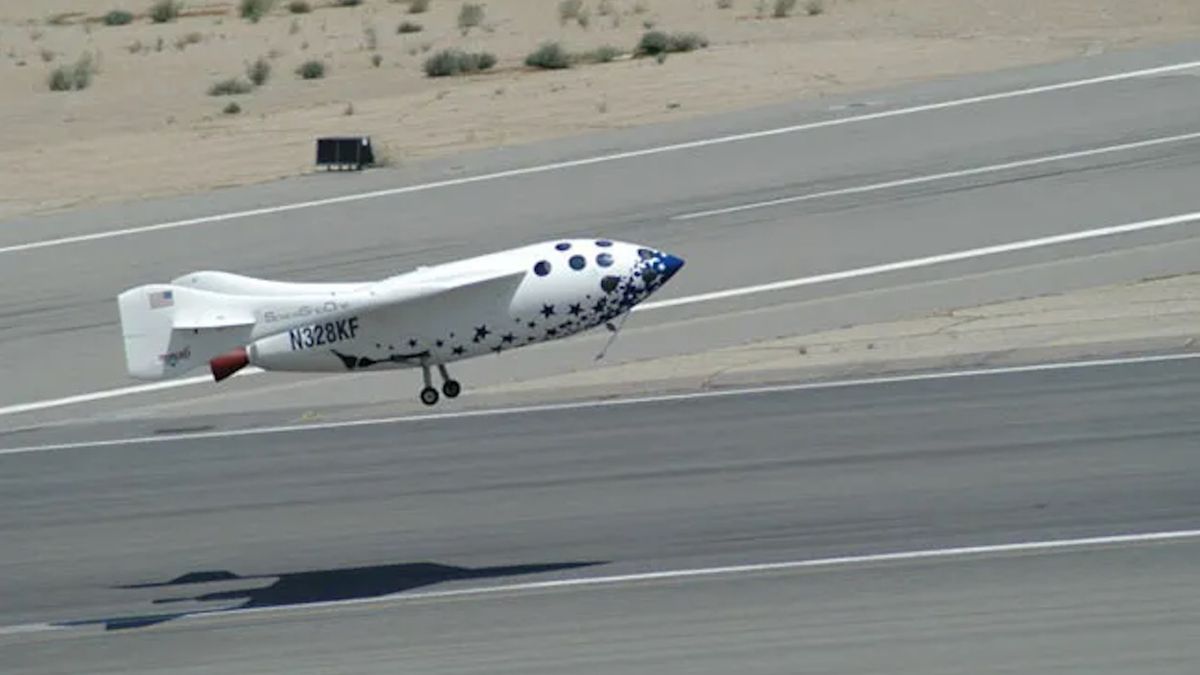
June 21, 2004
SpaceShipOne makes 1st privately funded human spaceflight News
https://cdn.mos.cms.futurecdn.net/FwS65QPWPFAD6aqtq9t7wP-1200-80.jpg
Nobel laureate concerned about AI-generated image of black hole at the center of our galaxy
https://cdn.mos.cms.futurecdn.net/aCA8DVSDgyakY729FC4PgU-1200-80.jpg.webp
Miss Carolyn’s Constellation of the Week
Constellation “Hercules the Strong Man”
Space Launches For This Week
Space Flight Now Launch Schedule
TBD Falcon 9 • Axiom Mission 4 (Ax-4)
Launch time: TBD
Launch site: Launch Complex 39A, Kennedy Space Center, Florida
A SpaceX Falcon 9 rocket will launch the fourth private astronaut mission to the International Space Station. Former NASA astronaut and Axiom Space’s Director of Human Spaceflight will serve as the commander of the mission. This will be her fifth trip to space and her second time commanding a private astronaut mission. Shubhanshu Shukla, an Indian Air Force (IAF) pilot and astronaut with the Indian Space Research Organisation (ISRO) will be the pilot onboard the SpaceX Crew Dragon. Sławosz Uznański-Wiśniewski, a Polish member of the European Space Agency’s (ESA) Astronaut Reserve Class of 2022, and Tibor Kapu, a Hungarian member of the Hungarian to Orbit (HUNOR) Astronaut Program, will serve as the Mission Specialists. These four astronauts will spend up to 14 days docked to the ISS after launching from NASA’s Kennedy Space Center on a Falcon 9 rocket. Following stage separation, the booster will target a touchdown at Landing Zone 1 (LZ-1) at Cape Canaveral Space Force Station. Delayed from May 29, June 8, 10 and 11. Delayed from June 19. Delayed from June 22 as NASA continues evaluating repairs to a leak in the Zvezda module on the International Space Station.
Updated: June 19
TBD Atlas 5 • Kuiper 2
Launch time: TBD
Launch site: SLC-41, Cape Canaveral Space Force Station, Florida
A United Launch Alliance Atlas 5 rocket, in a 551 configuration, will launch the second batch of 27 Project Kuiper satellites for Amazon. The mission is referred to as Kuiper Atlas 02 (KA-02) by Amazon. Delayed from June 13. Scrubbed on June 16 due to an issue connected to the gaseous nitrogen purge line for the RD-180 engine on the booster.
Updated: June 20
NET June 23/24 H-2A • GOSAT-GW
Launch time: 1:33:03 a.m. JST on June 24 (12:33:03 p.m. EDT, 1633:03 UTC on June 23)
Launch site: Launch Pad 1, Tanegashima Space Center, Japan
A Mitsubishi Heavy Industries Co., Ltd. H-2A rocket will launch the Global Observing SATellite for Greenhouse gases and Water cycle (GOSAT-GW), a Japanese Earth-observing satellite. The roughly 2,900 kg (6,393 lbs) satellite will operate in a Sun-synchronous orbit at an altitude of 666 km (414 mi). This spacecraft comes from a partnership between the Japanese Ministry of Environment (MOE), National Institute for Environmental Studies (NIES) and the Japanese Aerospace Exploration Agency (JAXA). The two primary instruments are the Total Anthropogenic and Natural emissions mapping SpectrOmeter-3 (TANSO-3) and the Advanced Microwave Scanning Radiometer 3 (AMSR3). This will be the 50th and final launch of a H-2A rocket.
Updated: April 25
TBD Electron • ‘Symphony in the Stars’
Launch time: TBD
Launch site: Launch Complex 1, Pad A, Mahia, New Zealand
A Rocket Lab Electron rocket will launch a satellite for an undisclosed customer into a 650 km circular orbit. This is set to be the first of two such launches in 2025 for this customer. Delayed from June 20 due to strong upper level winds.
Updated: June 20
TBD Eris • TestFlight1
Launch time: Window opens 7:30 a.m. AEST on May 16 (5:30 p.m. EDT, 2130 UTC on May 15)
Launch site: Pad 1, Bowen Orbital Spaceport
Gilmour Space in Australia is preparing to launch the inaugural flight of its Eris Block 1 rocket. The three-stage launch vehicle is 25 m (82 ft) tall and is equipped with 1.5 m (4.9 ft) diameter payload fairings. The rocket is designed to send up to 305 kg up to low Earth orbit. This first mission, called “TestFlight1,” does not appear to have a payload on board. Delayed from May 4, 2024, due to a lack of launch permit. Delayed from May 14/15 due to a ground support system issue. Delayed from May 15/16 due to unintended triggering of the payload fairing deployment at the pad.
Updated: May 31
Summer 2025 Falcon 9 • TRACERS
Launch time: TBD
Launch site: SLC-4E, Vandenberg Space Force Base, California
A SpaceX Falcon 9 rocket will launch NASA’s TRACERS (Tandem Reconnection and Cusp Electrodynamics Reconnaissance Satellites) as the primary payload on a rideshare mission secured through the agency’s VADR (Venture-Class Acquisition of Dedicated and Rideshare) launch services contract, providing new opportunities for science and technology payloads. The two TRACERS satellites are designed to study the interaction of the Sun’s solar particles interact with the Earth’s magnetic field to better understand the impacts of solar activity on Earth. The mission is conducted through a partnership between NASA; the University of Iowa; the Southwest Research Institute; the University of New Hampshire; the Space Sciences Laboratory at the University of California, Berkeley; and the University of California, Los Angeles. The secondary payload(s) have not been announced for this mission as of May 15.
Updated: May 15
NET July Falcon 9 • MTG-S1
Launch time: TBD
Launch site: LC-39A or SLC-40
A SpaceX Falcon 9 rocket will launch the Meteosat Third Generation – Sounder 1 (MTG-S1) spacecraft to geostationary Earth orbit on behalf of the European Organization for the Exploration of Meteorological Satellites (EUMETSAT). In addition to its Infrared Sounder instrument, the spacecraft also hosts the European Union’s Copernicus Sentinel-4 mission. The MTG-S1 is designed to observe the full lifecycle of convective storms from space and create more accurate forecasts. The spacecraft was originally manifested as the payload for the third flight of an Ariane 6 rocket, but was shifted to a Falcon 9 in June 2024.
Updated: June 02
Visible satellite passages over the next couple of days.
You can use the http://www.heavens-above.com website to find out what’s in orbit and
where to look during fly-overs
All times are “local” (Dallas) time.
ISS
Jun 22
Jun 23
Jun 25
Tiangong
NO PASSES