
IO Group: https://groups.io/g/DARCskynet/topics
Facebook Group: http://www.facebook.com/groups/306498286059167/
Saturday’s DARC SkyNet is at 9PM CT.
Recent Astronomical Discoveries
Euclid discovers a stunning Einstein ring
https://www.sciencedaily.com/releases/2025/02/250210132844.htm
Discussion Topic of the Evening
The Dragonfly Mission to Titan
https://en.wikipedia.org/wiki/Dragonfly_(Titan_space_probe)
Dragonfly (Artist’s Depiction)
https://upload.wikimedia.org/wikipedia/commons/3/31/Dragonfly_Concept_Art_2024.webp

TSSM Montgolfier balloon with a boat-lander gondola.
https://upload.wikimedia.org/wikipedia/commons/5/57/TSSM-TandEM-Montgolfiere.jpg

2021 render of Dragonfly
https://upload.wikimedia.org/wikipedia/commons/a/ac/Dragonfly_spacecraft.jpg

Titan
https://upload.wikimedia.org/wikipedia/commons/4/45/Titan_in_true_color.jpg

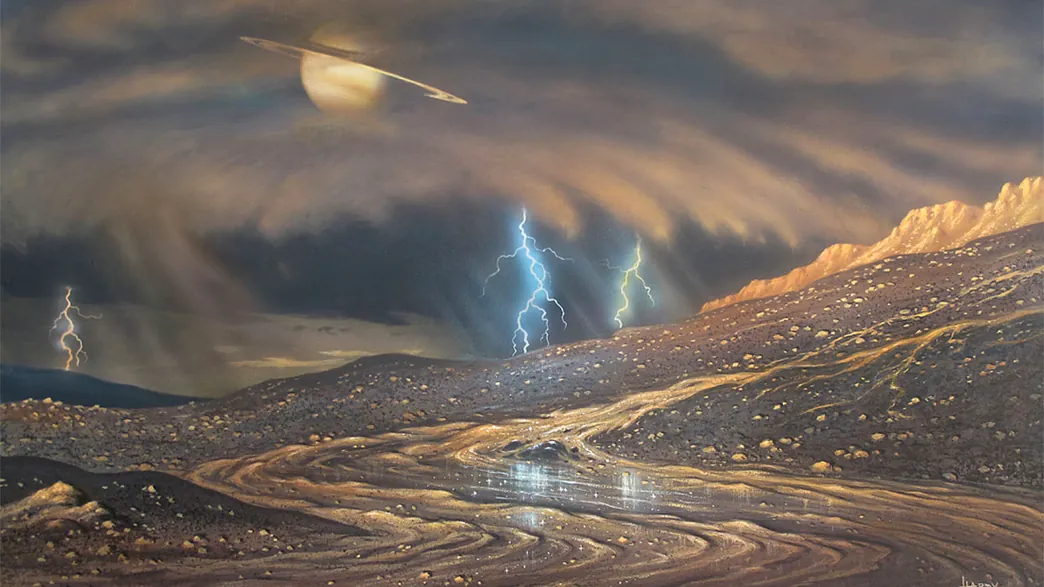
Rain on Titan
https://assets.iflscience.com/assets/articleNo/44205/aImg/20824/1507893095-cover-image-l.webp
Dragonfly Descent and Landing

Landing site
https://upload.wikimedia.org/wikipedia/commons/2/25/Titan_globe.jpg

Selk Impact Crater
https://upload.wikimedia.org/wikipedia/commons/0/0c/Selk_crater_on_Titan.jpg

Waz Up
Space Exploration and Space History
Space Exploration News
Sunita Williams and Butch Wilmore return date confirmed by NASA
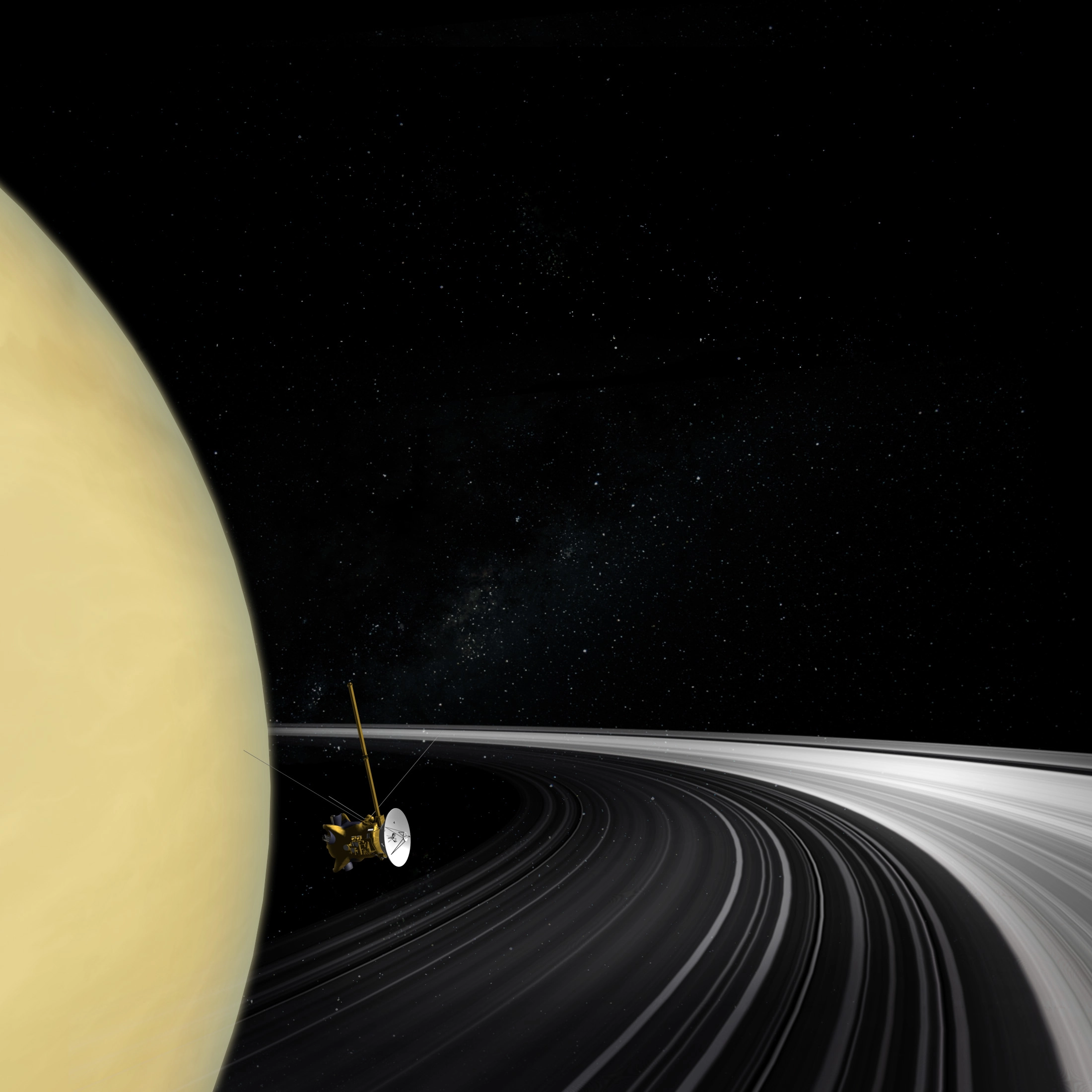
Saturn’s Rings Are “Disappearing”
https://cdn.mos.cms.futurecdn.net/v88ZdWRKQJ8H3xbMQYGe2M.jpg.webp
Space-Related Birthdays
February 9, 1960: Peggy Whitson (STS-111/STS-113 (Exp 5), Exp 16, Exp 50/51/52; Axiom Mission 2)

February 10, 1968: Garrett Reisman (STS-123/124 (Exp 16/17), STS-132)
https://upload.wikimedia.org/wikipedia/commons/7/73/Garrettreismanv2.jpg

February 11, 1960: Richard Mastracchio (STS-106, STS-118, STS-131, Exp 38/39)
https://upload.wikimedia.org/wikipedia/commons/9/9e/Richard_Mastracchio_2013.jpg

This Week in Space History
Feb 11:
1997
STS-82 Launches for Hubble Space Servicing Mission
https://www.nasa.gov/sites/default/files/styles/full_width_feature/public/82738054.jpg

2000
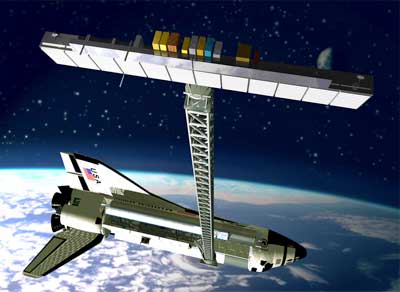
STRM Spacecraft Launched from Space Shuttle (STS-99)
https://spaceflightnow.com/shuttle/sts099/images/000131srtmconcept.jpg
Feb. 12
1961
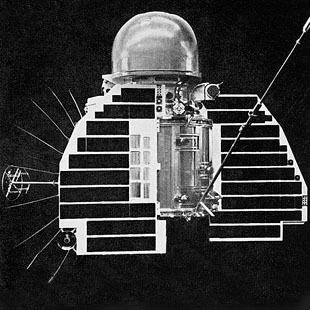
Venera 1 Becomes First Spacecraft to Flyby Venus
http://mentallandscape.com/V_Venera1i.jpg
2001
.NEAR Lands on Asteroid Eros
https://nssdc.gsfc.nasa.gov/planetary/image/near_0155981852_plus3.jpg

Feb. 14
1972
Luna 20 Soft Lands on the Moon
https://moonregistry.forallmoonkind.org/wp-content/uploads/1972/02/luna20-moonscape-1170×570.jpg

Feb. 15
2005
Cassini Flyby of Titan

Miss Carolyn’s Constellation of the Week
Canis Major, the Big Dog.
Space Launches For This Week
Space Flight Now Launch Schedule
February 18 Falcon 9 • Starlink 10-12
Launch time: 6 p.m. EST (2300 UTC)
Launch site: SLC-40, Cape Canaveral Space Force Station, Florida
A SpaceX Falcon 9 rocket will launch another batch of Starlink V2 Mini satellites into low Earth orbit. A little more than eight minutes after liftoff, the first stage booster will land on the SpaceX droneship, ‘Just Read the Instructions,’ stationed in the Atlantic Ocean. This will be the first booster to land off the coast of The Bahamas. Delayed from Feb. 17.
Updated: February 11
NET February 18/19 Electron • ‘Fasten Your Seatbelts’
Launch time: 12:15 p.m. NZDT on Feb. 19 (6:15 p.m. EST, 2315 UTC on Feb. 18)
Launch site: Launch Complex 1, Mahia Peninsula, New Zealand
A Rocket Lab Electron rocket will launch the first Gen-3, 35cm high-resolution, Earth observation satellites for BlackSky, which will head into a mid-inclination, circular orbit at 470 km. The satellite will launch from Electron, deploying through Rocket Lab’s Motorized Lightband This will be Rocket Lab’s ninth launch with BlackSky as a customer and its 60th Electron launch to date. The company hasn’t said if the booster will be recovered following stage separation.
Updated: February 10
NET February 26 Falcon 9 • IM-2
Launch time: TBD
Launch site: Launch Complex 39A, Kennedy Space Center, Florida
A SpaceX Falcon 9 rocket will launch Intuitive Machines’ second robotic mission to the Moon. Onboard will be a Nova-C class lander named Athena or Attie, for short. It will fly several commercial payloads along with three NASA science payloads as part of the agency’s Commercial Lunar Payload Services (CLPS) program. NASA also has its Lunar Trailblazer spacecraft launching as a rideshare payload, which will be deployed separately. The Lunar Trailblazer was selected as part of NASA’s Small Innovative Missions for Planetary Exploration (SIMPLEx) program in 2019. Following stage separation, the Falcon 9 first stage booster will target a touchdown at Landing Zone 1 (LZ-1) at Cape Canaveral Space Force Station.
Updated: January 31
February 26 Ariane 6 • CSO-3
Launch time: 1:24 p.m. local time (11:24 a.m. EST, 1624 UTC)
Launch site: Europe’s Spaceport, Kourou, French Guiana
An Ariane 6 rocket managed by Arianespace will launch the Composite Spatiale Optique-3 (CSO-3) satellite on the second flight in the Ariane 6 program. This will be an Ariane 62 configuration, meaning there will be two solid rocket motors on the vehicle. It will send the CSO-3 satellite into a Sun-synchronous orbit (SSO) at an altitude of about 800 km (497.1 mi). The CSO-3 is a military Earth imaging satellite for the French defense procurement agency, DGA., and is expected to operate for at least 10 years.
Updated: February 12
February 27/28 Soyuz 2.1a • Progress MS-30 / 91P
Launch time: 10:24 p.m. MSK on Feb. 28 (4:24 p.m. EST, 1924 UTC on Feb. 27)
Launch site: Baikonur Cosmodrome, Kazakhstan
An uncrewed Progress cargo ship will launch atop a Russian Soyuz rocket to deliver supplies to the International Space Station. It is expected to dock with the station at 6:03 p.m. EST (2303 UTC) on March 1.
Updated: February 05
NET February 27/28 Falcon 9 • SPHEREx and PUNCH
Launch time: 7:10 p.m. PST (10:10 p.m. EST, 0310 UTC)
Launch site: SLC-4E, Vandenberg Space Force Base, California
A SpaceX Falcon 9 rocket will launch two co-manifested missions on behalf of NASA. The primary payload is the Spectro-Photometer for the History of the Universe, Epoch of Reionization and Ices Explorer (SPHEREx) observatory, which is designed to map the entire sky in infrared light. The total mission cost for SPHEREx, including launch is about $488 million. Sharing the Falcon 9 rocket is the Polarimeter to Unify the Corona and Heliosphere (PUNCH), which consists of four suitcase-sized satellites designed to map a region around the Sun where the corona transitions to solar wind. Both missions will launch to a polar orbit and will be deployed about 11 minutes apart. A little less than eight minutes after liftoff, the Falcon 9 first stage booster will target a touchdown at Landing Zone 4 back at VSFB.
Updated: February 01
NET March Falcon 9 • Transporter-13
Launch time: TBD
Launch site: SLC-4E, Vandenberg Space Force Base, California
A SpaceX Falcon 9 rocket will launch a dozens of satellites on the company’s 13th smallsat rideshare mission to a sun-synchronous orbit. Among those satellites are a trio of CubeSats for NASA’s Electrojet Zeeman Imaging Explorer (EZIE) mission; Arvaker 1, the first microsatellie for Kongsberg NanoAvionics’ N3X constellation; and the Botsat-1 satellite from Botswana. Less than eight minutes after liftoff, the first stage booster will return for a touchdown at a landing pad near the launch site.
Updated: January 31
NET March 12 Falcon 9 • Crew-10
Launch time: 7:48 p.m. EDT (2348 UTC)
Launch site: Launch Complex 39A, Kennedy Space Center, Florida
A SpaceX Falcon 9 rocket will launch three astronauts and a cosmonaut to the International Space Station. The quartet will fly onboard the Crew Dragon spacecraft named ‘Endurance.’ Originally, the crew was to fly on the C213 Crew Dragon (yet unnamed), but swapped the vehicle to compensate for the fact that C213 still needs additional work before it can fly. The mission will carry NASA astronauts Anne McClain and Nichole Ayers along with Japanese Aerospace Exploration Agency (JAXA) astronaut Takuya Onishi and Roscosmos cosmonaut Kirill Peskov. This will be the second spaceflight for both McClain and Onishi and the first for both Ayers and Peskov.
Visible satellite passages over the next couple of days.
You can use the http://www.heavens-above.com website to find out what’s in orbit and
where to look during fly-overs
All times are “local” (Dallas) time.
ISS
Feb. 15
Feb. 16
Feb. 18
Tiangong
Feb. 16
Feb. 17
Feb. 20
Feb. 21
Feb. 24