
IO Group: https://groups.io/g/DARCskynet/topics
Facebook Group: http://www.facebook.com/groups/306498286059167/
Saturday’s DARC SkyNet is at 9PM CT.
Recent Astronomical Discoveries
Pandora, a small satellite mission poised to provide in-depth study of at least 20 known planets
https://www.sciencedaily.com/releases/2025/01/250116134125.htm

Discussion Topic of the Evening.
Earth’s Mini-Moon Was Probably a Piece of Its Real Moon
From Scientific American By Becky Ferreira
Mini-Me Moon
Waz Up
Space Exploration and Space History
Space Exploration News
Boom Supersonic XB-1 jet breaks sound barrier on historic test flight
https://img-s-msn-com.akamaized.net/tenant/amp/entityid/AA1y15E2.img?w=768&h=432&m=6
NASA’s Asteroid Bennu Sample Reveals Mix of Life’s Ingredients
https://www.nasa.gov/wp-content/uploads/2025/01/jason2large.jpg

Space-Related Birthdays
John M. Fabian 28-Jan-1939 STS-7, STS-51-G
https://upload.wikimedia.org/wikipedia/commons/thumb/6/6f/Fabian-jm.jpg/220px-Fabian-jm.jpg

David C. Hilmers 28-Jan-1950 STS-51-J, STS-26, STS-36, STS-42
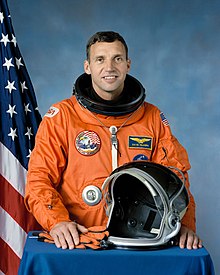
Christina Koch 29-Jan-1979 Soyuz MS-12/Soyuz MS-13 (Expedition 59/60/61), Artemis 2

Wally Funk 31-Jan-1939 NS-16

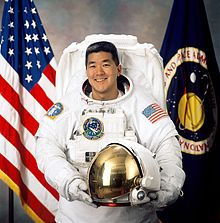
Daniel M. Tani 01-Feb-1961 STS-108, STS-120/122 (Expedition 16)
https://upload.wikimedia.org/wikipedia/commons/thumb/1/14/Daniel_Tani.jpg/220px-Daniel_Tani.jpg
This Week in Space History
January 27, 1967 Apollo 1 Flash Fire
https://upload.wikimedia.org/wikipedia/commons/e/e1/Apollo1-Crew_01.jpg

January 31, 1961, Mercury-Redstone Ham Flight

January 31st, Apollo 14 Launched

January 28, 1986, Shuttle Challenger exploded, killing all seven crew members.
https://upload.wikimedia.org/wikipedia/commons/thumb/7/7b/Challenger_1A.jpg/170px-Challenger_1A.jpg
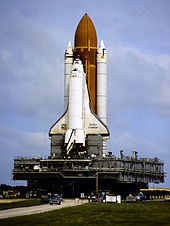
February 1, 2003 Shuttle Columbia Disintegrated on Re-Entry

January 31, 1958 – Explorer 1 Launched

Miss Carolyn’s Constellation of the Week
Space Launches For This Week
Space Flight Now Launch Schedule
February 2 H3 • QZS-6
Launch time: 5:30 p.m. JST (3:30 a.m. EST, 0830 UTC)
Launch site: Yoshinobu Launch Complex, JAXA Tanegashima Space Center
The Japanese Aerospace Exploration Agency (JAXA) will launch the 5th H3 rocket with the Quasi-Zenith Satellite System (QZS-6) satellite onboard. The QZS System is GPS compatible and provides secure positioning services. The satellite will carry what the U.S. Space Force’s Space Systems Command describes as “a space domain awareness optical payload,” which was designed and built by the MIT Lincoln Laboratory. This is the first of two Japanese satellites that will host a payload from the U.S. Space Force.
Updated: February 01
February 3 Falcon 9 • Starlink 12-3
Launch time: 3:54 a.m. EST (0854 UTC)
Launch site: SLC-40, Cape Canaveral Space Force Station, Florida
A SpaceX Falcon 9 rocket will launch another batch of Starlink V2 Mini satellites into low Earth orbit. A little more than eight minutes after liftoff, the first stage booster will target at landing on a droneship positioned in the Atlantic Ocean.
Updated: February 02
NET February 3/4 Electron • ‘IOT 4 You and Me’
Launch time: 9:43 a.m. NZDT on Feb. 4 (3:43 p.m. EST, 2043 UTC on Feb. 3)
Launch site: Launch Complex 1, Mahia Peninsula, New Zealand
A Rocket Lab Electron rocket will launch a batch of five satellites for Kinéis’ Internet of Things (IOT) constellation. This will be the fourth out of five planned launches to deploy the 25 satellites. Rocket Lab will not be attempting to recover the booster.
Updated: January 23
February 3 Falcon 9 • WorldView Legion 5 & 6
Launch time: Window opens at 6:32 p.m. EST (2332 UTC)
Launch site: Launch Complex 39A, Kennedy Space Center, Florida
A SpaceX Falcon 9 rocket will launch the third and final pair of WorldView Legion Earth observation satellites for Maxar Technologies, which will complete the first block. These series of high-resolution remote sensing satellites operate in a mix of sun-synchronous and mid-inclination orbits. Satellites 5 and 6 will launch into MIO. About eight minutes after liftoff, the first stage booster will target a touchdown at Landing Zone 1 at Cape Canaveral Space Force Station.
Updated: January 30
TBD Falcon 9 • Starlink 10-12
Launch time: TBD
Launch site: SLC-40, Cape Canaveral Space Force Station, Florida
A SpaceX Falcon 9 rocket will launch another batch of Starlink V2 Mini satellites into low Earth orbit. A little more than eight minutes after liftoff, the first stage booster will land on a SpaceX droneship stationed in the Atlantic Ocean.
Updated: January 24
NET February 26 Falcon 9 • IM-2
Launch time: TBD
Launch site: Launch Complex 39A, Kennedy Space Center, Florida
A SpaceX Falcon 9 rocket will launch Intuitive Machines’ second robotic mission to the Moon. Onboard will be a Nova-C class lander named Athena or Attie, for short. It will fly several commercial payloads along with three NASA science payloads as part of the agency’s Commercial Lunar Payload Services (CLPS) program. NASA also has its Lunar Trailblazer spacecraft launching as a rideshare payload, which will be deployed separately. The Lunar Trailblazer was selected as part of NASA’s Small Innovative Missions for Planetary Exploration (SIMPLEx) program in 2019. Following stage separation, the Falcon 9 first stage booster will target a touchdown at Landing Zone 1 (LZ-1) at Cape Canaveral Space Force Station.
Updated: January 31
NET February 27/28 Falcon 9 • SPHEREx and PUNCH
Launch time: 7:10 p.m. PST (10:10 p.m. EST, 0310 UTC)
Launch site: SLC-4E, Vandenberg Space Force Base, California
A SpaceX Falcon 9 rocket will launch two co-manifested missions on behalf of NASA. The primary payload is the Spectro-Photometer for the History of the Universe, Epoch of Reionization and Ices Explorer (SPHEREx) observatory, which is designed to map the entire sky in infrared light. The total mission cost for SPHEREx, including launch is about $488 million. Sharing the Falcon 9 rocket is the Polarimeter to Unify the Corona and Heliosphere (PUNCH), which consists of four suitcase-sized satellites designed to map a region around the Sun where the corona transitions to solar wind. Both missions will launch to a polar orbit and will be deployed about 11 minutes apart. A little less than eight minutes after liftoff, the Falcon 9 first stage booster will target a touchdown at Landing Zone 4 back at VSFB.
Updated: February 01
NET March Falcon 9 • Transporter-13
Launch time: TBD
Launch site: SLC-4E, Vandenberg Space Force Base, California
A SpaceX Falcon 9 rocket will launch a dozens of satellites on the company’s 13th smallsat rideshare mission to a sun-synchronous orbit. Among those satellites are a trio of CubeSats for NASA’s Electrojet Zeeman Imaging Explorer (EZIE) mission; Arvaker 1, the first microsatellie for Kongsberg NanoAvionics’ N3X constellation; and the Botsat-1 satellite from Botswana. Less than eight minutes after liftoff, the first stage booster will return for a touchdown at a landing pad near the launch site.
Visible satellite passages over the next couple of days.
You can use the http://www.heavens-above.com website to find out what’s in orbit and
where to look during fly-overs
All times are “local” (Dallas) time.
ISS
Feb 2
Feb 4
Tiangong
Feb 6
Feb 7
Feb 8