
IO Group: https://groups.io/g/DARCskynet/topics
Facebook Group: http://www.facebook.com/groups/306498286059167/
Saturday’s DARC SkyNet is at 9PM CT.
Discussion Topic of the Evening.
“SpaceX or Blue Origin?”
New Glenn

Space X, Blue Origin and NASA Saturn V, compared
https://i.insider.com/57d6cb35077dccda0b8b4fc5?width=1200&format=jpeg&auto=webp
Project Kuiper

Next Gen Orbital Boosters Compared

Jeff Bezos
Waz Up
Space Exploration and Space History
Space Exploration News
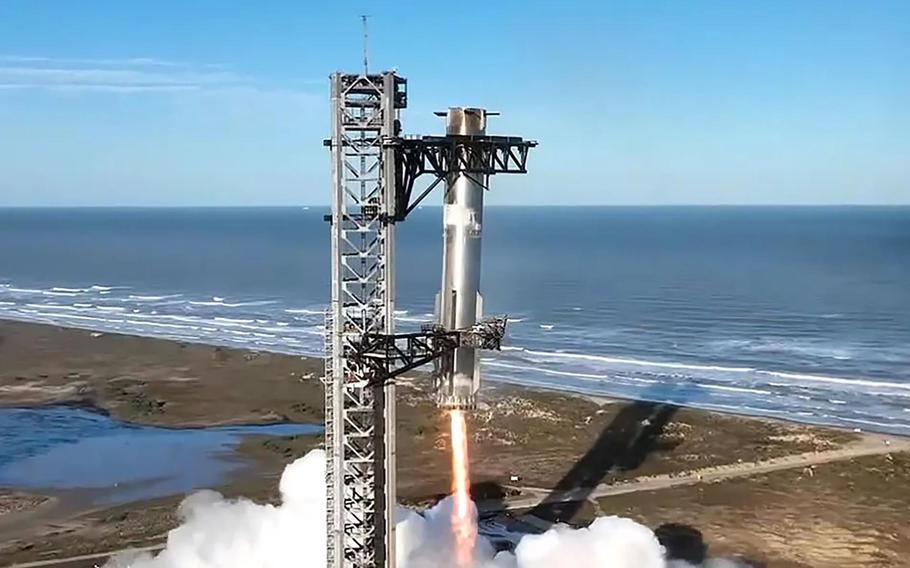
SpaceX catches Super Heavy booster on Starship Flight 7 test but loses upper stage
SpaceX Catches Super Heavy Booster
Jeff Bezos’ Blue Origin launches massive New Glenn rocket into orbit on 1st flight
New Glenn Launch
https://media.cnn.com/api/v1/images/stellar/prod/ap25016274040206.jpg?q=w_1160,c_fill/f_webp

Sticks and Stones: The Molecular Clouds in the Heart of the Milky Way
From Universetoday.com
Sgr A (Sticks Cloud / Stone Cloud)
https://www.universetoday.com/wp-content/uploads/2025/01/Sticks-and-Stones-GMC-1024×573.jpg

Space-Related Birthdays
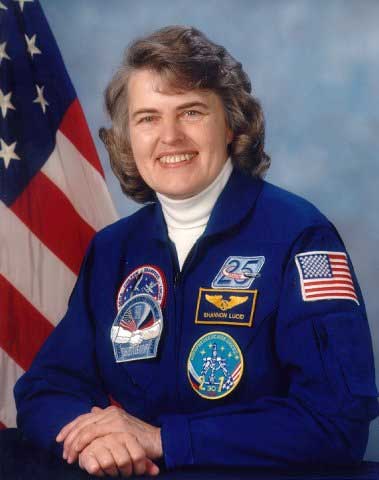
January 14, 1943: Shannon Lucid (STS-51-G, STS-34, STS-43, STS-58, STS-76/79 Mir Space Station)
https://upload.wikimedia.org/wikipedia/commons/0/0a/ShannonLucid.jpeg
January 16, 1952: L. Blaine Hammond (STS-39, STS-64)
https://en.wikipedia.org/wiki/L._Blaine_Hammond#/media/File:L_Blaine_Hammond.jpg


January 16, 1946: Michael Coats (STS-41-D, STS-29, STS-39)
https://upload.wikimedia.org/wikipedia/commons/c/c4/MichaelCoats.jpg
January 16, 1955: Jerry Linenger (STS-64, STS-81/84 Mir Space Station)
https://upload.wikimedia.org/wikipedia/commons/6/6e/Jerry_Linenger.jpg

This Week in Space History
January 14:
2005: The European Space Agency Huygens probe touched down on Titan, one of the moons of Saturn. It was the first time a human-made vehicle had touched down on the surface of a Moon in our outer Solar System. Huygens had traveled to Saturn with NASA’s Cassini Mission to Saturn.
Jan. 13
1993 – Launch of STS-54 Endeavour – Launch of TDRS 6
TDRS 6 Launch
https://www.nasa.gov/wp-content/uploads/2023/03/1993_january_tdrs_6f_payload.jpg
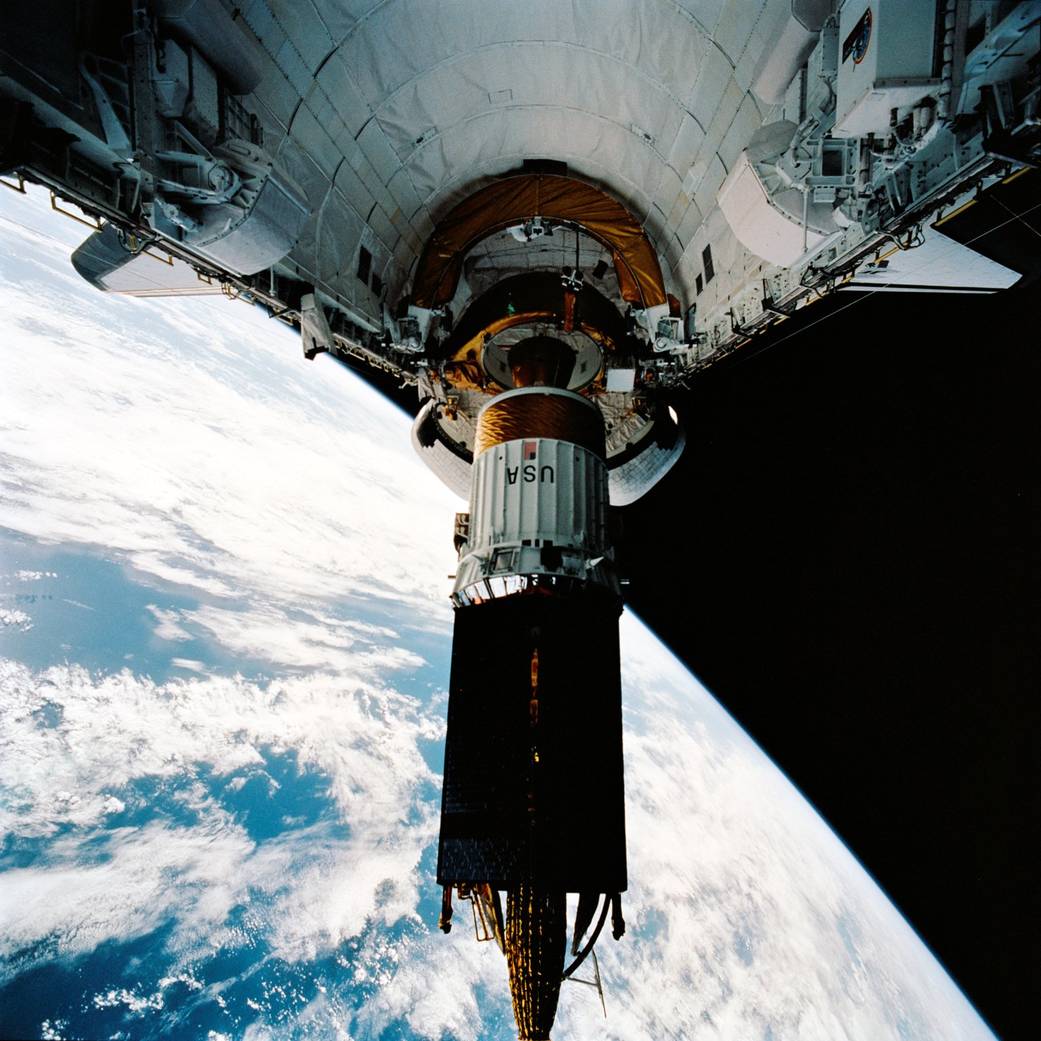
It is an American communications satellite, of first generation, which is operated by NASA as part of the Tracking and Data Relay Satellite System. It was constructed by TRW, and is based on a custom satellite bus which was used for all seven first generation TDRS satellites.
Jan. 14
1969 – Launch of Soyuz 4 carrying cosmonaut Vladimir Shatalov on his first flight. The aim of the mission was to dock with Soyuz 5, transfer two crew members from that spacecraft, and return to Earth.
http://www.spacefacts.de/graph/photo/photos2/soyuz-4_launch_2.jpg

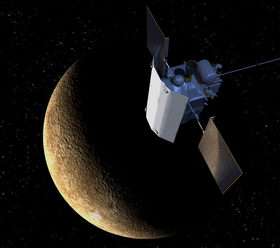
2008 – First Messenger flyby of Mercury.
https://scx1.b-cdn.net/csz/news/800a/2006/MESSENGER_Sunside.jpg
Jan. 15
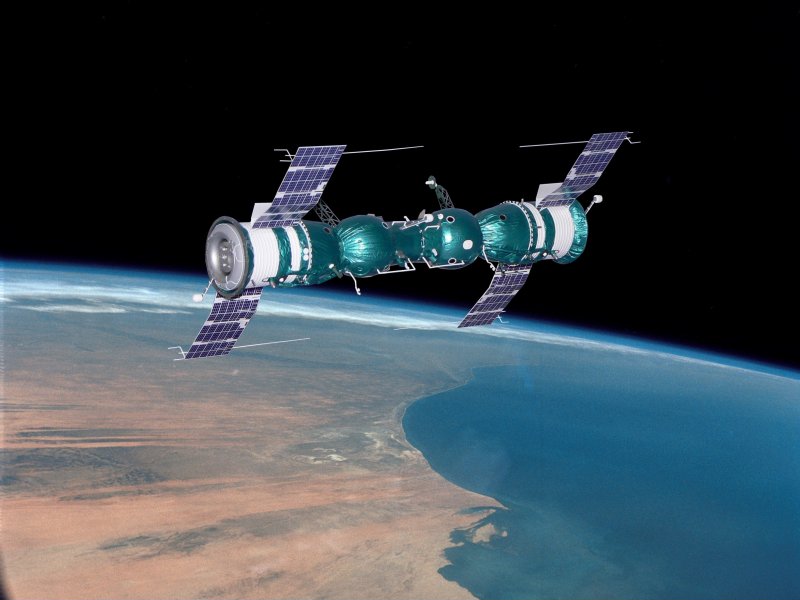
1969- Launch of Soyuz 5 which docked with Soyuz 4 in orbit.
https://upload.wikimedia.org/wikipedia/commons/3/33/Soyuz45-1.jpg
Jan. 16
1978 – NASA Astronaut Training Group 8 Selected
The group was selected to provide pilot, engineer, and scientist astronauts for space shuttle flights.

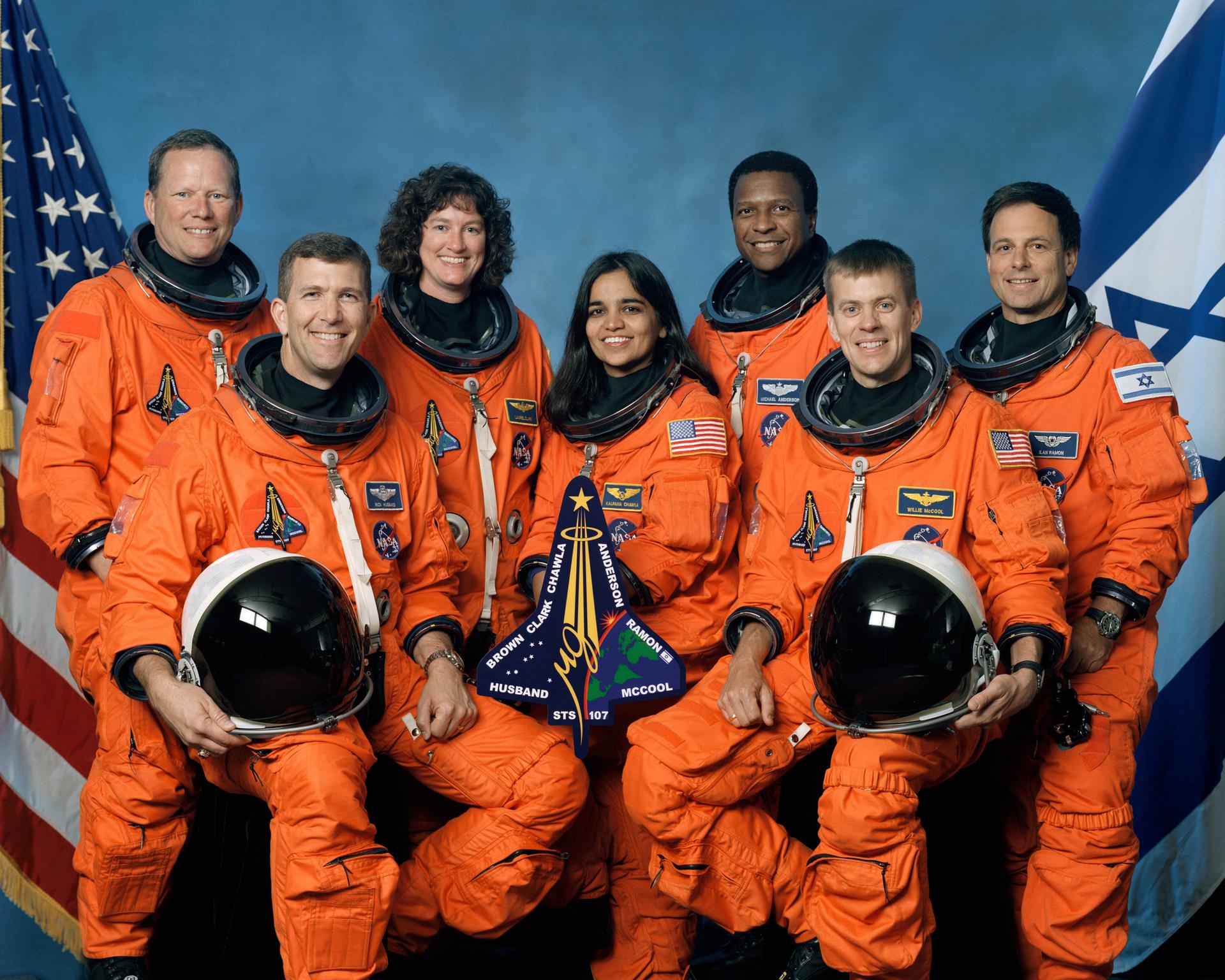
2003 – Launch of STS-107
It was the 113th flight in the Space Shuttle program and the 28th and final flight of the Space Shuttle Columbia.
Jan. 17
1990 – NASA Astronaut Training Group 13 Selected
Miss Carolyn’s Constellation of the Week
Caelum, the chisel and Columba, the dove.
Space Launches For This Week
Space Flight Now Launch Schedule
NET January 19 Falcon 9 • Starlink 11-8
Launch time: 7:35 a.m. PST (10:35 a.m. EST, 1535 UTC)
Launch site: SLC-4E, Vandenberg Space Force Base, California
A SpaceX Falcon 9 rocket will launch a batch of 27 Starlink V2 Mini satellites to low Earth orbit. A little more than eight minutes after liftoff, the first stage booster will target a landing on the droneship, ‘Of Course I Still Love You,’ positioned out in the Pacific Ocean. Delayed from Jan. 18.
Updated: January 18
January 21 Falcon 9 • Starlink 13-1
Launch time: Four-hour window opens 12:13 a.m. EDT (0513 UTC)
Launch site: LC-39A, Kennedy Space Center, Florida
A SpaceX Falcon 9 rocket will launch another batch of Starlink V2 Mini satellites into low Earth orbit. A little more than eight minutes after liftoff, the first stage booster will land on a SpaceX droneship stationed in the Atlantic Ocean.
Updated: January 17
January 24 Falcon 9 • Starlink 11-6
Launch time: Window opens at 5:54 a.m. PST (8:54 a.m. EST, 1354 UTC)
Launch site: SLC-4E, Vandenberg Space Force Base, California
A SpaceX Falcon 9 rocket will launch another batch of Starlink V2 Mini satellites to low Earth orbit. A little more than eight minutes after liftoff, the first stage booster will target a landing on the droneship, ‘Of Course I Still Love You,’ positioned out in the Pacific Ocean.
Updated: January 18
January 24 Falcon 9 • Starlink 10-12
Launch time: Four-hour window opens 5:45 p.m. EST (2245 UTC)
Launch site: SLC-40, Cape Canaveral Space Force Station, Florida
A SpaceX Falcon 9 rocket will launch another batch of Starlink V2 Mini satellites into low Earth orbit. A little more than eight minutes after liftoff, the first stage booster will land on a SpaceX droneship stationed in the Atlantic Ocean.
Updated: January 17
NET Spring 2025 New Glenn • EscaPADE
Launch time: TBD
Launch site: Launch Complex 36, Cape Canaveral Space Force Station
A Blue Origin New Glenn rocket will launch a pair of identical spacecraft on NASA’s Escape and Plasma Acceleration and Dynamics Explorers (EscaPADE) mission. The two satellites, named Blue and Gold, will make a roughly 11-month journey to Mars where they will then perform about an 11-month science mission while orbiting the Red Planet. Blue and Gold were manufactured by Rocket Lab over about 3.5 years and carry science experiments from the University of California, Berkeley. This launch of the New Glenn rocket will also feature a landing attempt on its landing barge in the Atlantic Ocean. Delayed from October 13.
Updated: September 11
TBD 2025 Vulcan Centaur • Dream Chaser 1
Launch time: TBD
Launch site: SLC-41, Cape Canaveral Space Force Station, Florida
A United Launch Alliance Vulcan Centaur rocket will launch on its second demonstration flight with Sierra Space’s Dream Chaser cargo vehicle for the International Space Station. The Dream Chaser is a lifting body resupply spacecraft that will launch on top of a rocket and land on a runway. This will be the Dream Chaser’s first flight to space. The Vulcan Centaur rocket will fly in the VC4L configuration with four GEM-63XL solid rocket boosters, a long-length payload fairing, and two RL10 engines on the Centaur upper stage. Delayed from August 2022, December 2023, January 2024, April 2024 and September 2024.
Updated: October 17
Visible satellite passages over the next couple of days.
You can use the http://www.heavens-above.com website to find out what’s in orbit and
where to look during fly-overs
All times are “local” (Dallas) time.
ISS – No passes
Tiangong
Jan 21
Jan 23
Jan 24
Jan 25
Jan 26