
IO Group: https://groups.io/g/DARCskynet/topics
Facebook Group: http://www.facebook.com/groups/306498286059167/
Saturday’s DARC SkyNet is at 9PM CT.
Discussion Topic of the Evening.
Enter Topic Here
Enter NCS Name and Call Here
Discussion Topic of the Evening.
The Solar sunspot cycle
Recent Astronomical Discoveries
Astronomers may have discovered the answer to a mysterious stellar event | ScienceDaily

Waz Up
Space Exploration and Space History
11-24 ~ 11-30
Space Exploration News
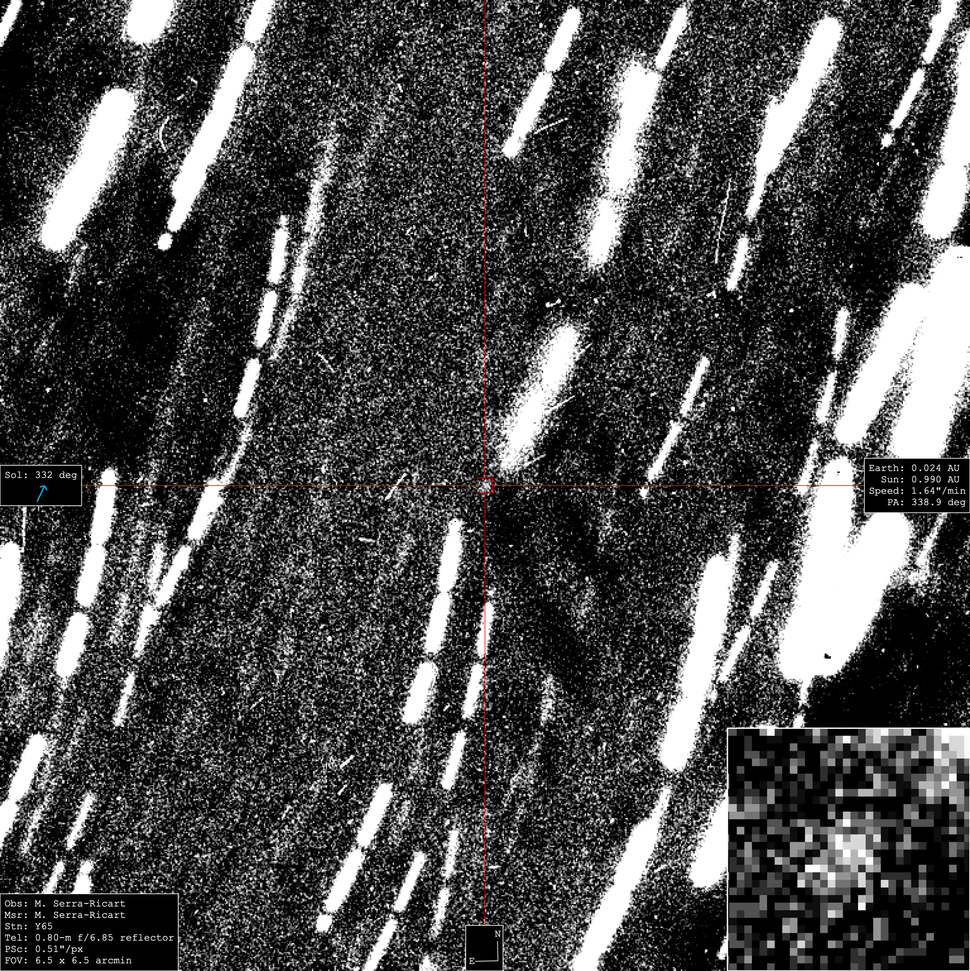
Goodnight moon! Astronomers snap photo of Earth’s departing mini-moon
https://cdn.mos.cms.futurecdn.net/BYcoXSvudSti5NBva6Gq9Z-970-80.png
Warm up this holiday season with NASA’s new SLS rocket engine fireplace (video)
https://img-s-msn-com.akamaized.net/tenant/amp/entityid/AA1uVP3a.img?w=768&h=432&m=6
Space-Related Birthdays
Richard R. Arnold Nov 26, 1963 STS-119, Soyuz MS-08 (Expedition 55/56)

James Wetherbee Nov 27, 1952 STS-32, STS-52, STS-63, STS-86, STS-102, STS-113
https://en.wikipedia.org/wiki/Jim_Wetherbee#/media/File:James_Wetherbee.jpg

Kenneth Camera Nov 29 STS-37, STS-56, STS-74
https://upload.wikimedia.org/wikipedia/commons/3/38/Kenneth_Cameron.jpg

This Week in Space History
Skylab 4
Nov. 22, 1973 -The first #Thanksgiving in space happened. Skylab 4 astronauts Gerald Carr, Edward Gibson, and William Pogue celebrated after a grueling 6.5 hour spacewalk!
https://pbs.twimg.com/media/FiMRJfUXwBM1OTy?format=jpg&name=360×360
November 24
1639 1st observation of transit of Venus by Jeremiah Horrocks and William Crabtree – helped establish size of the Solar System
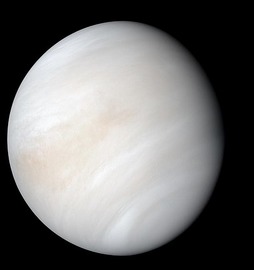
Venus was the first planet to be explored by a spacecraft – NASA’s Mariner 2 successfully flew by and scanned the cloud-covered world on Dec. 14, 1962. Since then, numerous spacecraft from the U.S. and other space agencies have explored Venus, including NASA’s Magellan, which mapped the planet’s surface with radar.
Spacecraft Picture of Venus
https://duckduckgo.com/i/d1a4f23d.jpg
Apollo 12
On November 24, 1969, Apollo 12 splashed down at 2:58 p.m. (CST) near American Samoa in the Pacific Ocean.

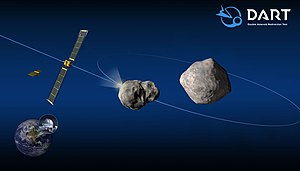
DART, Launched November 24, 2021
Double Asteroid Redirection Test (DART) was a NASA space mission aimed at testing a method of planetary defense against near-Earth objects (NEOs).
https://upload.wikimedia.org/wikipedia/commons/thumb/4/40/Dart-poster3.jpg/300px-Dart-poster3.jpg
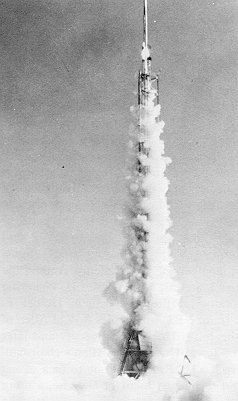
Aerobee launch, November 24, 1947
The Aerobee was an early sounding rocket that was essentially a larger, upgraded version of the WAC Corporal.
https://www.daviddarling.info/images/Aerobee.jpg
November 26, 2018, the NASA’s InSight mission landed on Mars. It was the first robotic explorer to study the “inner space” of Mars: its crust, mantle, and core.
Insight Checkout Before Launch
https://pbs.twimg.com/media/FFJSFPGWYAU6WAx?format=jpg&name=small
November 26, 2011, Mars Curiosity launched! Curiosity landed in August 2012 for its mission to study the ancient habitability and the potential for life on the Red Planet.
Curiosity Selfie
https://pbs.twimg.com/media/FFI2n-hXsAQjO6V?format=jpg&name=small
Apollo 12 splashed down in the Pacific Ocean November 24 in 1969 marking the end of Al Bean, Pete Conrad, and Dick Gordon’s 10-day journey to the Moon and back.
Apollo 12 Splashdown
https://pbs.twimg.com/media/FE_dy5cWYAQo88d?format=jpg&name=small
November 28:
1659: Dutch mathematician and astronomer Christiaan Huygens saw a dark region on Mars (Syrtis Major) – the first Martian surface feature spotted from Earth. Syrtis Major is a volcanic plain on Mars; Huygens observed it through his telescope and made a drawing of it.
1963: Just six days after President John F. Kennedy’s assassination, President Lyndon B. Johnson announced that NASA’s Launch Operations Center would be renamed the John F. Kennedy Space Center in honor of the late president. This center on Merritt Island, Florida has served as the launch place for some of NASA’s most defining flights, including the Skylab orbital workshop, Apollo 11, all of the Shuttle launches, and most recently, the Artemis I launch.
November 29:
1961: Astronaut John Glenn was selected to be the first American sent into Earth orbit (Scott Carpenter was named as the back-up.)
Miss Carolyn’s Constellation of the Week
Andromeda, the princess
Space Launches For This Week
Space Flight Now Launch Schedule
December 2 Falcon 9 • SiriusXM-9
Launch time: Approx. 11 a.m. EST (1600 UTC)
Launch site: TBD – LC-39A, Kennedy Space Center or SLC-40, Cape Canaveral Space Force Station, Florida
A SpaceX Falcon 9 will launch the SiriusXM-9 satellite, which will deliver radio services for the SiriusXM service. The satellite, which will eventually be positioned in a geostationary orbit, is based on Maxar’s 1300-class platform. The first-stage booster of the Falcon 9 is scheduled to land on a drone ship in the Atlantic Ocean.
Updated: November 20
TBD New Glenn • NG-1
Launch time: TBD
Launch site: Launch Complex 36, Cape Canaveral Space Force Station, Florida
A Blue Origin New Glenn rocket will launch the company’s Blue Ring spacecraft, which is capable of both hosting and deploying multiple payloads. Blue Origin will attempt to land the first stage booster on its sea-based landing platform, ‘Jacklyn.’
Updated: November 20
NET Spring 2025 New Glenn • EscaPADE
Launch time: TBD
Launch site: Launch Complex 36, Cape Canaveral Space Force Station
A Blue Origin New Glenn rocket will launch a pair of identical spacecraft on NASA’s Escape and Plasma Acceleration and Dynamics Explorers (EscaPADE) mission. The two satellites, named Blue and Gold, will make a roughly 11-month journey to Mars where they will then perform about an 11-month science mission while orbiting the Red Planet. Blue and Gold were manufactured by Rocket Lab over about 3.5 years and carry science experiments from the University of California, Berkeley. This launch of the New Glenn rocket will also feature a landing attempt on its landing barge in the Atlantic Ocean. Delayed from October 13.
Updated: September 11
TBD 2025 Vulcan Centaur • Dream Chaser 1
Launch time: TBD
Launch site: SLC-41, Cape Canaveral Space Force Station, Florida
A United Launch Alliance Vulcan Centaur rocket will launch on its second demonstration flight with Sierra Space’s Dream Chaser cargo vehicle for the International Space Station. The Dream Chaser is a lifting body resupply spacecraft that will launch on top of a rocket and land on a runway. This will be the Dream Chaser’s first flight to space. The Vulcan Centaur rocket will fly in the VC4L configuration with four GEM-63XL solid rocket boosters, a long-length payload fairing, and two RL10 engines on the Centaur upper stage. Delayed from August 2022, December 2023, January 2024, April 2024 and September 2024.
Visible satellite passages over the next couple of days.
All times are “local” (Dallas) time.
ISS
Dec. 1
Dec. 2
Dec. 3
Dec. 4
Dec.5
Tiangong
Dec. 4