

SKYNET!!!! 9PM CT – 10:30 PM CT
Electronic Check Ins: https://forms.gle/1Cbaop4xnAKR61467
Saturday’s Topic: “Did You See the Comet?” & Constellation “Cepheus, the King”
Net Control: Billye KF5PDS
Afterglow Movie 10:30PM: “The House on Haunted Hill” (1959)
2-Meter Repeater W5FC: 146.880MHz, PL 110.9, –
Echolink: W5FC-R, node 37247.
Youtube.com Search “DARC Skynet”
Facebook.com Search “DARC Skynet”
Direct Video Link: https://www.youtube.com/channel/UCishlh8WmW7OXy9Q6sxsaag
IO Group: https://groups.io/g/DARCskynet/topics
Facebook Group: http://www.facebook.com/groups/306498286059167/
Saturday’s DARC SkyNet is at 9PM CT.
Recent Astronomical Discoveries
Rocky planets orbiting small stars could have stable atmospheres needed to support life | ScienceDaily
Discussion Topic of the Evening.
“Did You See the Comet?”
Share your C/2023 A3 (Tsuchinshan–ATLAS) experience.
Rui Santos Leiria, Portugal

Muhammand Alaa Sharm el sheikh, Egypt

Waz Up
Space Exploration and Space History
Space Exploration News
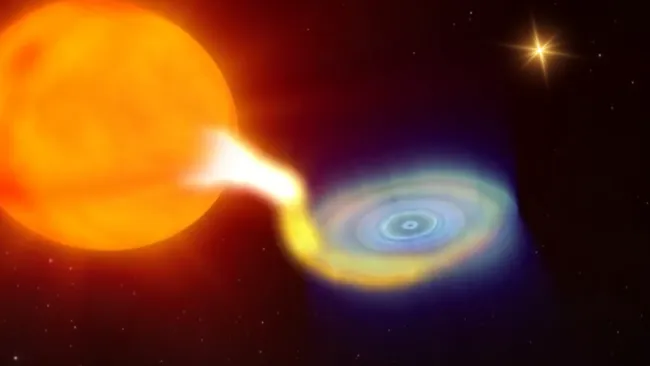
1st triple black hole system discovered in ‘happy accident’
https://cdn.mos.cms.futurecdn.net/Vh8HxyxNp4gVVjVraFpYAf-650-80.png.webp
After the Catch: What’s Next for Starship Flight 6?

A BIG DEVELOPMENT IN SPACE WEATHER FORECASTING: Imagine a giant CME heading straight for Earth, but no one knew it was coming. https://th.bing.com/th?id=OVFT.fEReUd_FfYBzlfZuLy9_Oy&pid=News&w=197&h=112&c=14&rs=2&qlt=90
Space-Related Birthdays
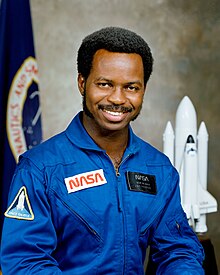
Ronald McNair Oct 21, 1950
STS-41-B
STS-51-L (disaster)
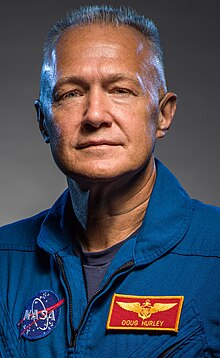
Douglas G. Hurley Oct 21, 1966
STS-127
STS-135
SpX-DM2 (Expedition 63)
Donald H. Peterson Oct 22, 1933 STS-6

Susan Kilrain Oct 24, 1961
STS-83
STS-94

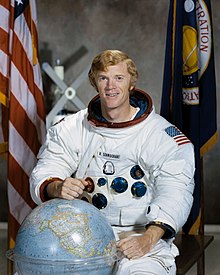
Rusty Schweickart Oct 25, 1935 Apollo 9
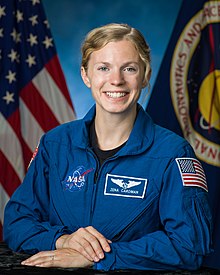
Zena Cardman Oct 26, 1988 No flights yet
Stephen Robinson Oct 26, 1955
STS-85
STS-95
STS-114
STS-130

This Week in Space History
On October 24, 1946, a V-2 rocket captured the first-ever photo of Earth from space.

October 1945
Article in Wireless World, “Extra-Terrestrial Relays — Can Rocket Stations Give Worldwide Radio Coverage?” makes the first discussion of geostationary satellites as a means of communication. Written by Arthur C. Clarke.
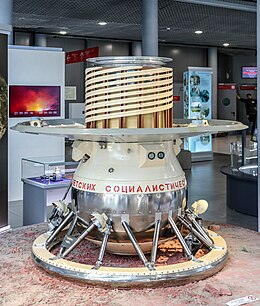
Venera 9 was a Soviet un-crewed space mission to Venus. It consisted of an orbiter and a lander. It was launched on
Miss Carolyn’s Constellation of the Week
Constellation Cepheus, the King
Space Launches For This Week
Space Flight Now Launch Schedule
October 29 Falcon 9 • Starlink 9-9
Launch time: 4:30 a.m. PDT (7:30 a.m. EDT, 1130 UTC)
Launch site: SLC-4E, Vandenberg Space Force Base, California
A SpaceX Falcon 9 rocket will launch another batch of Starlink V2 Mini satellites to low Earth orbit. A little more than eight minutes after liftoff, the first stage booster will land on the SpaceX droneship, ‘Of Course I Still Love You.’
Updated: October 24
October 30 Falcon 9 • Starlink 10-13
Launch time: 5:10 p.m. EDT (2110 UTC)
Launch site: SLC-40, Cape Canaveral Space Force Station, Florida
A SpaceX Falcon 9 rocket will launch another batch of Starlink V2 Mini satellites to low Earth orbit. A little more than eight minutes after liftoff, the first stage booster will land on a SpaceX droneship.
Updated: October 24
November 4 Electron • ‘Changes in Latitudes, Changes in Attitudes’
Launch time: 11:30 p.m. NZDT (5:30 a.m. EST, 1030 UTC)
Launch site: Launch Complex 1, Mahia Peninsula, New Zealand
A Rocket Lab Electron rocket will launch a satellite for “a confidential commercial customer.” The mission is described as “Rocket Lab’s fastest turnaround to date: from signed contract to launch date in less than two months.” The payload, the orbit and the timing of deployment were not disclosed at the time the launch was announced. Delayed by Rocket Lab from Oct. 19 “to perform final checkouts.”
Updated: October 25
November 4/5 Falcon 9 • CRS-31
Launch time: 9:29 p.m. EST (0229 UTC)
Launch site: Launch Complex 39A, Kennedy Space Center, Florida
A SpaceX Falcon 9 rocket will launch one of its Cargo Dragon spacecraft to deliver thousands of pounds of science and other supplies to the International Space Station. This will be SpaceX’s 31st supply run to the ISS as part of its Commercial Resupply Services-2 contract with NASA. The first stage booster will perform a return to landing site (RTLS) landing at Landing Zone 1 (LZ-1) less than eight minutes after liftoff.
Updated: October 24
NET November New Glenn • NG-1
Launch time: TBD
Launch site: Launch Complex 36
A Blue Origin New Glenn rocket will launch the company’s Blue Ring spacecraft, which is capable of both hosting and deploying multiple payloads. Blue Origin will attempt to land the first stage booster on its sea-based landing platform, ‘Jacklyn.’
Updated: September 11
NET Spring 2025 New Glenn • EscaPADE
Launch time: TBD
Launch site: Launch Complex 36, Cape Canaveral Space Force Station
A Blue Origin New Glenn rocket will launch a pair of identical spacecraft on NASA’s Escape and Plasma Acceleration and Dynamics Explorers (EscaPADE) mission. The two satellites, named Blue and Gold, will make a roughly 11-month journey to Mars where they will then perform about an 11-month science mission while orbiting the Red Planet. Blue and Gold were manufactured by Rocket Lab over about 3.5 years and carry science experiments from the University of California, Berkeley. This launch of the New Glenn rocket will also feature a landing attempt on its landing barge in the Atlantic Ocean. Delayed from October 13.
Updated: September 11
TBD 2025 Vulcan Centaur • Dream Chaser 1
Launch time: TBD
Launch site: SLC-41, Cape Canaveral Space Force Station, Florida
A United Launch Alliance Vulcan Centaur rocket will launch on its second demonstration flight with Sierra Space’s Dream Chaser cargo vehicle for the International Space Station. The Dream Chaser is a lifting body resupply spacecraft that will launch on top of a rocket and land on a runway. This will be the Dream Chaser’s first flight to space. The Vulcan Centaur rocket will fly in the VC4L configuration with four GEM-63XL solid rocket boosters, a long-length payload fairing, and two RL10 engines on the Centaur upper stage. Delayed from August 2022, December 2023, January 2024, April 2024 and September 2024.
Visible satellite passages over the next couple of days.
You can use the http://www.heavens-above.com website to find out what’s in orbit and
where to look during fly-overs
ISS
Nov. 1
Nov. 2
Nov. 3
Nov. 4
Tiangong
Oct. 27
Oct. 28
Oct. 29
Oct. 30