
IO Group: https://groups.io/g/DARCskynet/topics
Facebook Group: http://www.facebook.com/groups/306498286059167/
Saturday’s DARC SkyNet is at 9PM CT.
Recent Astronomical Discoveries
AI helps distinguish dark matter from cosmic noise | ScienceDaily
Galaxy and Dark Matter
Discussion Topic of the Evening.
Nerio: Mars May Be Missing A Third, Far Larger Moon
Planet Mars
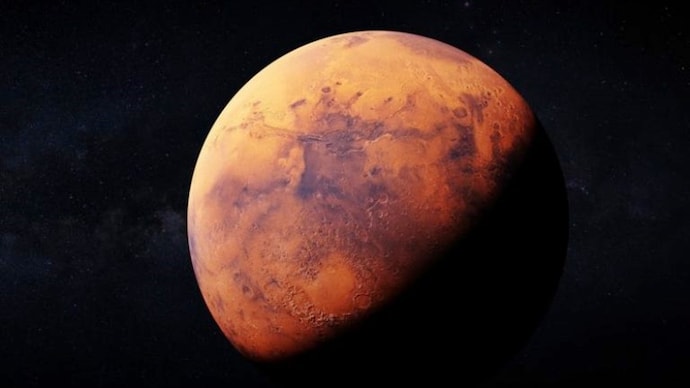
Triaxial Ellipsoid

Waz Up
Space Exploration and Space History
Space Exploration News
International Observe the Moon Night is Saturday, September 14, 2024
Polaris Dawn Flight Day 3 Update

Space-Related Birthdays
Birthdays
Lee Morin Sept 9, 1952 STS-110

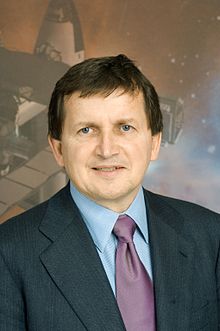
Charles Simonyi Sept 10, 1948
Soyuz TMA-10/TMA-9, Soyuz TMA-14/TMA-13
Mike Mullane Sept 10, 1945
STS-41-D
STS-27
STS-36

Robert Crippen Sept 11, 1937 STS-1
STS-7
STS-41-C
STS-41-G

Randolph Bresnik Sept 11, 1967
STS-129
Soyuz MS-05 (Expedition 52/53)

Anousheh Ansari Sept 12, 1966
Soyuz TMA-9/8

Roger K. Crouch Sept 12, 1940
STS-83, STS-94
https://upload.wikimedia.org/wikipedia/commons/thumb/d/d5/Roger_Crouch.jpg/220px-Roger_Crouch.jpg
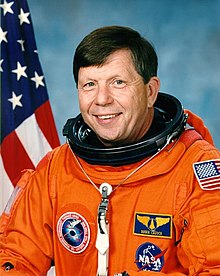
Eugene H. Trinh Sept 14, 1950 STS-50

John Herrington Sept 14, 1958 STS-113
https://upload.wikimedia.org/wikipedia/commons/thumb/b/bf/Herrington.jpg/220px-Herrington.jpg

This Week in Space History
Gemini 11
Gemini 11 (officially Gemini XI)[2] was the ninth crewed spaceflight mission of NASA’s Project Gemini, which flew from September 12 to 15, 1966.

Conestoga 1
The first launch of the new Conestoga 1 design took place on 9 Sep 1982,

Viking 2
Viking 2 was launched on September 9, 1975. Following launch using a Titan/Centaur launch vehicle and a 333-day cruise to Mars, the Viking 2 Orbiter began returning global images of Mars prior to orbit insertion.
Miss Carolyn’s Constellation of the Week
Constellations “Delphinus and Equuleus”
Space Launches For This Week
Space Flight Now Launch Schedule
September 15 Falcon 9 • Galileo FOC FM26 & FM32
Launch time: Window 6:48-7:09 p.m. EDT (2248-2309 UTC)
Launch site: SLC-40, Cape Canaveral Space Force Station, Florida
A SpaceX Falcon 9 rocket will launch two satellites into medium Earth orbit for the European Commission’s Galileo project. The Galileo constellation provides navigation data like the U.S. Global Positioning System (GPS). The Falcon 9 first stage booster will be recovered on a drone ship in the Atlantic Ocean.
Updated: September 12
NET September 25 Falcon 9 • Crew 9
Launch time: 2:28 p.m. EDT (1828 UTC)
Launch site: SLC-40, Cape Canaveral Space Force Station, Florida
A SpaceX Falcon 9 rocket will launch a Dragon spacecraft carrying a new crew of four to the International Space Station. The Falcon 9’s first stage booster will return to Landing Zone 1 at Cape Canaveral Space Force Station. Following the decision to return the Starliner astronauts aboard the Crew 9 Dragon, the mission will now be commanded by Nick Hague. He will be accompanied aboard the Dragon Freedom by Roscosmos cosmonaut Mission Specialist Aleksandr Gorbunov to start a six-month expedition to the station. Delayed from Aug. 18 due to the extension of the Starliner Crew Flight Test mission and delayed from Sept. 24 for separation between launches from pad 40.
Updated: September 12
TBD Vulcan • Certification Flight 2
Launch time: TBD
Launch site: SLC-41, Cape Canaveral Space Force Station, Florida
The second flight of United Launch Alliance’s Vulcan rocket will carry ballast and a collection of small payloads. ULA changed this mission when it became clear the original payload, Sierra Space Dream Chaser cargo ship, would not ready for launch. This second test flight is needed to gain certification from the U.S. military to fly national security payloads.
Updated: September 12
October 7 Falcon 9 • Hera
Launch time: 10:52 a.m. EDT (1452 UTC)
Launch site: SLC-40, Cape Canaveral Space Force Station, Florida
SpaceX will launch the Hera European Space Agency mission to study the Didymos binary asteroid system that was impacted by the DART mission in September 2022.
Updated: September 01
NET October 10 Falcon Heavy • Europa Clipper
Launch time: 12:31 p.m. EDT (1631 UTC)
Launch site: LC-39A, Kennedy Space Center, Florida
A SpaceX Falcon Heavy rocket will launch NASA’s Europa Clipper to begin its journey to the Galilean moon of the same name. Europa, a moon believed to have a saltwater ocean on its surface, is the fourth largest of Jupiter’s 95 moons. It’s also the sixth closest to the planet. This Falcon Heavy rocket will be flown in a fully expendable configuration, bringing an end to the side booster, tail numbers B1064 and B1065, after they each flew on five previous Falcon Heavy missions.
Updated: September 12
NET November New Glenn • NG-1
Launch time: TBD
Launch site: Launch Complex 36
A Blue Origin New Glenn rocket will launch the company’s Blue Ring spacecraft, which is capable of both hosting and deploying multiple payloads. Blue Origin will attempt to land the first stage booster on its sea-based landing platform, ‘Jacklyn.’
Updated: September 11
TBD Vulcan Centaur • Dream Chaser 1
Launch time: TBD
Launch site: SLC-41, Cape Canaveral Space Force Station, Florida
A United Launch Alliance Vulcan Centaur rocket will launch on its second demonstration flight with Sierra Space’s Dream Chaser cargo vehicle for the International Space Station. The Dream Chaser is a lifting body resupply spacecraft that will launch on top of a rocket and land on a runway. This will be the Dream Chaser’s first flight to space. The Vulcan Centaur rocket will fly in the VC4L configuration with four GEM-63XL solid rocket boosters, a long-length payload fairing, and two RL10 engines on the Centaur upper stage. Delayed from August 2022, December 2023, January 2024, April 2024 and September 2024.
We currently have the following people checked in via w5fc.org… You can check-in via the club website by clicking on the hotlink provided.
(Read check ins so far)
I’ll now take check-ins or comments
At this point we should be reaching our 90 minute cut-off point, so NCS can decide whether to cut any of these topics due to lack of time.
10. Visible satellite passages over the next couple of days.
You can use the http://www.heavens-above.com website to find out what’s in orbit and
where to look during fly-overs
Tom can cover this one as well, otherwise follow the instructions below…
Net Control Note: Look for the highest magnitude and read those with highest point info. As an example: May 20th is the next, good pass.
All times are “local” (Dallas) time.
Tiangong
Sept. 16
Sept. 17
Sept. 18
Sept. 19
Sept. 20
Sept. 21