
IO Group: https://groups.io/g/DARCskynet/topics
Facebook Group: http://www.facebook.com/groups/306498286059167/
Saturday’s DARC SkyNet is at 9PM CT.
Discussion Topic of the Evening.
The BOSS Great Wall
- From Wikipedia
Graphic Representation of a Large Supercluster System
https://en.m.wikipedia.org/wiki/BOSS_Great_Wall#/media/File%3ABOSS_Great_Wall.jpg

Point-Plot BOSS Great Wall Cartesian Coordinates
https://en.m.wikipedia.org/wiki/BOSS_Great_Wall#/media/File%3A28261Lietzen.jpg

Waz Up
Space Exploration and Space History
Space Exploration News
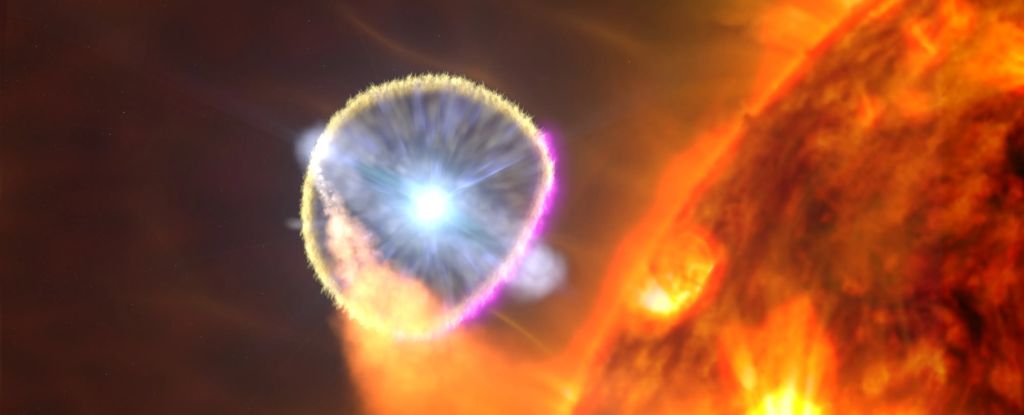
Rare Sky Explosion Coming Soon: A Once-in-a-Lifetime Event Visible to The Naked Eye
https://www.sciencealert.com/images/2024/06/classical-nova.jpg
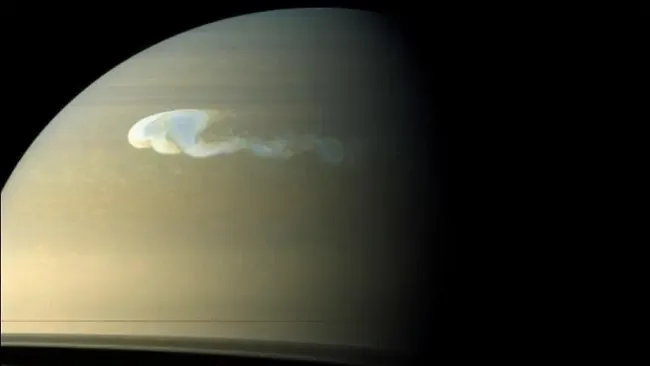
Saturn’s planet-wide storms driven by seasonal heating, Cassini probe reveals
https://cdn.mos.cms.futurecdn.net/DHfyukSpB9ioM2G5yTEGqC-650-80.jpg.webp
NASA’s Perseverance rover loses its hitchhiking “pet rock” after more than a year together on Mars.

Space-Related Birthdays
Taylor Wang June 16, 1940 STS-51-B

Brian Duffy June 20, 1953 STS-45, STS-57, STS-72, STS-92
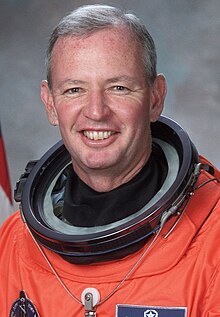
James Buchli June 20, 1945 STS-51-C, STS-61-A, STS-29, STS-48
https://upload.wikimedia.org/wikipedia/commons/thumb/5/5f/James_Buchli.jpg/220px-James_Buchli.jpg

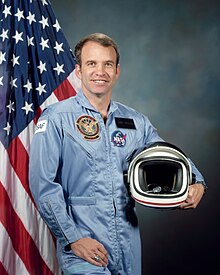
Gary Payton June 20, 1948 STS-51-C
https://upload.wikimedia.org/wikipedia/commons/thumb/e/e4/Gary_Payton.jpg/220px-Gary_Payton.jpg
This Week in Space History
June 18, 1983
When the Space Shuttle Challenger lifted off from the Kennedy Space Center (KSC) on June 18, 1983, Ride became the first American woman to fly in space, and the third woman overall.
Actress Kristen Stewart will portray Ride in an upcoming TV series.
June 16, 1963
Valentina Tereshkova became the first woman in space with the launch of Vostok 6.

Miss Carolyn’s Constellation of the Week
Space Launches For This Week
Space Flight Now Launch Schedule
June 23 Falcon 9 • Starlink 10-2
Launch time: Window opens at 1:03 p.m. EDT (1703 UTC)
Launch site: SLC-40, Cape Canaveral Space Force Station, Florida
A SpaceX Falcon 9 rocket will launch a batch of Starlink V2 Mini satellites to low Earth orbit. About 8.5 minutes after liftoff, the first stage booster will land on a droneship out in the Atlantic Ocean. Delayed from June 12. Delayed from June 13 due to the weather. Delayed from June 14 due to T-0 abort.
Updated: June 20
June 24 Long March 2C • SVOM
Launch time: TBD
Launch site: Xichang Satellite Launch Center, People’s Republic of China
A Chinese Long March 2C rocket will launch the Space-based multi-band astronomical Variable Objects Monitor (SVOM) spacecraft. The satellite is a dual Franco-Chinese mission, which is “dedicated to the study of the most distant explosions of stars, the gamma-ray bursts.” There are four main instruments on board, two of which are French and two which are Chinese. The spacecraft will be launched to a 625-km Earth orbit and will operate for at least three years with an option to extend for another two years beyond that. Delayed from late 2023.
Updated: January 28
June 25 Falcon Heavy • GOES U
Launch time: 5:16 p.m. EDT (2116 UTC)
Launch site: LC-39A, Kennedy Space Center, Florida
A SpaceX Falcon Heavy will launch the fourth and final satellite of the next-generation series of geostationary weather satellites for NASA and NOAA. GOES-U will orbit 22,300 miles above the equator to monitor weather conditions across the United States. The satellite will be renamed GOES-19 once it reaches its operational orbit. Delayed from April 30 and May.
Updated: June 17
Summer 2024 Falcon 9 • ASBM
Launch time: TBD
Launch site: SLC-4E, Vandenberg Space Force Base, California
A SpaceX Falcon 9 rocket will launch the Arctic Satellite Broadband Mission, consisting of two satellites owned by Space Norway. The Falcon 9 will launch the two Northrop Grumman-built satellites into a highly elliptical orbit that lingers over the Arctic region. The satellites carry communications payloads for the Norwegian Ministry of Defense, the U.S. Space Force, and Inmarsat.
Updated: December 13
TBD Eris • TestFlight1
Launch time: TBD
Launch site: Pad 1, Bowen Orbital Spaceport
Gilmour Space in Australia is preparing to launch the inaugural flight of its Eris Block 1 rocket. The three-stage launch vehicle is 25 m (82 ft) tall and is equipped with 1.5 m (4.9 ft) diameter payload fairings. The rocket is designed to send up to 305 kg up to low Earth orbit. This first mission, called “TestFlight1,” does not appear to have a payload on board. Delayed from May 4 due to a lack of launch permit.
Updated: May 28
NET June Soyuz • Kondor-FKA 2
Launch time: TBD
Launch site: Pad 1S, Vostochny Cosmodrome
A Russian Soyuz rocket will launch the Kondor-Experimental SAR Spacecraft FKA 2 (Kondor-FKA 2) satellite to sun-synchronous orbit at 510 km altitude and an inclination of 97.4°. The mission, with a roughly five-year live span, is being launched on behalf of NPO Mashinostroyeniya.
Updated: June 10
June 29/30 H3 • DAICHI-4
Launch time: 12:06:42 – 12:19:34 p.m. JST (11:06:42 – 11:19:34 p.m. EDT, 0306:42-0319:34 UTC)
Launch site: Yoshinobu Launch Complex at the JAXA Tanegashima Space Center
The Japanese Exploration Aerospace Agency (JAXA) will launch the third flight of its H3 Launch Vehicle. The mission, H3 F3: Flight No. 3, will launch the Advanced Land Observing Satellite-4 “DAICHI-4” (ALOS-4). This Earth observation satellite is manufactured by Mitsubishi Electric Corporation will use a phased array type L-band synthetic aperture radar (PALSAR-3) and is designed to operate for seven years or orbit.
Updated: April 26
NET July Falcon 9 • Transporter-11
Launch time: TBD
Launch site: SLC-4E, Vandenberg Space Force Base, California
A SpaceX Falcon 9 rocket will launch dozens of satellites to a sun-synchronous orbit on the company’s 11th such rideshare mission. Among the payloads are the European Space Agency’s Arctic Weather Satellite, UK-based Surrey Satellites’ Tyche satellite for the UK Space Command, Japan-based iQPS’ QPS-SAR No. 8 satellite and U.S.-based Planet Labs’ Tanager-1 satellite.
Updated: June 17
NET July 7/8 Falcon 9 • Türksat 6A
Launch time: TBD
Launch site: SLC-40, Cape Canaveral Space Force Station, Florida
A SpaceX Falcon 9 rocket will launch the Türksat 6A communications satellite for the Turkish operator Türksat. Türksat 6A is the first geostationary communications satellite to be built in Turkey, with development led by TÜBİTAK Space Technologies Research Institute and Turkish Aerospace Industries. It will operate at the 42° East orbital position. Delayed from 2nd Quarter 2023 and March 2024.
Updated: June 17
NET July Atlas 5 • USSF 51
Launch time: TBD
Launch site: SLC-41, Cape Canaveral Space Force Station, Florida
A United Launch Alliance Atlas 5 rocket, designated AV-101, will launch the USSF 51 mission for the U.S. Space Force. This mission will launch an undisclosed payload for the military.
Recent Astronomical Discoveries
Iron meteorites hint that our infant solar system was more doughnut than dartboard | ScienceDaily
https://th.bing.com/th?id=OVFT.ZyqjEQmNcillKBb8vdbpgy&pid=News&w=300&h=186&c=14&rs=2&qlt=90
Visible satellite passages over the next couple of days.
All times are “local” (Dallas) time.
ISS
Jun 23
ACS Solar Sail
Jun 23
Jun 24
Jun 25
Jun 26
Jun 27
Jun 28
Hubble Space Telescope
Jun 29
Jun 30