
IO Group: https://groups.io/g/DARCskynet/topics
Facebook Group: http://www.facebook.com/groups/306498286059167/
Saturday’s DARC SkyNet is at 9PM CT.
Discussion Topic of the Evening.
TBD
Waz Up
Space Exploration and Space History
Astronaut Birthdays
April 27, 1953: Ellen Shulman Baker, KB5SIX (STS-34, STS-50, STS-71)
April 28, 1943: John Creighton (STS-51-G, STS-36, STS-48)
April 28, 1949: Jerome Apt, N5QWL (STS-37, STS-47, STS-59, STS-79)
April 28, 1956: Paul Lockhart (STS-111, STS-113)
April 30, 1945: Michael Smith (STS-51-L Challenger)
April 30, 1957: Duane Carey (STS-109)
April 30, 1976: Victor Glover, KI5BKC (SpaceX Crew-1 Exp 64/65; Artemis 2)
May 1, 1925: Scott Carpenter (Mercury-Atlas 7)
May 2, 1957: Dominic L. Pudwill Gorie (STS-91, STS-99, STS-108, STS-123)
May 2, 1975: Dorothy Metcalf-Lindenburger (STS-131)
May 3, 1949: Albert Sacco (STS-73)
May 4, 1956: Michael L. Gernhardt (STS-69, STS-83, STS-94, STS-104)
Miss Carolyn’s Constellation of the Week
Space Launches For This Week
Space Flight Now Launch Schedule
May 6 Falcon 9 • Starlink 6-57
Launch time: Four hour launch window opens at 11:34 a.m. EDT (1534 UTC)
Launch site: SLC-40, Cape Canaveral Space Force Station, Florida
A SpaceX Falcon 9 rocket will launched 23 Starlink satellites into low Earth orbit. The first stage booster will be recovered on a droneship in the Atlantic Ocean.
Updated: May 03
May 6/7 Atlas 5 • CST-100 Starliner Crew Flight Test
Launch time: 10:34 p.m. ET (0234 UTC on the 7th)
Launch site: SLC-41, Cape Canaveral Space Force Station, Florida
A United Launch Alliance Atlas 5 rocket, designated AV-085, will launch Boeing’s CST-100 Starliner spacecraft on its first mission with astronauts, known as the Crew Test Flight, to the International Space Station. The capsule will dock with the space station, then return to Earth to landing in the Western United States. NASA astronauts Butch Wilmore and Suni Williams will fly on the mission. The rocket will fly in a vehicle configuration with two solid rocket boosters and a dual-engine Centaur upper stage. Delayed from August and 1st Quarter of 2020. Delayed from mid-2020 after Boeing decision to refly the Orbital Flight Test. Delayed from early 2021, June 2021, and late 2021. Delayed from late 2022 to implement fixes on the Starliner spacecraft after OFT-2. Delayed from April 2023, July 2023 and April 2024.
Updated: May 03
May 7 Falcon 9 • Starlink 6-56
Launch time: Four hour launch window opens at 11:08 a.m. EDT (1508 UTC)
Launch site: LC-39A, Kennedy Space Center, Florida
A SpaceX Falcon 9 rocket will launched 23 Starlink satellites into low Earth orbit. The first stage booster will be recovered on a droneship in the Atlantic Ocean.
Updated: May 03
TBD Eris • TestFlight1
Launch time: TBD
Launch site: Pad 1, Bowen Orbital Spaceport
Gilmour Space in Australia is preparing to launch the inaugural flight of its Eris Block 1 rocket. The three-stage launch vehicle is 25 m (82 ft) tall and is equipped with 1.5 m (4.9 ft) diameter payload fairings. The rocket is designed to send up to 305 kg up to low Earth orbit. This first mission, called “TestFlight1,” does not appear to have a payload on board. Delayed from May 4 due to a lack of launch permit.
Updated: April 23
June 24 Long March 2C • SVOM
Launch time: TBD
Launch site: Xichang Satellite Launch Center, People’s Republic of China
A Chinese Long March 2C rocket will launch the Space-based multi-band astronomical Variable Objects Monitor (SVOM) spacecraft. The satellite is a dual Franco-Chinese mission, which is “dedicated to the study of the most distant explosions of stars, the gamma-ray bursts.” There are four main instruments on board, two of which are French and two which are Chinese. The spacecraft will be launched to a 625-km Earth orbit and will operate for at least three years with an option to extend for another two years beyond that. Delayed from late 2023.
Updated: January 28
June 25 Falcon Heavy • GOES U
Launch time: TBD
Launch site: LC-39A, Kennedy Space Center, Florida
A SpaceX Falcon Heavy will launch the fourth and final satellite of the next-generation series of geostationary weather satellites for NASA and NOAA. GOES-U will orbit 22,300 miles above the equator to monitor weather conditions across the United States. The satellite will be renamed GOES-19 once it reaches its operational orbit. Delayed from April 30 and May.
Updated: March 26
Check-ins or comments
At this point we should be reaching our 90 minute cut-off point, so NCS can decide whether to cut any of these topics due to lack of time.
Recent Astronomical Discoveries
The Cosmic Glitch in Gravity
https://www.sciencedaily.com/releases/2024/05/240501125809.htm
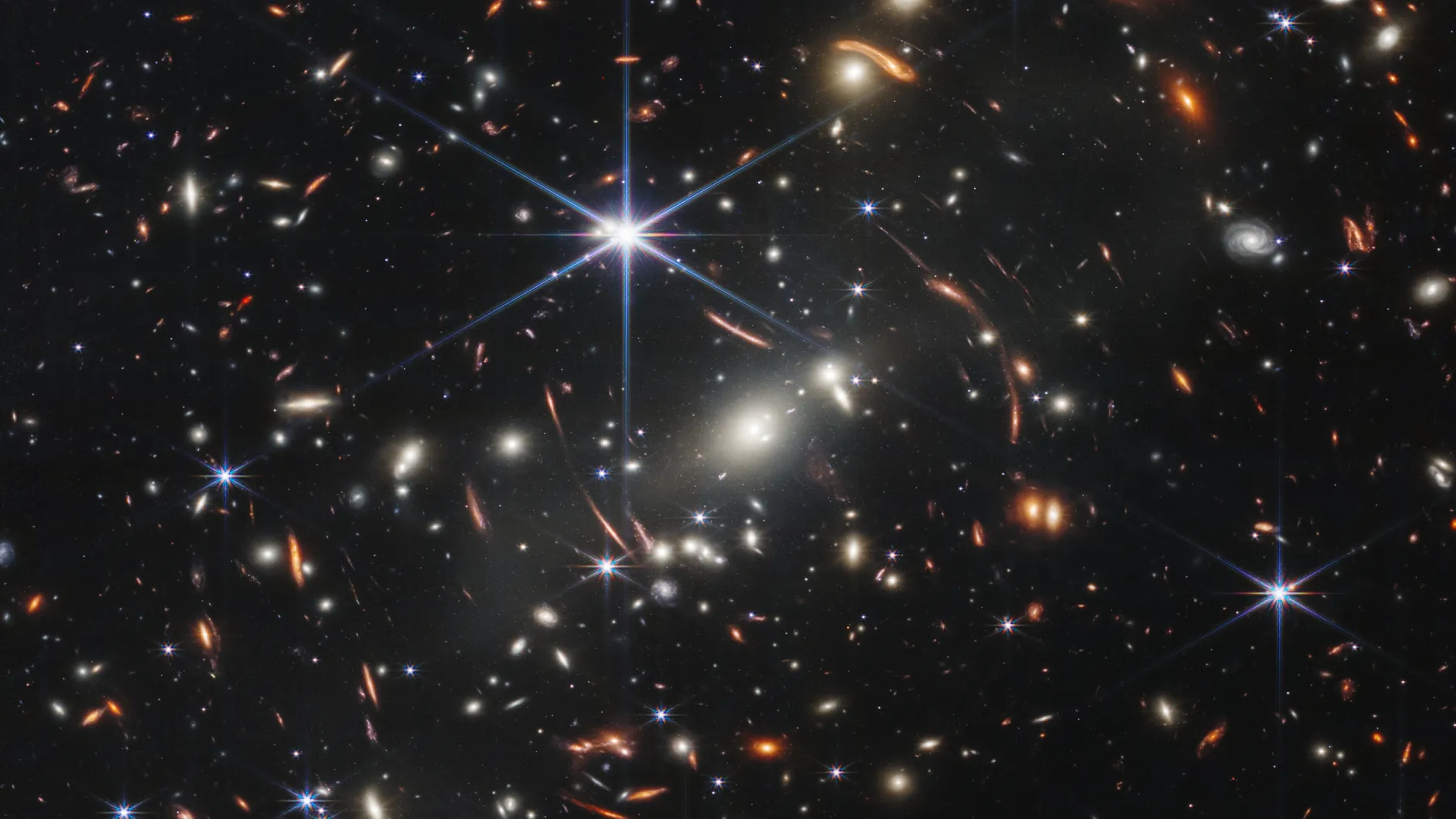
The “Galaxy”
https://cdn.mos.cms.futurecdn.net/SK8FW9fy8MDtLEVaPnox8c-1920-80.jpg.webp
Visible satellite passages over the next couple of days.
All times are “local” (Dallas) time.
ISS
May 9
May 10
May 11
May 12
May 12
Envisat
May 5
May 7
May 8
May 10
May 12