
IO Group: https://groups.io/g/DARCskynet/topics
Facebook Group: http://www.facebook.com/groups/306498286059167/
Saturday’s DARC SkyNet is at 9PM CT.
Discussion Topic of the Evening.
Enter Topic Here
Enter NCS Name and Call Here
Discussion Topic of the Evening.
Night-shining cloud mission ends; yields high science results for NASA
AIM Spacecraft
Mesosphere Cloud Formation
https://th.bing.com/th/id/R.b1d2d422f11e0b61c8f71006605cf061?rik=4LPjR9W7LPWVgg&pid=ImgRaw&r=0
Waz Up
Space Exploration and Space History
Space Exploration News
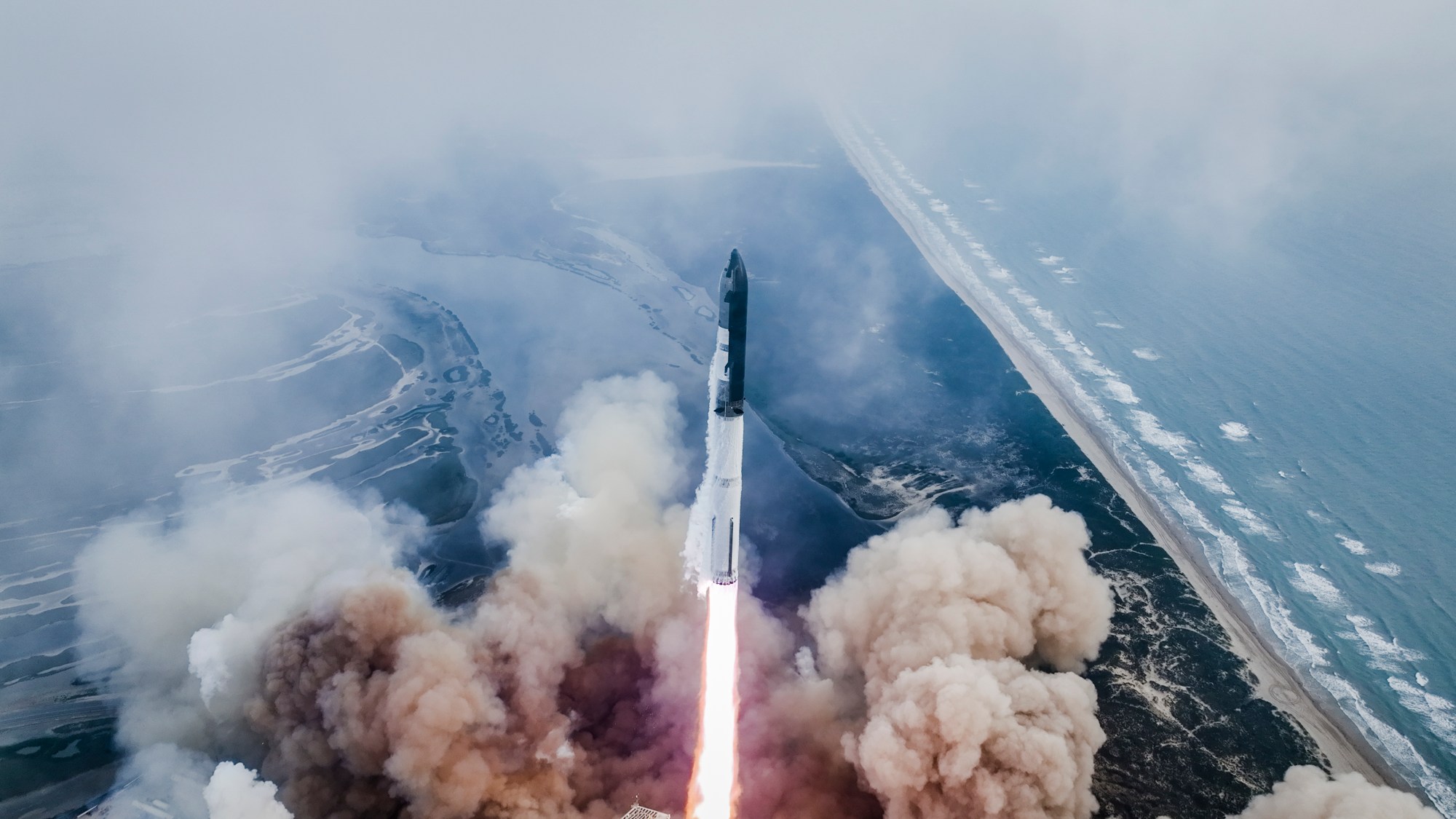
NASA Artemis Mission Progresses with SpaceX Starship Test Flight
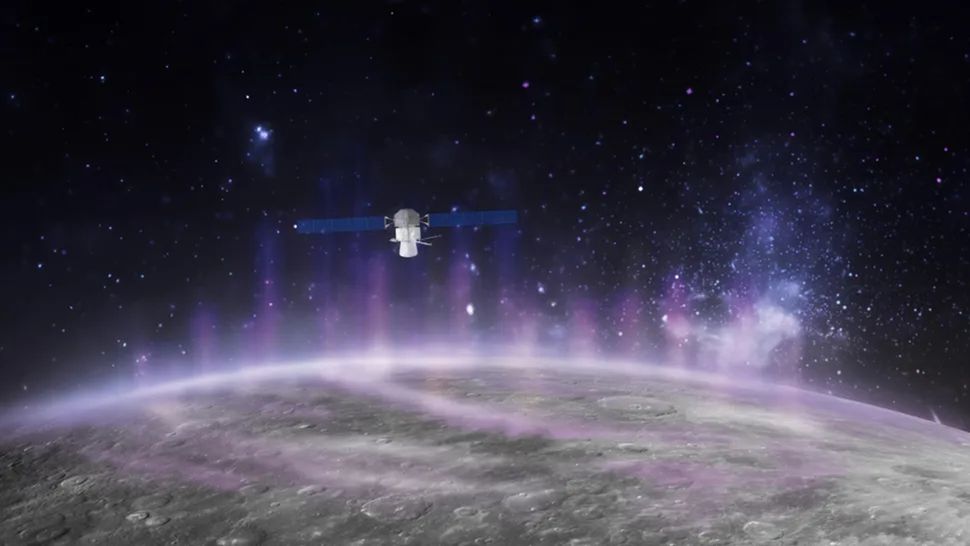
Mercury slammed by gargantuan eruption from the sun’s hidden far side, possibly triggering ‘X-ray auroras’
https://cdn.mos.cms.futurecdn.net/qktsSKRcL77nk57vwHJ5ES-970-80.jpg
‘The Nightmare Is Over’: NASA Resurrects VERITAS Mission to Venus
https://img-s-msn-com.akamaized.net/tenant/amp/entityid/BB1jUepj.img?w=768&h=432&m=6
Space-Related Birthdays
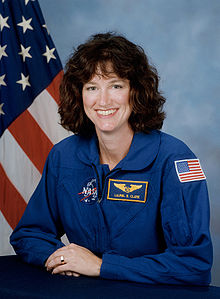
Laurel Clark 10-Mar-1961 STS-107
Curtis Brown 11-Mar-1956 STS-47, STS-66, STS-77, STS-85, STS-95, STS-103
https://upload.wikimedia.org/wikipedia/commons/thumb/4/41/Curtis_Brown.jpg/220px-Curtis_Brown.jpg

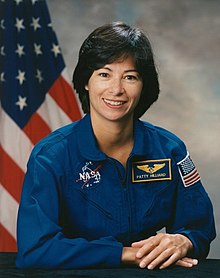
Patricia Robertson 12-Mar-1963 No flights (died in a plane crash)
Wally Schirra 12-Mar-1923 Mercury-Atlas 8, Gemini 6A, Apollo 7

Gene Cernan 14-Mar-1934 Gemini 9A, Apollo 10, Apollo 17
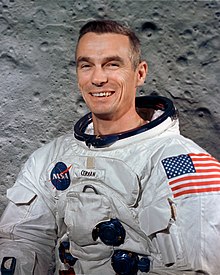
Frank Borman 14-Mar-1928 Gemini 7, Apollo 8

Michael Fincke 14-Mar-1967 Soyuz TMA-4 (Expedition 9), Soyuz TMA-13 (Expedition 18), STS-134, Boeing Starliner-1

William B. Lenoir 14-Mar-1939 STS-5
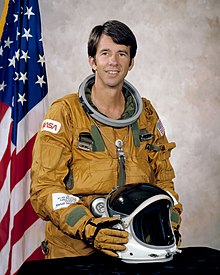
Alan Bean 15-Mar-1932 Apollo 12, Skylab 3

Walter Cunningham 16-Mar-1932 Apollo 7

Michael J. Bloomfield 16-Mar-1959 STS-86, STS-97, STS-110
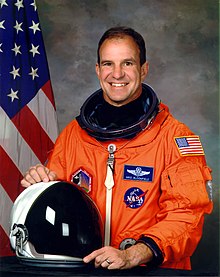
This Week in Space History
March 13, 1969 Apollo 9
Apollo 9 splashed down 55 years ago OTD after completing one of the program’s most underrated test missions

March 16, 1966 First successful space docking
Spacecraft docking capability depends on space rendezvous, the ability of two spacecraft to find each other and station-keep in the same orbit.

Miss Carolyn’s Constellation of the Week
Lynx, the Wild Cat and Cancer, the Crab
Space Launches For This Week
Space Flight Now Launch Schedule
March 18/19 Falcon 9 • Starlink 7-16
Launch time: 7:20-11:51 p.m. PT (10:20 p.m. – 2:51 a.m. ET, 0220-0651 UTC)
Launch site: SLC-4E, Vandenberg Space Force Base, California
A SpaceX Falcon 9 rocket will launch 23 Starlink internet satellites from Space Launch Complex 4 East (SLC-4E). The Falcon 9’s first stage booster is targeting a landing on the droneship ‘Of Course I Still Love You’ in the Pacific Ocean.
Updated: March 15
March 20 Electron • NROL-123
Launch time: Window 2:15-6:30 a.m. EDT (0515-1130 UTC)
Launch site: Launch Complex 2, Wallops Flight Facility, Virginia
A Rocket Lab Electron rocket will launch its first mission for the National Reconnaissance Office (NRO) from Launch Complex 2 at NASA’s Wallops Flight Facility in Virginia. The NROL-123 mission, also known as ‘Live and Let Fly,’ was booked as part of the NRO’s Rapid Acquisition of a Small Rocket (RASR) contract. It will launch a classified payload to orbit.
Updated: March 07
March 21 Soyuz • Soyuz MS-25
Launch time: 4:21 p.m. MSK (9:21 a.m. EDT, 1321 UTC)
Launch site: Baikonur Cosmodrome, Kazakhstan
A Russian government Soyuz rocket will the crewed Soyuz MS-25 spacecraft to the International Space Station. The mission will carry Russian commander Oleg Novitsky, Belarusian flight engineer Marina Vasilevskaya, and NASA astronaut Tracy Dyson into orbit for a long-duration flight on the space station. The rocket will fly in the Soyuz-2.1a configuration. The Soyuz will dock at the Prichal module about three hours after liftoff. On its return trip, it will bring back Russian cosmonauts Oleg Kononenko and Nikolai Chub.
Updated: February 05
March 21 Falcon 9 • CRS-30
Launch time: 4:55 p.m. ET (2055 UTC)
Launch site: SLC-40, Cape Canaveral Space Force Station, Florida
A SpaceX Falcon 9 rocket will launch a Dragon 2 spacecraft on a cargo resupply mission to the International Space Station. The Falcon 9’s first stage booster will land back at Landing Zone 1 at Cape Canaveral Space Force Station. The flight is the 30th mission by SpaceX conducted under a Commercial Resupply Services contract with NASA. It’s also the first launch of a second-generation Dragon to the space station lifting off from SCL-40.
Updated: March 15
March 22 Falcon 9 • Starlink 6-42
Launch time: Four hour window opens at 7:55 p.m.
Launch site: LC-39A, Kennedy Space Center, Florida
A SpaceX Falcon 9 rocket will launch another batch of second-generation Starlink V2 Mini internet satellites. The Falcon 9’s first stage booster will land on a droneship in the Atlantic Ocean.
Updated: March 16
March 28 Delta 4-Heavy • NROL-70
Launch time: TBD
Launch site: SLC-37B, Cape Canaveral Space Force Station, Florida
A United Launch Alliance Delta 4-Heavy rocket will launch a classified spy satellite cargo for the U.S. National Reconnaissance Office. The largest of the Delta 4 family, the Heavy version features three Common Booster Cores mounted together to form a triple-body rocket. This is the final flight of a Delta 4 rocket.
Updated: March 12
NET April 22 Atlas 5 • CST-100 Starliner Crew Flight Test
Launch time: TBD
Launch site: SLC-41, Cape Canaveral Space Force Station, Florida
A United Launch Alliance Atlas 5 rocket, designated AV-085, will launch Boeing’s CST-100 Starliner spacecraft on its first mission with astronauts, known as the Crew Test Flight, to the International Space Station. The capsule will dock with the space station, then return to Earth to landing in the Western United States. NASA astronauts Butch Wilmore and Suni Williams will fly on the mission. The rocket will fly in a vehicle configuration with two solid rocket boosters and a dual-engine Centaur upper stage. Delayed from August and 1st Quarter of 2020. Delayed from mid-2020 after Boeing decision to refly the Orbital Flight Test. Delayed from early 2021, June 2021, and late 2021. Delayed from late 2022 to implement fixes on the Starliner spacecraft after OFT-2. Delayed from April 2023 and July 21, 2023.
Updated: February 21
NET April Vulcan Centaur • Dream Chaser 1
Launch time: TBD
Launch site: SLC-41, Cape Canaveral Space Force Station, Florida
A United Launch Alliance Vulcan Centaur rocket will launch on its second demonstration flight with Sierra Space’s Dream Chaser cargo vehicle for the International Space Station. The Dream Chaser is a lifting body resupply spacecraft that will launch on top of a rocket and land on a runway. This will be the Dream Chaser’s first flight to space. The Vulcan Centaur rocket will fly in the VC4L configuration with four GEM-63XL solid rocket boosters, a long-length payload fairing, and two RL10 engines on the Centaur upper stage. Delayed from August 2022, December 2023 and January 2024.
Updated: December 13
NET April 30 Falcon Heavy • GOES U
Launch time: TBD
Launch site: LC-39A, Kennedy Space Center, Florida
A SpaceX Falcon Heavy will launch the fourth and final satellite of the next-generation series of geostationary weather satellites for NASA and NOAA. GOES-U will orbit 22,300 miles above the equator to monitor weather conditions across the United States. The satellite will be renamed GOES-19 once it reaches its operational orbit.
Updated: February 08
June Falcon 9 • Türksat 6A
Launch time: TBD
Launch site: SLC-40, Cape Canaveral Space Force Station, Florida
A SpaceX Falcon 9 rocket will launch the Türksat 6A communications satellite for the Turkish operator Türksat. Türksat 6A is the first geostationary communications satellite to be built in Turkey, with development led by TÜBİTAK Space Technologies Research Institute and Turkish Aerospace Industries. Delayed from 2nd Quarter 2023 and March 2024.
Updated: December 13
June 24 Long March 2C • SVOM
Launch time: TBD
Launch site: Xichang Satellite Launch Center, People’s Republic of China
A Chinese Long March 2C rocket will launch the Space-based multi-band astronomical Variable Objects Monitor (SVOM) spacecraft. The satellite is a dual Franco-Chinese mission, which is “dedicated to the study of the most distant explosions of stars, the gamma-ray bursts.” There are four main instruments on board, two of which are French and two which are Chinese. The spacecraft will be launched to a 625-km Earth orbit and will operate for at least three years with an option to extend for another two years beyond that. Delayed from late 2023.
Updated: January 28
Recent Astronomical Discoveries
Explaining a supernova’s ‘string of pearls’
Explaining a supernova’s ‘string of pearls’ | ScienceDaily
https://upload.wikimedia.org/wikipedia/commons/thumb/c/c4/Sn87a.jpg/290px-Sn87a.jpg
