
IO Group: https://groups.io/g/DARCskynet/topics
Facebook Group: http://www.facebook.com/groups/306498286059167/
Saturday’s DARC SkyNet is at 9PM CT.
Discussion Topic of the Evening.
Brenda WB5OZL
Neptune’s 14 Moons
By Anne Marie Helmenstine, Ph.D.
Dramatic Artist’s Concept of Neptune Moon Triton
:max_bytes(150000):strip_icc():format(webp)/illustration-of-the-gas-giant-planet-neptune-and-its-largest-moon-triton--112717275-590a25373df78c92830b8059.jpg)
Photo Neptune Moon Nereid
:max_bytes(150000):strip_icc():format(webp)/neptune-seen-from-its-tiny--distant-moon--nereid--112718200-590a25493df78c92830bb146.jpg)
Photo Triton
:max_bytes(150000):strip_icc():format(webp)/triton--the-largest-moon-of-planet-neptune--84518762-590a25663df78c92830bffaa.jpg)
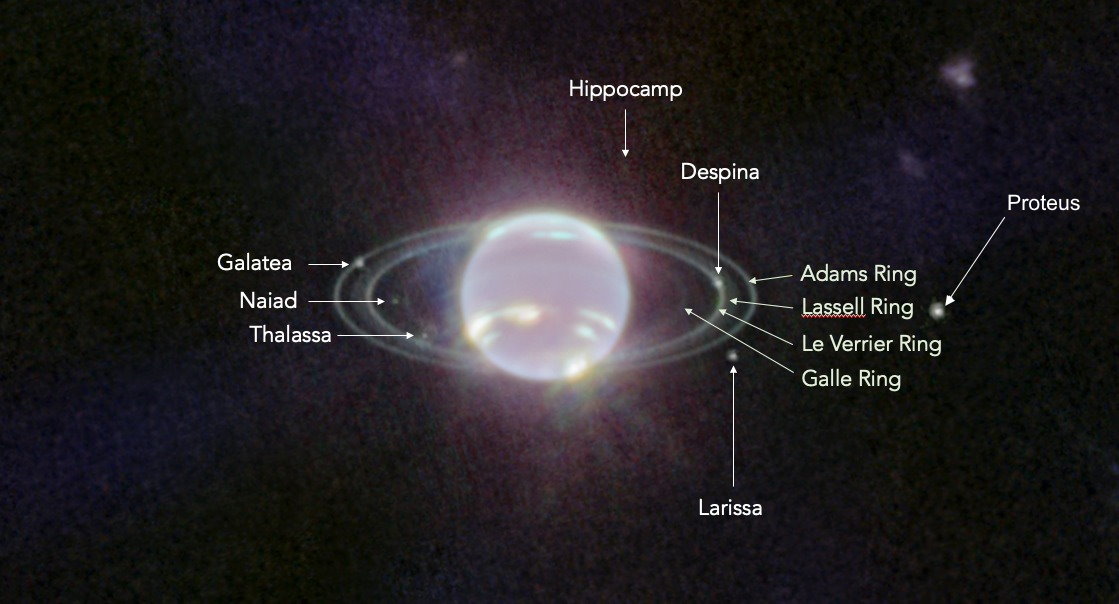
Neptune’s Moon System

JWST Photo – Neptune/Moon System
https://bigthink.com/wp-content/uploads/2022/09/allmoons.jpg
Waz Up
Space Exploration and Space History
Space Exploration News
Scientists find water on an asteroid for the first time, a hint into how Earth formed
Voyager 1 Has Gone Mysteriously—and Perhaps Fatally—Silent in Deep Space

Space-Related Birthdays
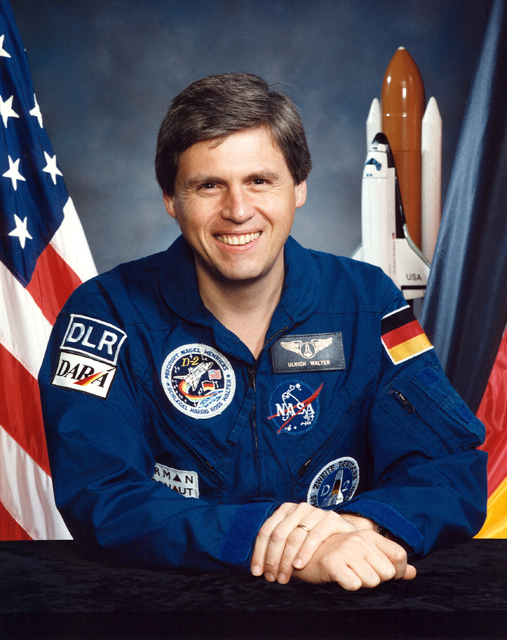
February 9, 1954 Ulrich Walter (DLR), Germany
STS-55
February 9, 1960 Peggy Whitson (NASA), US

STS-111/STS-113 (Expedition 5),Soyuz TMA-11 (Expedition 16), Soyuz MS-03/MS-04 (Expedition 50/51/52), Axiom Mission 2
February 10, 1968 Garrett Reisman (NASA), US
https://upload.wikimedia.org/wikipedia/commons/7/73/Garrettreismanv2.jpg

STS-123/124 (Expedition 16/17), STS-132
February 11, 1960 Richard Mastracchio (NASA), US
https://upload.wikimedia.org/wikipedia/commons/9/9e/Richard_Mastracchio_2013.jpg

STS-106, STS-118, STS-131, Soyuz TMA-11M (Expedition 38/39)
February 13, 1939 Valery Rozhdestvensky (RKA), Russia
https://upload.wikimedia.org/wikipedia/en/d/d4/Valery_Ilyich_Rozhdestvensky.jpg
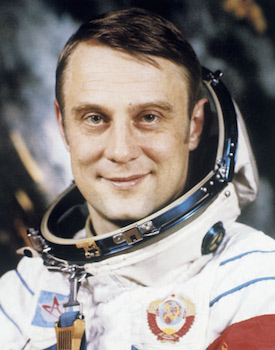
Soyuz 23
February 13, 1939 Sigmund Jähn (IK), Germany
https://upload.wikimedia.org/wikipedia/commons/c/c2/Sigmund_Jahn_cropped.jpg
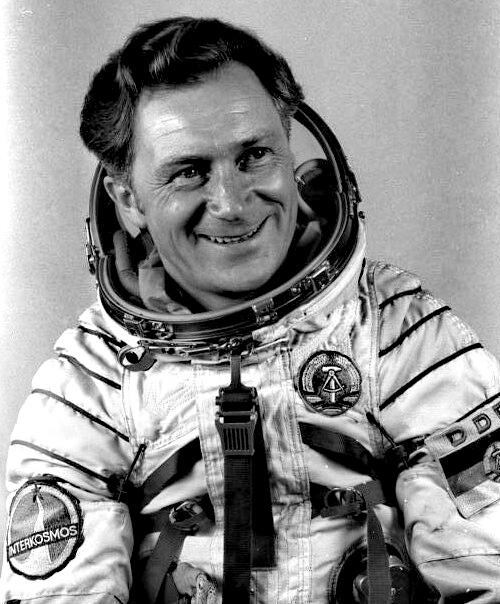
Soyuz 31/Soyuz 29
February 13, 1942 Donald Williams (NASA), US
https://upload.wikimedia.org/wikipedia/commons/8/8f/Williams-de.jpg

STS-51-D, STS-34
February 13, 1964 Stephen G. Bowen (NASA), US
https://upload.wikimedia.org/wikipedia/commons/c/c4/Stephenbowenv2.jpg

STS-126, STS-132, STS-133, SpaceX Crew-6 (Expedition 68/69)
February 14, 1947 Pham Tuân (IK), Vietnam
https://upload.wikimedia.org/wikipedia/commons/3/38/Ph%E1%BA%A1m_Tu%C3%A2n_.JPG

Soyuz 36, Soyuz 37
February 15, 1944 Aleksandr Serebrov (RKA), Russia
https://upload.wikimedia.org/wikipedia/en/4/4e/Aleksandr_Aleksandrovich_Serebrov.jpg
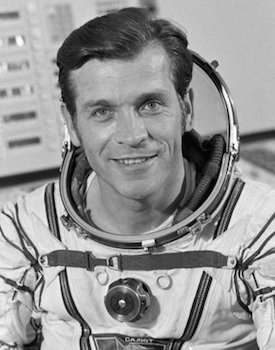
Soyuz T-7/Soyuz T-5, Soyuz T-8, Soyuz TM-8, Soyuz TM-17
February 15, 1964 Leland Melvin (NASA), US
https://upload.wikimedia.org/wikipedia/commons/5/5e/Leland_Melvin.jpg

STS-122, STS-129
This Week in Space History
February 11, DISCOVR
Launched this week in 2015 (February 11), the DISCOVR (Deep Space Climate Observatory) continues to monitor solar wind from a million miles away at L1, the first Lagrangian point.

Launched this week in 2013 (February 11), Landsat 8 continued the Landsat program and contributed to our understanding of processes on our home plane

February 16, 1961 Explorer 9
On this day in 1961, Explorer 9 was launched: “Explorer 9 was the first in a series of 3.66 m inflatable spheres to be successfully placed into orbit solely for the determination of atmospheric densities.

Miss Carolyn’s Constellation of the Week
Constellation Canis Major, the Big Dog
Space Launches For This Week
Space Flight Now Launch Schedule
February 16/17 H3 • VEP-4
Launch time: 9:22:55 a.m. – 13:06:34 p.m. JST (9:22:55 p.m. – 1:06:34 a.m. EST, 0222:55-0606:34 UTC)
Launch site: Yoshinobu Launch Complex, JAXA Tanegashima Space Center
The Japanese Aerospace Exploration Agency (JAXA) is preparing for a second test flight of its H3 rocket following a failure with the second stage engine in March 2023. The mission is dubbed H3/TF2 (Test Flight No. 2). The flight will feature the Vehicle Evaluation Payload-4 (VEP-4) for purposes of the demonstration. JAXA stated in December 2023 that it “will capitalize on the excess launch capability of the H3TF2 by providing launch and orbit insertion opportunities for two small secondary payloads (piggyback payloads), CE-SAT-IE and TIRSAT.” Delayed from Feb. 15 due to poor weather.
Updated: February 15
February 17 GSLV-F14 • INSAT-3DS
Launch time: 5:30 p.m. IST (7 a.m. EST, 1200 UTC)
Launch site: SDSC-SHAR, Sriharikota
An Indian Geosynchronous Satellite Launch Vehicle (GSLV) Mk. 2 rocket, designated GSLV-F14, will launch the INSAT-3DS satellite for the country’s Ministry of Earth Sciences (MoES). This geostationary meteorological satellite will support the previously launched INSAT-3D and INSAT3DR satellites. The 2275 kg INSAT-3DS satellite is based off of the Indian Space Research Organization’s (ISRO) I-2k satellite bus.
Updated: February 08
February Falcon 9 • Starlink 6-39
Launch time: TBD
Launch site: SLC-40, Cape Canaveral Space Force Station, Florida
A SpaceX Falcon 9 rocket will launch another batch of 23 second-generation Starlink V2 Mini internet satellites. The Falcon 9’s first stage booster will land on a droneship in the Atlantic Ocean.
Updated: February 09
March 1 Falcon 9 • Crew 8
Launch time: 12:04 a.m. EST (0504 UTC)
Launch site: LC-39A, Kennedy Space Center, Florida
A SpaceX Falcon 9 rocket will launch a Crew Dragon spacecraft on the program’s 13th flight with astronauts. The Falcon 9’s first stage booster will return to land at Landing Zone 1 at Cape Canaveral Space Force Station. NASA astronauts Matthew Dominick, Michael Barratt, and Jeanette Epps along with Roscosmos cosmonaut Alexander Grebenkin will launch on a Crew Dragon spacecraft to begin a six-month expedition on the International Space Station. The Crew Dragon will return to a splashdown at sea off the coast of Florida. Delayed from Feb. 22 and 28.
Updated: February 16
March 21 Soyuz • Soyuz MS-25
Launch time: 4:21 p.m. MSK (9:21 a.m. EDT, 1321 UTC)
Launch site: Baikonur Cosmodrome, Kazakhstan
A Russian government Soyuz rocket will the crewed Soyuz MS-25 spacecraft to the International Space Station. The mission will carry Russian commander Oleg Novitsky, Belarusian flight engineer Marina Vasilevskaya, and NASA astronaut Tracy Dyson into orbit for a long-duration flight on the space station. The rocket will fly in the Soyuz-2.1a configuration. The Soyuz will dock at the Prichal module about three hours after liftoff. On its return trip, it will bring back Russian cosmonauts Oleg Kononenko and Nikolai Chub.
Updated: February 05
TBD Atlas 5 • USSF 51
Launch time: TBD
Launch site: SLC-41, Cape Canaveral Space Force Station, Florida
A United Launch Alliance Atlas 5 rocket, designated AV-101, will launch the USSF 51 mission for the U.S. Space Force. This mission will launch an undisclosed payload for the military.
Updated: January 15
NET April 2024 Atlas 5 • CST-100 Starliner Crew Flight Test
Launch time: TBD
Launch site: SLC-41, Cape Canaveral Space Force Station, Florida
A United Launch Alliance Atlas 5 rocket, designated AV-085, will launch Boeing’s CST-100 Starliner spacecraft on its first mission with astronauts, known as the Crew Test Flight, to the International Space Station. The capsule will dock with the space station, then return to Earth to landing in the Western United States. NASA astronauts Butch Wilmore and Suni Williams will fly on the mission. The rocket will fly in a vehicle configuration with two solid rocket boosters and a dual-engine Centaur upper stage. Delayed from August and 1st Quarter of 2020. Delayed from mid-2020 after Boeing decision to refly the Orbital Flight Test. Delayed from early 2021, June 2021, and late 2021. Delayed from late 2022 to implement fixes on the Starliner spacecraft after OFT-2. Delayed from April 2023 and July 21, 2023.
Updated: October 26
NET April Vulcan Centaur • Dream Chaser 1
Launch time: TBD
Launch site: SLC-41, Cape Canaveral Space Force Station, Florida
A United Launch Alliance Vulcan Centaur rocket will launch on its second demonstration flight with Sierra Space’s Dream Chaser cargo vehicle for the International Space Station. The Dream Chaser is a lifting body resupply spacecraft that will launch on top of a rocket and land on a runway. This will be the Dream Chaser’s first flight to space. The Vulcan Centaur rocket will fly in the VC4L configuration with four GEM-63XL solid rocket boosters, a long-length payload fairing, and two RL10 engines on the Centaur upper stage. Delayed from August 2022, December 2023 and January 2024.
Updated: December 13
NET April 30 Falcon Heavy • GOES U
Launch time: TBD
Launch site: LC-39A, Kennedy Space Center, Florida
A SpaceX Falcon Heavy will launch the fourth and final satellite of the next-generation series of geostationary weather satellites for NASA and NOAA. GOES-U will orbit 22,300 miles above the equator to monitor weather conditions across the United States. The satellite will be renamed GOES-19 once it reaches its operational orbit.
Recent Astronomical Discoveries
Diverse ancient volcanoes on Mars discovered by planetary scientist may hold clues to pre-plate tectonic activity on Earth | ScienceDaily